
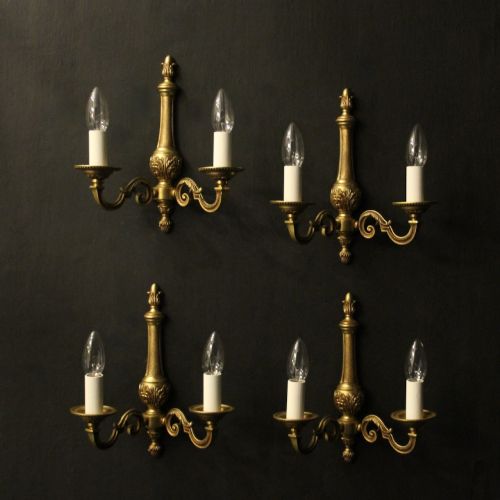
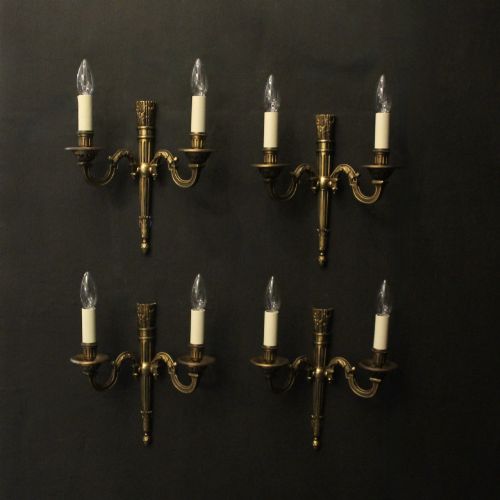
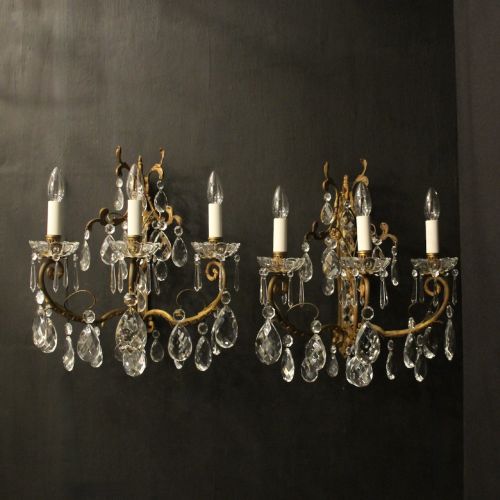
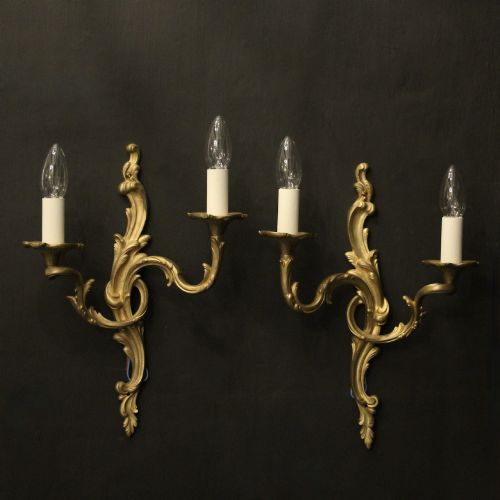


Gilt Metal Appliques
These gilt metal appliques are ornamental wall lights, sconces, and furniture mounts designed to bring decorative illumination and surface enrichment to an interior.
Gilt Metal Appliques
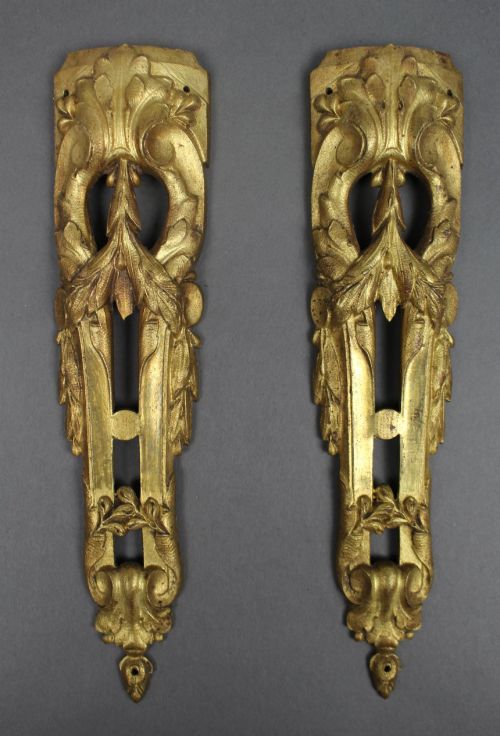
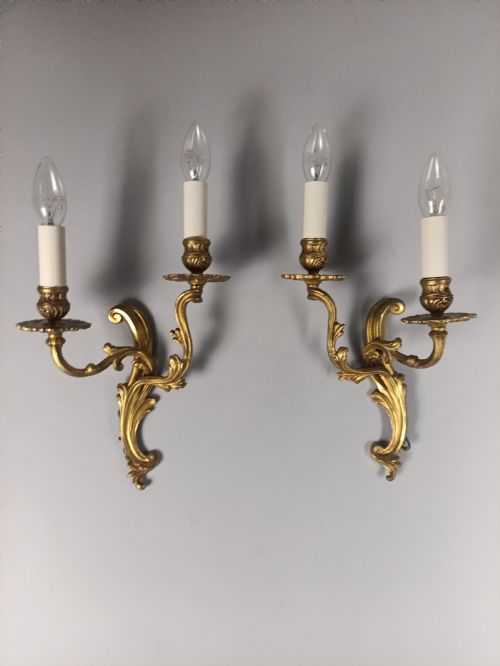
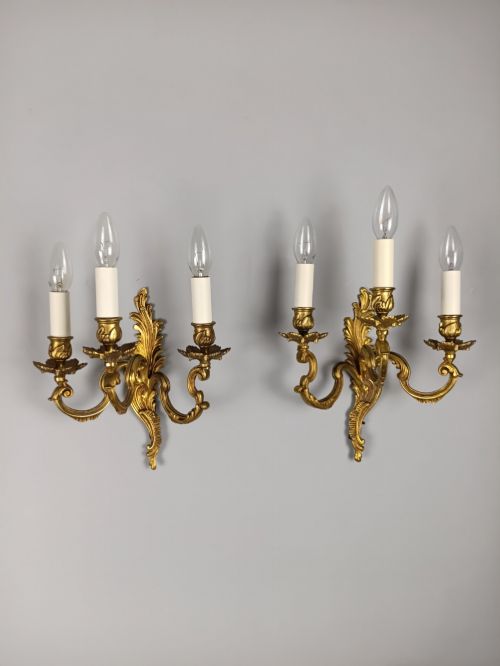
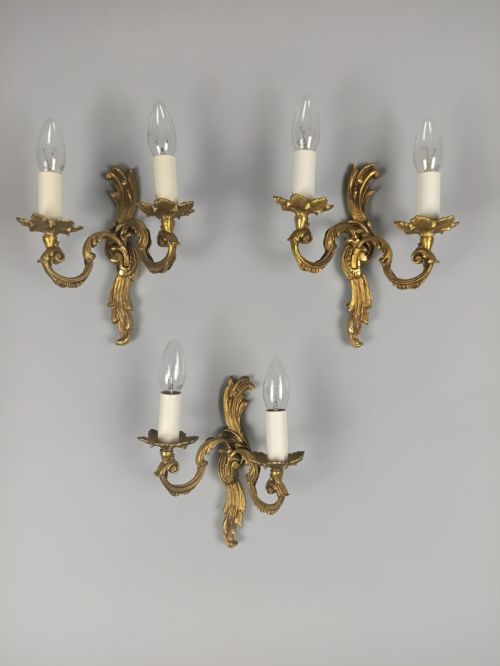
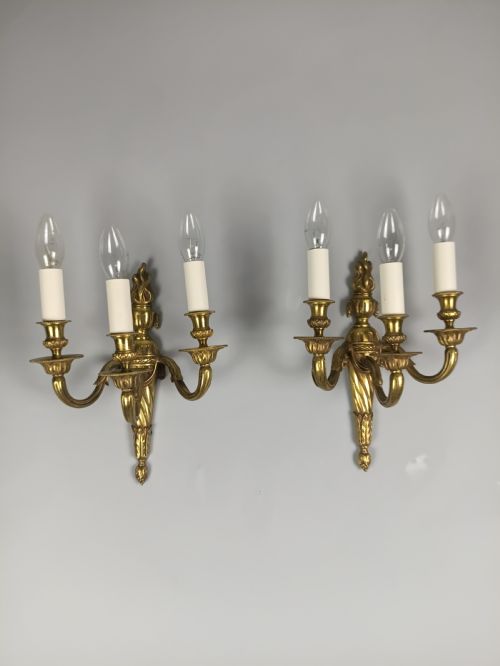
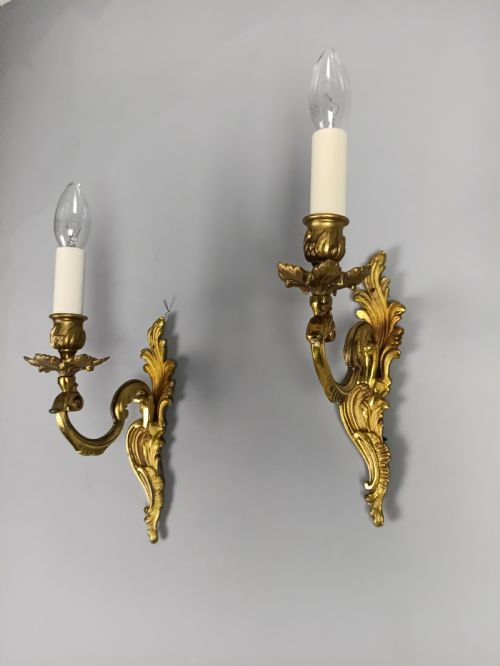
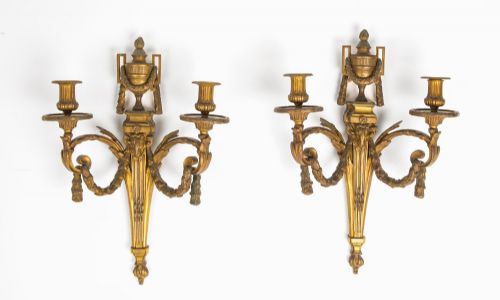
Gilt metal appliques primarily take the form of French wall lights and wall sconces, alongside furniture mounts and candelabra. Pieces range from single arm lights up to multi-branch fixtures holding five branches.
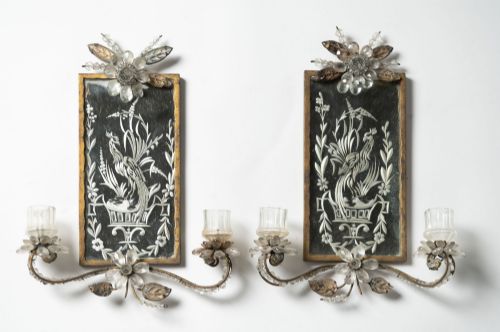
Most examples originate from the nineteenth and early twentieth centuries, spanning the 1870s through to the 1930s. French manufacture dominates the selection, accompanied by Italian Florentine pieces.
Designs draw heavily on classical and decorative traditions, frequently following Louis XVI style, Rococo, Empire, and French chateau aesthetics. These objects serve both practical lighting functions and decorative architectural roles.
Materials and construction
Makers utilised a variety of metallic bases including gilt bronze, brass, ormolu, gilded brass, and toleware, sometimes pairing them with crystal or glass elements. Giltwood also appears in Italian pieces from the period.
Casting and metalworking techniques allowed artisans to shape complex forms such as twin arm lights, ram's head masks, and rococo scrolls. Surfaces were then gilded to achieve a rich metallic finish that caught candle or electric light.
Watch for startled ram's head masks glaring from nineteenth century wall sconces.
Distinctions in quality
The sophistication of the casting and the depth of the chasing separate standard production pieces from finer works. Crisp detailing in motifs like ram's head masks and acanthus scrolls indicates superior craftsmanship.
The choice of base material influences the character of the object, with heavier gilt bronze and ormolu demonstrating a different weight and finish compared to lighter brass or toleware variants.
Maison Baguès
The Gilt Metal Appliques Glossary
- Applique
- A decorative wall-mounted light fixture or furniture mount. It projects from a vertical surface to provide illumination or ornamentation.
- Ormolu
- Finely ground high-carat gold mercury-gilded to a bronze base. This technique creates a durable and luminous golden finish on decorative metalwork.
- Rococo
- An ornate design style characterised by asymmetrical scrolls, shell motifs, and natural curves. It heavily influences many eighteenth and nineteenth century French wall lights.
- Sconce
- A wall-mounted lighting fixture designed to hold candles or electric lamps. Examples in this range frequently feature single, twin, or triple arms.
Gilt Metal Appliques: Frequently Asked Questions
What periods do these appliques come from?
The listings span from the eighteenth century through the nineteenth century and into the early twentieth century, specifically covering decades like the 1890s, 1900s, 1910s, 1920s, and 1930s.
Most pieces lean heavily into the later nineteenth and early twentieth century French production periods while retaining earlier stylistic influences.
How were these wall lights used?
These fixtures functioned primarily as interior wall lighting and decorative wall sconces designed to illuminate reception rooms and parlours.
Some items served as furniture mounts, applied directly to cabinetry and large wooden pieces to enhance their decorative appearance.
What styles are most common?
French Rococo, Louis XVI style, and Empire designs appear frequently across the inventory, reflecting classical European interior decoration.
Italian Florentine and French chateau aesthetics also shape the visual character of the wall lights and sconces.
Are these pieces wired for electricity?
The selection includes various wall lights and sconces designed for wall placement, though specific electrical wiring details depend on the individual item.
Buyers often assess the arm configurations, such as twin or triple arms, to determine how the fixtures integrate into modern wiring setups.