
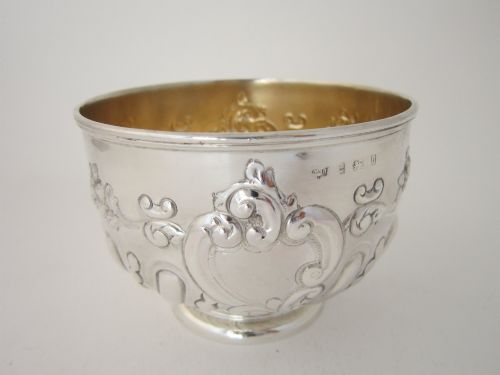


Gilt Interior Bowl
A gilt interior bowl brings warm, reflective colour to the table, catching the candlelight in ways plain silver cannot manage.
Gilt Interior Bowl
A gilt interior bowl brings together silver and gold wash, creating a brilliant contrast between the cold exterior metal and the warm interior lining. When searching for a gilt interior bowl, collectors encounter various forms ranging from sugar bowls and salt cellars to sweetmeat baskets and pedestal dishes. These pieces appear across Georgian, Victorian, and Edwardian periods, demonstrating how makers applied gilding to protect the base metal from acidic contents like sugar or salt.
The objects listed here span centuries of British craftsmanship, showcasing tableware made by both provincial and prominent smiths. Salt cellars and sugar bowls represent the most common forms meeting this description, often surviving as pairs or complete sets. Older examples emerge from the eighteenth century, while Victorian and Edwardian iterations dominate the everyday selection.
How they were made
Makers formed these vessels using sterling silver, old Sheffield plate, or copper, shaping the body through hammering, casting, or rolling. Sterling silver and silver plate provide the structural foundation for the vast majority of these tableware items.
Once the vessel took shape, craftsmen applied a gold gilt or vermeil layer to the interior using mercury amalgamation or electrochemical processes. This gold wash protected the underlying silver or copper from corrosion caused by salt and sugar, while adding a rich aesthetic depth.
Victorian salt cellars often came in fours because nobody wanted to reach across the table during dinner.
What varies in quality
The distinction between ordinary and exceptional pieces lies in the crispness of the chasing, the thickness of the silver gauge, and the preservation of the gold wash inside. Superior examples retain their original heavy gilding intact, showing minimal rubbing from centuries of use and cleaning.
Proportion and maker attribution also dictate worth, as evidenced by pieces bearing marks from known silversmiths like Joseph Craddock or John Kincard. Well-balanced pedestal dishes and heavy-gauge tea services demonstrate a higher standard of design and execution than standard production items.
Joseph Craddock·John Kincard·Thomas Smily·Edward Wood
The Gilt Interior Bowl Glossary
- Gilt interior
- A gold wash applied to the inside of a silver or plated vessel. This technique protected the metal from acidic food substances and provided a striking visual contrast.
- Old Sheffield plate
- A composite material made by fusing a thin sheet of silver to a thicker copper core. Makers utilised this method extensively before electroplating became common.
- Pedestal dish
- A raised bowl supported by a foot or stem. These forms lifted sweetmeats or fruit above the surface of the dining table.
- Sweetmeat basket
- A small decorative container used for serving confectionery or small sweet treats. They frequently feature pierced decoration and swing handles.
- Vermeil
- Sterling silver coated with a thin layer of gold. The term describes the rich yellow finish seen inside many Georgian and Victorian bowls.
Gilt Interior Bowl: Frequently Asked Questions
Why did they gild the inside of silver bowls?
Makers applied gold wash to protect the underlying silver or copper from the corrosive effects of salt, sugar, and mustard. These substances pitted unprotected silver over time, whereas gold resisted chemical reactions.
This practical measure also created a pleasing visual contrast between the bright gold interior and the polished silver exterior of the bowl.
How do I clean a gilt interior bowl?
Wash the vessel gently using warm water and mild washing-up liquid with a soft cloth. Avoid abrasive polishes, dips, or brushes that will wear away the thin layer of gold inside.
Dry the piece immediately with a soft lint-free towel to prevent water spots from forming on the metal surfaces.
Can I use these bowls for daily dining?
Many people continue to use these vessels for serving sugar, nuts, or small condiments at the table. Modern use requires gentle handling and hand washing to preserve the antique finish.
Careful use ensures the fragile gold wash remains intact for future generations of collectors to enjoy.
How do I date an antique silver bowl?
Examine the hallmarks stamped on the metal, which typically include assay office symbols, date letters, and maker's marks. British silver standards changed predictably across Georgian and Victorian reigns, allowing precise dating.
Stylistic cues such as the shape of the pedestal, the presence of wirework, and engraving styles also point toward specific decades.