


Gilt Inlaid Mantel Clock
A gilt inlaid mantel clock brings brass, ormolu, and tortoiseshell into a room with the quiet gravity of the nineteenth century.
Gilt Inlaid Mantel Clock
A gilt inlaid mantel clock is a domestic timekeeper designed to sit upon a fireplace shelf or bracket, combining cabinetry with precision movement. The examples found here span the nineteenth century, drawing heavily on French and Victorian aesthetics.
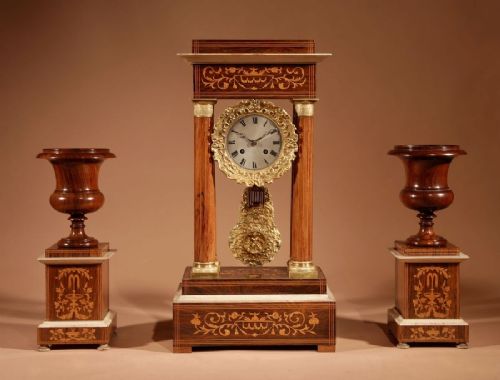
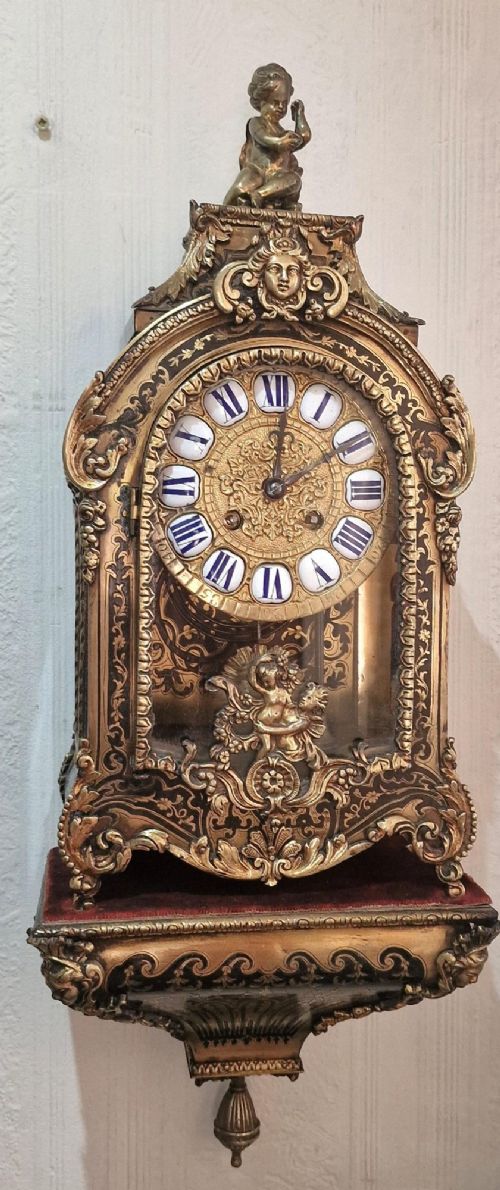
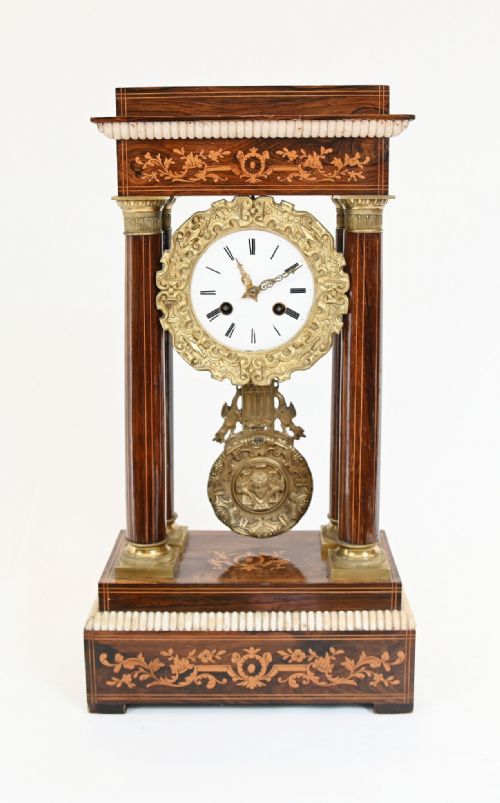
Buyers will most frequently encounter French portico clocks and Boulle revival pieces on this page. These take the form of architectural columns or scrolling tortoiseshell cases decorated with brass inlay.
Originating largely from French workshops and Victorian makers, these clocks range from portico timepieces in rosewood and mahogany to ornate marble garnitures. They serve as both functional instruments and focal points for a room.
How they were made
Cabinetmakers built the foundational cases from woods such as rosewood, mahogany, and black marble, often applying veneers and intricate brass or tortoiseshell inlay in the Boulle manner. Gilt bronze and ormolu mounts were cast and chased to frame the dial and accent the corners.
Enamel dials with delicate numerals were fitted behind glass bezels, housing mechanical movements driven by chains, springs, or fusee systems. Artisans combined carpentry, metal casting, and horology to achieve the finished garniture.
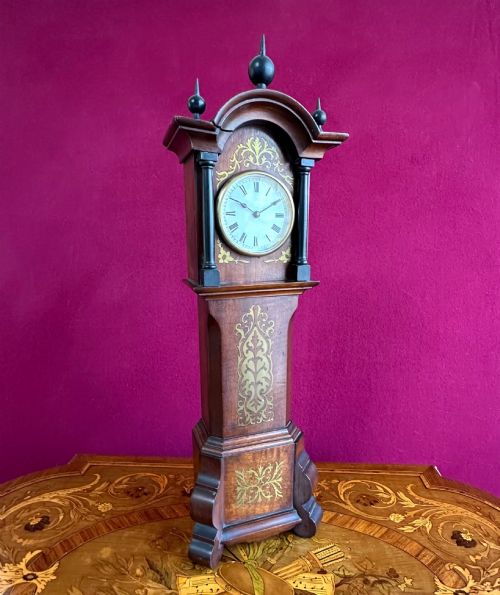
Miniature grandfather clocks let you have the presence of a tall case clock even if your mantelpiece only measures inches.
What varies in quality
The distinction between tiers rests upon the crispness of the gilt bronze chasing and the precision of the brass inlay work against the tortoiseshell or rosewood ground. Superior examples display seamless alignment in their veneers and deeply rendered cast ornament.
The integrity of the movement and the original matching of the dial, case, and garniture pieces dictate the standing of a clock. Finer pieces retain their original glass, pendulum, and movement signatures without later replacement.
Samuel Marti·Payne London
The Gilt Inlaid Mantel Clock Glossary
- Boulle
- A form of marquetry using brass and tortoiseshell inlaid in counterpoint patterns, named after the cabinetmaker André-Charles Boulle. It defines many French revival clocks of the nineteenth century.
- Portico clock
- An architectural style of clock featuring side columns supporting a lintel that houses the dial and movement. These are frequently executed in mahogany, rosewood, or marble.
- Ormolu
- Gilded bronze produced by applying a mercury-gilding amalgam to cast bronze. It provides a warm, durable metallic finish on decorative mounts.
- Garniture
- A set comprising a central clock flanked by matching decorative objects such as urns or vases. They are designed to stand together on a mantelpiece.
- Fusee
- A conical pulley used in clock movements to maintain an even pull on the gear train as the mainspring unwinds. It indicates a higher grade of mechanical construction.
Gilt Inlaid Mantel Clock: Frequently Asked Questions
How do I wind a mechanical mantel clock?
Use the designated key on the dial face to turn the winding arbors gently until resistance is felt, taking care not to overwind.
Ensure you do not force the springs past their limit, as nineteenth-century movements require a steady, measured touch.
Where should I place a heavy marble mantel clock?
Select a sturdy mantelpiece, shelf, or heavy furniture top capable of supporting substantial weight without sagging.
Marble and slate garnitures require a level surface to ensure the pendulum swings evenly and keeps accurate time.
How do I tell a French portico clock from a Boulle clock?
Portico clocks rely on architectural columns and symmetrical wood or marble cases, whereas Boulle clocks are covered in patterned brass and tortoiseshell inlay.
Both styles emerged strongly in the nineteenth century but serve very different visual roles in an interior.
Why does my antique clock run fast or slow?
Temperature changes, uneven surfaces, and the natural relaxation of nineteenth-century metal springs can alter the beat of the pendulum.
Adjustment is usually managed via a small nut on the pendulum rod, raising or lowering the bob to correct the time.