


Gilt Inlaid Credenza
A gilt inlaid credenza is a low, polished cabinet designed to anchor a formal interior while displaying precious objects.
Gilt Inlaid Credenza
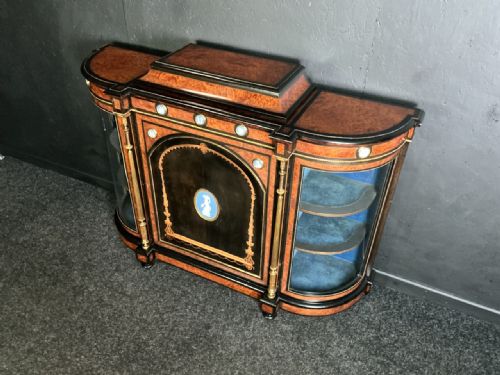
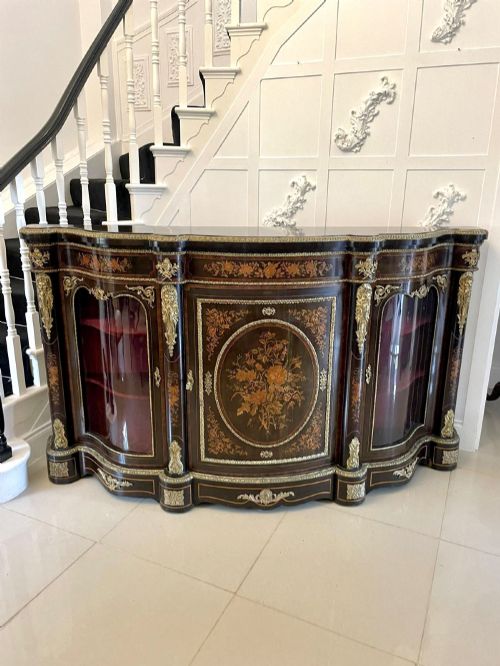
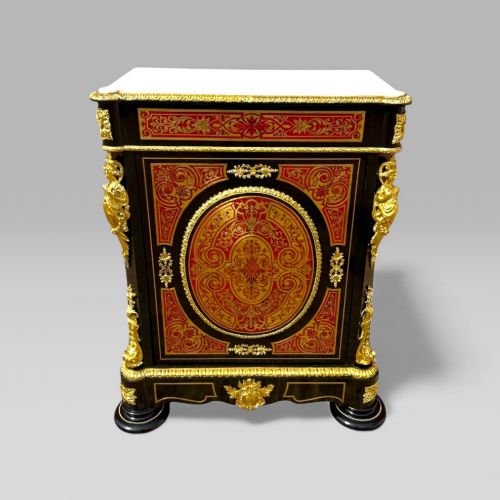
A gilt inlaid credenza combines a low, horizontal carcase with decorative metallic mounts and contrasting wood veneers. These pieces emerge predominantly from nineteenth-century British and French workshops, spanning Victorian and Napoleon III aesthetics.
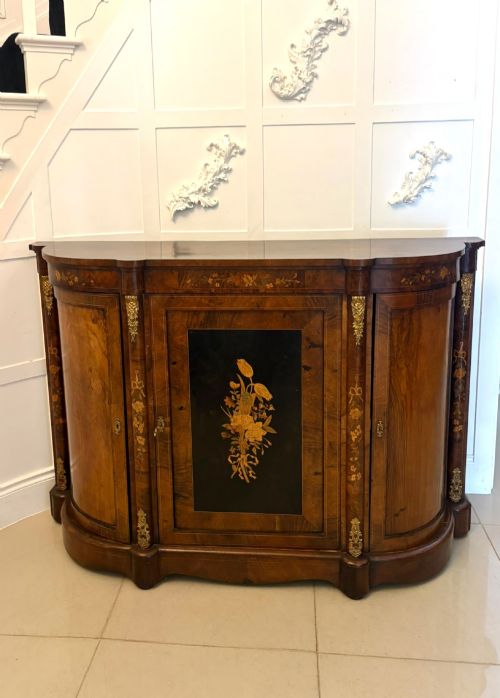
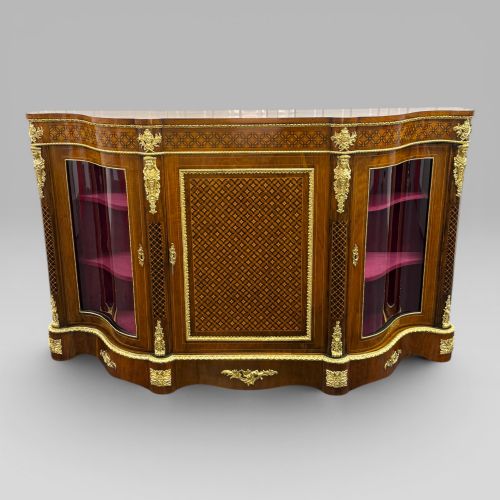
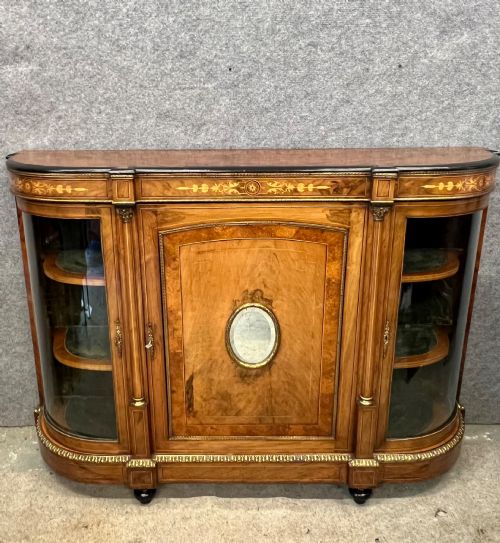
The most common form met here is the Victorian walnut credenza, frequently shaped with serpentine fronts and fitted with glazed central doors flanked by curved side cabinets. Walnut and ebonised wood provide the primary backgrounds for floral marquetry and intricate brass or gilt metal inlay.
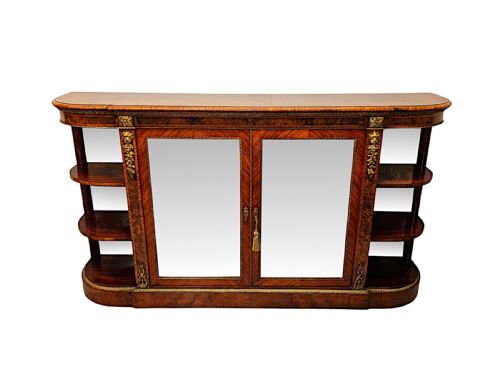
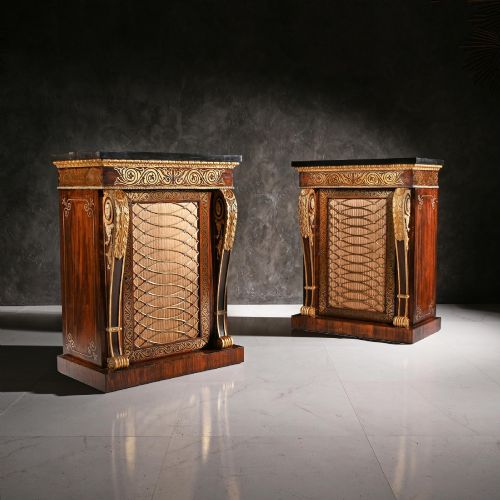
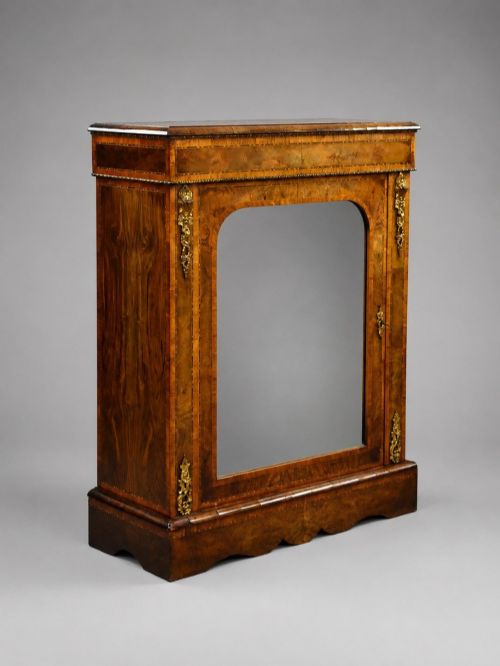
Beyond standard credenzas, the selection includes related pier cabinets and breakfront sideboards sharing the same vocabulary of mounts and marquetry. These low cabinets served primarily in reception rooms to hold porcelain and decorative table wares.
Materials and construction
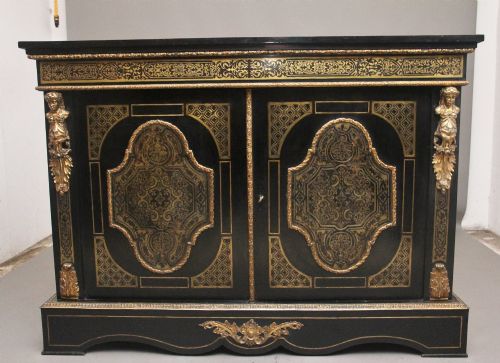
Cabinet makers utilised figured burr walnut, mahogany, and rosewood as grounds for intricate floral marquetry executed in lighter satinwood and fruitwoods. Ebonised finishes provided a dense black surface suited to contrasting brass and tortoiseshell boullework or stone inlay.
Ormolu and gilt bronze mounts, cast and chased, edge the panels, frame the doors, and cap the feet. Glass doors, often curved to follow serpentine profiles, required specialist bending techniques common to better nineteenth-century workshops.
Some nineteenth-century makers hid secret drawers inside these cabinets for family letters.
Evaluating craftsmanship and proportion
Quality rests primarily on the depth and precision of the marquetry and the crispness of the ormolu casting. Superior pieces demonstrate tightly controlled timber selection, where burr walnut grain mirrors across the central doors.
Construction details distinguish workshop output, notably the thickness of the timber veneers and the integration of the bronze mounts. Finer examples retain original fire-gilding on the metalwork and unbroken marquetry lines without shrinkage gaps.
Gillows·Louis Constantin Le Gaigneur·Maison Gagneau
The Gilt Inlaid Credenza Glossary
- Marquetry
- A decorative technique where thin slices of wood, shell, or ivory are fitted together to form pictorial or floral patterns. These veneers are then glued onto the structural carcase of the furniture.
- Ormolu
- Gilded bronze mounts applied to furniture for decorative accent and edge protection. The process involves coating metal with a mercury and gold amalgam before heating.
- Boullework
- A style of marquetry using tortoiseshell and brass inlaid together in contrasting positive and negative patterns. This technique is closely associated with French seventeenth and nineteenth-century cabinet making.
- Pier cabinet
- A narrow cabinet specifically built to stand against the wall space between windows. These tall, single-door display pieces share materials with larger credenzas.
- Pietra dura
- An inlay technique using cut and fitted polished coloured stones to create designs. These stone panels appear set into the wooden surfaces of high-status cabinets.
Gilt Inlaid Credenza: Frequently Asked Questions
What is a gilt inlaid credenza used for?
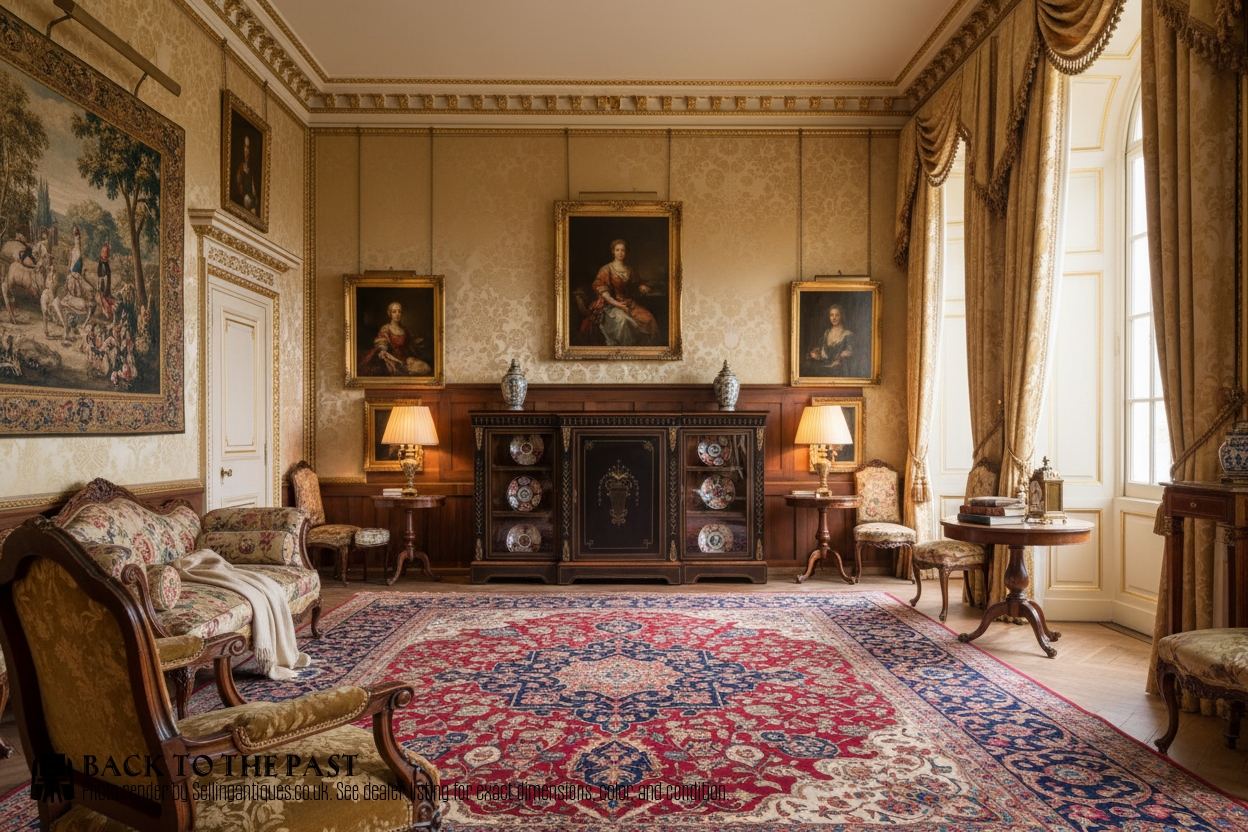
These low cabinets served as formal furniture pieces in nineteenth-century drawing rooms and reception spaces. They functioned both as display surfaces for porcelain and ornaments and as enclosed storage.
Interior shelving housed delicate tableware, while the top surface accommodated lamps, clocks, or decorative bronzes. Their low profile ensured they did not obstruct wall paintings or tall mirrors.
How do you clean an antique credenza?
Maintenance requires gentle dusting with a dry, soft cloth to prevent micro-abrasions on polished wood surfaces. Moisture and modern chemical sprays damage nineteenth-century French polishes and loosen delicate veneers.
Ormolu mounts benefit from careful dusting without metal cleaners, which strip the original gilding. Wax polish applied sparingly once or twice a year preserves the moisture balance of the walnut or ebonised carcase.
How do I date a Victorian credenza?
Dating relies on examining the timber veneers, hardware construction, and overarching stylistic influences. Mid-century examples often feature figured burr walnut with naturalistic floral marquetry and heavy ormolu mounts.
Later nineteenth-century pieces frequently adopt ebonised finishes influenced by the Aesthetic Movement or strict revivalist French Louis XVI proportions. Structural evidence like secondary pine carcases and hand-cut screws further confirms nineteenth-century origin.
Are these cabinets French or English?
The selection includes both British Victorian productions and French pieces made during the Napoleon III period. English workshops favoured burr walnut with subtle marquetry and restrained gilt metal mounts.
French makers leaned towards ebonised finishes, elaborate boullework, and heavy ormolu mounts reflecting Louis XVI revival styles. Both traditions utilised similar carcase construction while maintaining distinct decorative signatures.