





Gilt Gallery Side Tables
These gilt gallery side tables bring architectural sparkle and refined French or Regency character to a room.
Gilt Gallery Side Tables
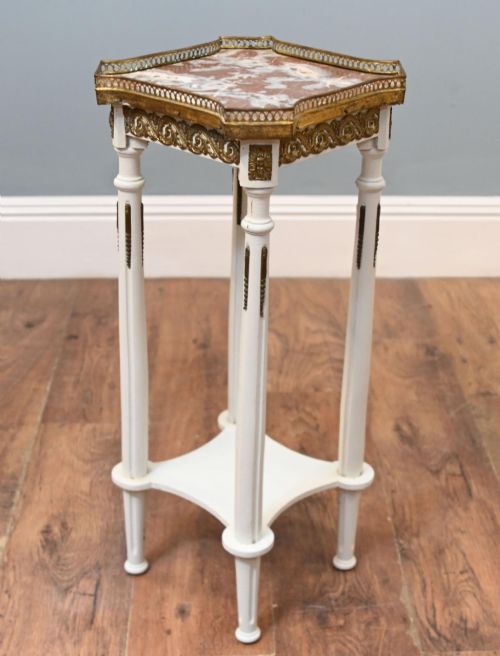
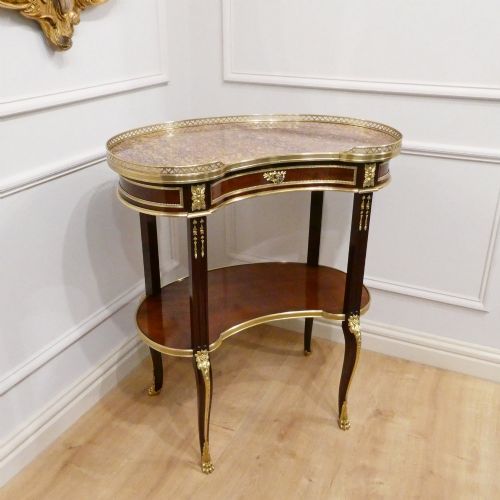
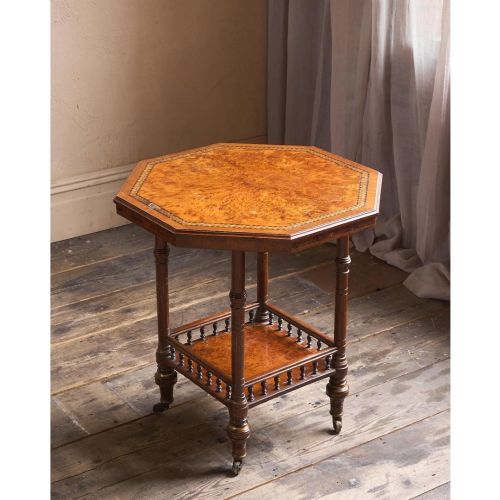
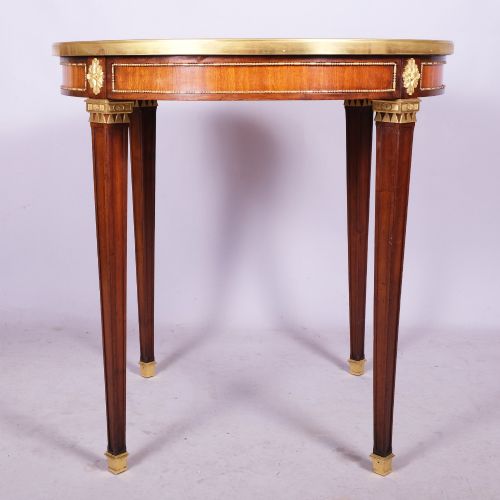
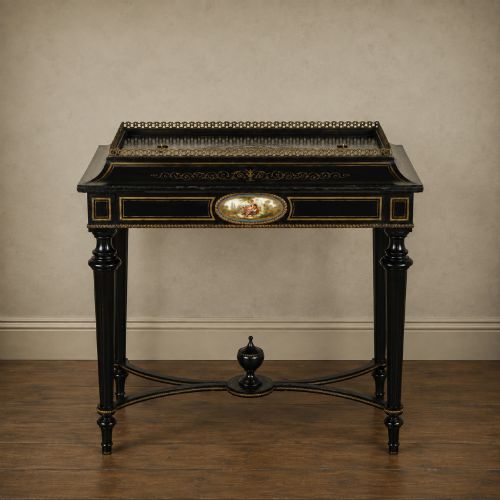
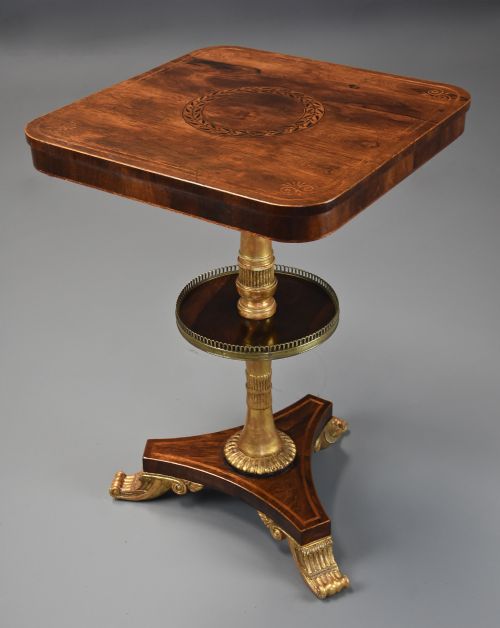
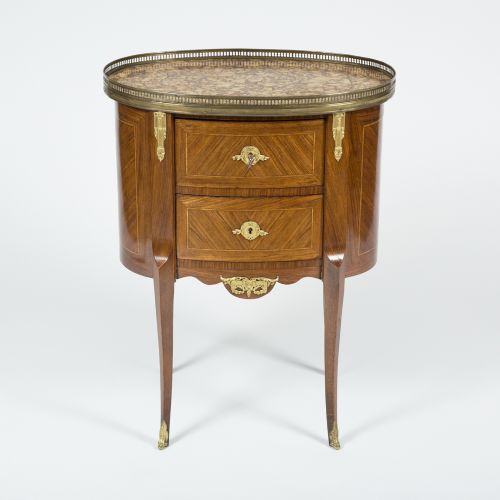
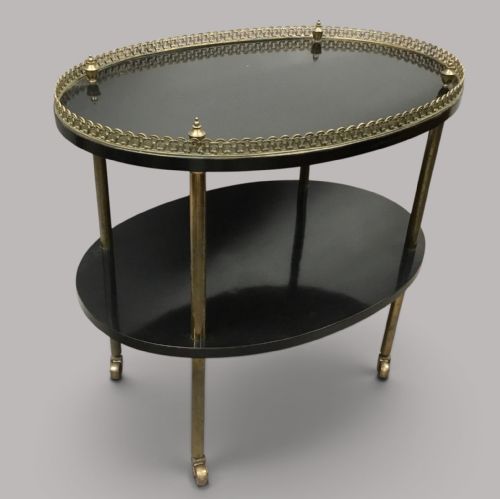
A gilt gallery side table stands as a decorative surface designed for display and convenience, featuring a raised metal border or gallery around the top. The selection includes side tables, occasional tables, consoles, and etageres from the nineteenth and early twentieth centuries.
The pieces often follow French tastes, ranging from Louis XVI and Louis XV styles to Empire and Chinoiserie. Makers and workshops of the period utilised woods like mahogany, rosewood, walnut, and ebonised timber.
Many examples incorporate marble tops, ormolu mounts, and marquetry or parquetry inlay. Buyers meet these tables in various forms, including kidney shapes, two-tier etageres, and lamp tables.
How they were made
Cabinetmakers constructed these tables using a foundation of solid timbers and fine veneers such as mahogany, rosewood, kingwood, and amboyna. Surfaces frequently display intricate marquetry patterns or geometric parquetry work.
Metal components, including brass galleries and ormolu mounts, were cast and chased to add decorative emphasis around marble tops and wooden edges. Gilding techniques applied gold leaf or parcel gilt highlights to carved wooden details and brass frames.
Gilt Gallery Side Tables Retail Price Guide 2026
Typical asking prices for gilt gallery side tables among the pieces listed under this phrase on Sellingantiques today, from the lower quarter to the upper quarter. They describe what is for sale here now, not the wider market.
Several tables sneak in painted porcelain plaques and lacquerwork alongside their brass galleries, proving the Victorians loved a bit of everything at once.
What varies in quality
The refinement of the cast bronze or ormolu mounts and the crispness of the chased details separate standard pieces from exceptional ones. Heavier, finely detailed metalwork indicates superior workshop production.
The choice and execution of timber veneers, such as detailed floral marquetry or precise parquetry geometric arrangements, dictate the level of craftsmanship. Original marble tops, well-fitted brass galleries, and branded or labelled maker attribution elevate a piece's standing.
Maison Millet·Gillows·Haentgos Freres
The Gilt Gallery Side Tables Glossary
- Gallery
- A raised miniature balustrade or rail running around the edge of a table top to prevent items from sliding off. This metal or wooden border is often pierced or cast.
- Ormolu
- Gilded bronze used for decorative mounts and fittings on furniture during the eighteenth and nineteenth centuries. The technique involves applying a mercury and gold amalgam to bronze.
- Etagere
- A set of open shelves or tiers used for displaying small objects or ornaments. These pieces typically feature multiple levels supported by slender columns.
- Marquetry
- The art of applying pieces of veneer to a structure to form decorative patterns and pictures. Craftsmen use various coloured woods, shells, and metals.
- Parquetry
- A geometric mosaic of wood pieces used for decorative floors and furniture surfaces. Squares, triangles, and diamonds form repeating patterns across the table top.
- Guéridon
- A small French round table supported by one or more columns or figures. These tables often feature marble tops and gilt bronze mounts.
Gilt Gallery Side Tables: Frequently Asked Questions
How were these tables used?
These tables served primarily as occasional surfaces in drawing rooms and boudoirs for holding lamps, books, or decorative porcelain.
Many tiered versions functioned as etageres or lamp tables, providing multiple display levels within grand Victorian and Edwardian interiors.
How do I identify a French style table?
French influence appears through curved cabriole legs, kidney-shaped tops, and elaborate ormolu mounts referencing Louis XV or Louis XVI designs. Marquetry inlay and breche d'alep marble tops further point to French workshop traditions.
Cabinetmakers working in England also adopted these continental forms, occasionally producing pieces in the manner of Regency or French revival aesthetics.
Where should I place a side table?
These tables fit easily beside seating furniture, against panelled walls as console tables, or as standalone lamp stands in hallways. Their finished backs and detailed parquetry allow them to sit away from walls.
When positioning them, consider protecting delicate marble surfaces and polished mahogany or rosewood finishes from direct heat and strong sunlight.