
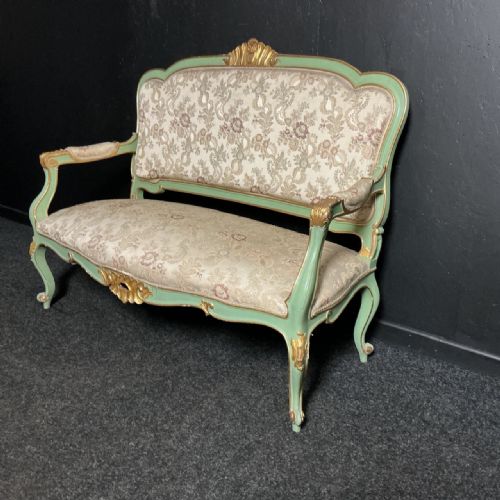
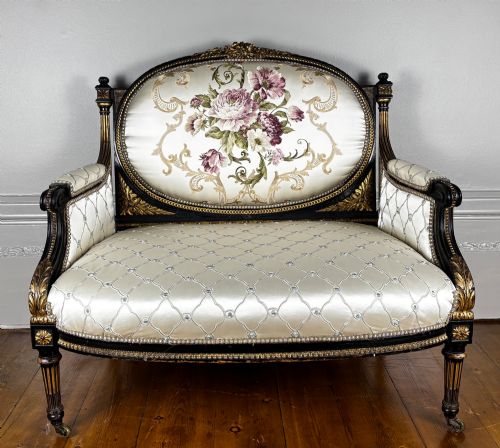


Gilt French Settee
A gilt french settee brings gilded grandeur and curved timber framing into a salon, offering a historic seat designed for elegance.
Gilt French Settee
When you search for a gilt french settee, you are looking at upholstered seating created in styles such as Louis XV, Louis XVI, and French Empire. These pieces appear mostly from the nineteenth century, including specific dates around eighteen eighty and nineteen hundred, alongside occasional mid twentieth century examples.
The forms span two seat sofas, canapés, window sofas, and larger salon suites. You will frequently encounter items described under related terms like couch, love seat, or bergère sofa, reflecting varied continental production.
Originating predominantly from French workshops and continental makers, these settees combine carved wooden frames with decorative gilding and textile upholstery.
How they were made
Craftsmen built the structural frames using timber such as beech, walnut, and general wood, often shaping the wood through detailed carving. Giltwood, gold leaf, and paint were then applied to the surfaces to create a lustrous finish.
Upholstery methods utilised fabric, silk, tapestry, and cane panels for seating and backs. Many pieces incorporated structural elements like armrests and padded cushions supported by timber frames.
Materials recorded on this page include giltwood, beech, walnut, cane, silk, and gold leaf across various continental sofa forms.
What varies in quality
The refinement of the wood carving determines much of the distinction between pieces, with deeply hand carved details setting apart superior frames from simpler mouldings. The application of gold leaf versus flat paint also dictates the visual depth of the gilding.
Upholstery materials range from standard modern replacement fabrics to original silks and tapestries that preserve the historical integrity of the settee. Structural stability within the timber frame and cane work further separates everyday seating from finer salon pieces.
The Gilt French Settee Glossary
- Canapé
- An ornamental sofa or settee featuring an upholstered back and seat within a decorative wooden frame. These pieces often follow Louis XV or Louis XVI design idioms.
- Giltwood
- Timber that has been coated with a thin layer of gold leaf or metallic gilt. This finish provides the characteristic reflective surface seen on period seating.
- Bergère
- An enclosed upholstered armchair or sofa style characterised by wooden frames and padded armrests. Caned panels are frequently incorporated into the sides or back.
- Louis XV Style
- A design period marked by asymmetric curves, natural motifs, and rococo ornamentation. Settees in this style emphasise fluid lines and cabriole legs.
- Louis XVI Style
- A neoclassical aesthetic defined by straight lines, symmetrical proportions, and geometric ornamentation. Frames often feature fluted columns and rectilinear profiles.
Gilt French Settee: Frequently Asked Questions
How do I use a gilt french settee today?
These settees fit well as statement seating in a drawing room, bedroom, or hallway. Their decorative frames make them suitable for spaces where historical character is desired.
Because of their antique construction, they function best for light sitting rather than heavy everyday lounge use. Placing them away from direct sunlight protects the delicate gilt finish and textile upholstery.
What is the difference between Louis XV and Louis XVI settees?
Louis XV settees display curved lines, cabriole legs, and ornate rococo carving with floral motifs. The overall aesthetic is fluid and asymmetric.
Louis XVI settees shift toward neoclassical straight lines, geometric symmetry, and tapered fluted legs. They offer a more restrained and architectural appearance compared to their predecessors.
How do I identify the period of a settee?
Examine the timber construction, carving style, and upholstery methods used on the frame. Nineteenth century pieces frequently draw inspiration from earlier royal French reigns.
Look for specific date markers in the design or historical documentation if available. Stylistic revivals from eighteen eighty to nineteen hundred often emulate eighteenth century originals closely.
Are these settees upholstered in original fabrics?
Most antique settees have been reupholstered at least once during their lifespan to maintain usability. Finding original silk or tapestry upholstery is uncommon.
Replacement fabrics often match historical styles such as silk or patterned tapestry. Inspecting the fabric helps determine whether the upholstery is a recent update or a period survival.