


Gilt Framed Equestrian Prints
These gilt framed equestrian prints bring the energy of the hunting field and the racecourse directly to the drawing room wall.
Gilt Framed Equestrian Prints
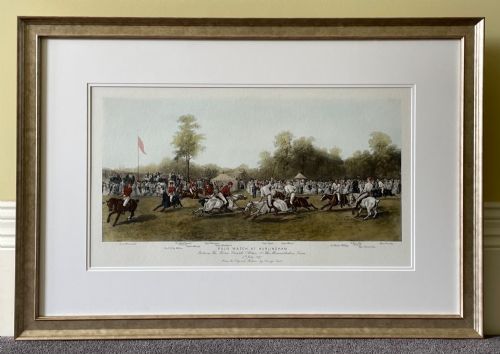
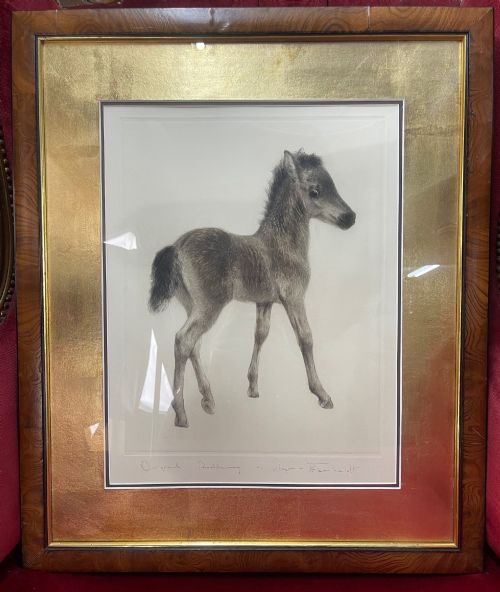
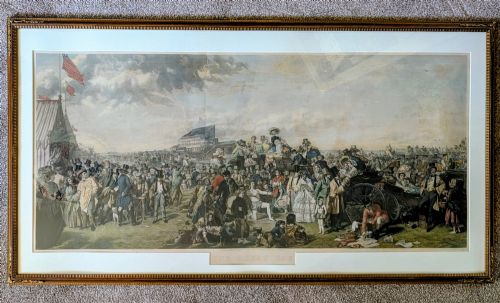
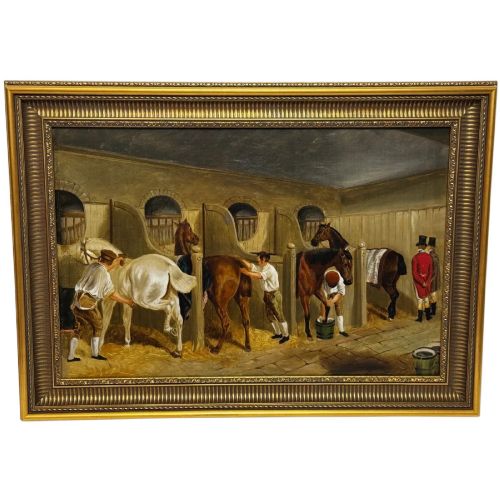
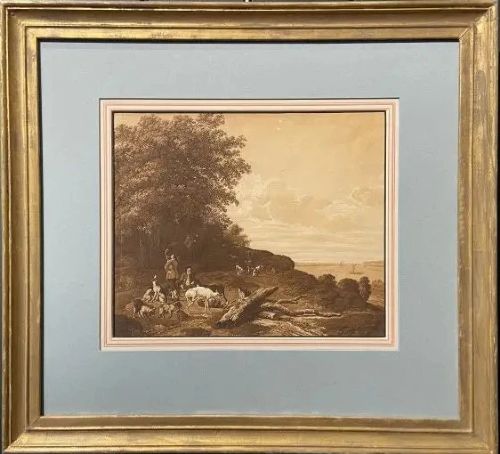
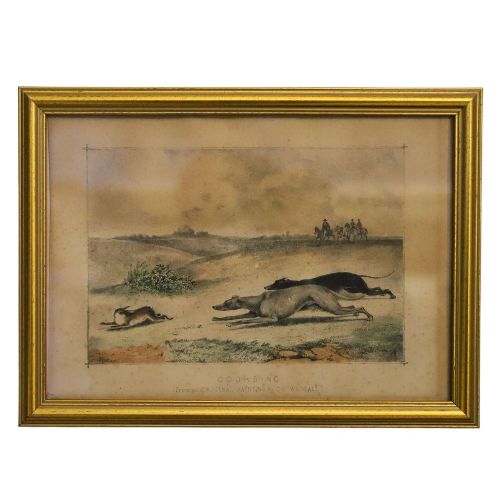
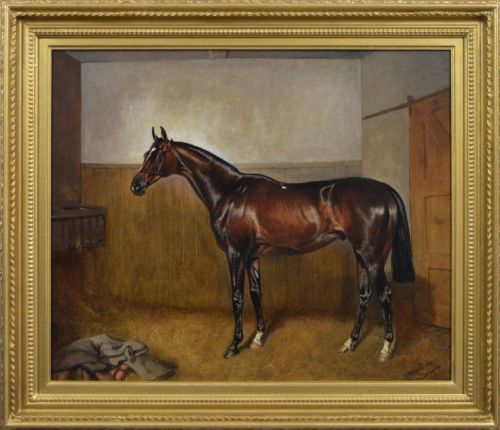
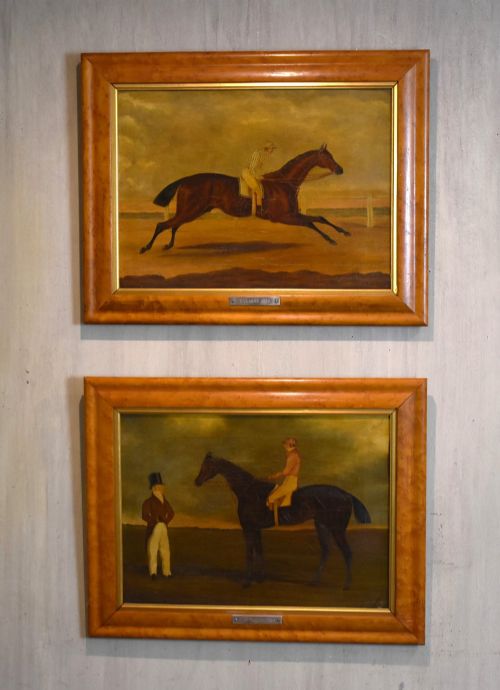
When searching for gilt framed equestrian prints, buyers encounter a diverse selection ranging from nineteenth-century lithographs and aquatints to twentieth-century photographic sets. These works typically depict hunting scenes, racehorses with jockeys, and intimate studies of hounds or foals.
The inventory on this page spans from seventeenth-century Dutch subjects to mid-century showjumping records, though nineteenth-century sporting prints and Victorian interpretations remain the most frequently met forms. Works appear as single plates or in sets, often preserving the original character of the framing.
Subjects range from grand racehorse portraits and structured meets to field sports like hare coursing and polo, capturing the equestrian traditions valued across multiple eras.
Materials and Technique
The works rely upon traditional printmaking and painting supports, utilising paper or canvas housed behind glass within wood frames finished in gold leaf or gilt wood. Print techniques include lithography, drypoint, engraving, and aquatint alongside original oil paintings and watercolours.
Makers applied metallic leaf to timber mouldings to create the luminous borders that define these pieces, pairing the visual weight of the frame with detailed ink, wash, or pigment work on the surface.
Listings feature works executed on paper, canvas, and glass, housed within traditional gold leaf and gilt wood frames.
Assessing Quality
Quality depends upon the clarity of the impression or brushwork and the preservation of the medium against environmental toning. Strong examples retain crisp lines in engravings and lithographs, or confident pigment application in oils.
The integrity of the original gilt frame and the presence of period glazing contribute significantly to the standing of a piece, distinguishing items that survive in uncompromised state from later assemblies.
Kurt Meyer Eberhardt·William Powell Frith·Johannes Lingelbach·John Alfred Wheeler·John Frederick Herring·Francis Calcroft Turner
The Gilt Framed Equestrian Prints Glossary
- Lithograph
- A planographic printmaking process using a limestone or metal plate. Artists draw with a greasy medium to transfer ink onto paper.
- Aquatint
- A intaglio printmaking technique that produces tonal areas resembling watercolour washes. It is frequently combined with line etching in sporting prints.
- Drypoint
- A printmaking method where the artist scratches directly into a metal plate with a sharp needle. This creates a raised burr that holds ink for a velvety line.
- Crystoleum
- A Victorian method of applying a hand-coloured print to the inside of concave glass. The paper backing is rubbed away and the image is further painted.
- Engraving
- A technique where an artisan cuts lines directly into a metal plate using a burin. The resulting incisions hold the ink for printing.
Gilt Framed Equestrian Prints: Frequently Asked Questions
How do I date a framed sporting print?
Dating relies upon the paper quality, printing technique, and stylistic markers of the period. Nineteenth-century examples often use hand-coloured aquatint or lithography.
The framing style and any inscriptions on the reverse or margin also provide vital chronological clues for the collector.
Are these prints original to their gilt frames?
Many retain their period gilt wood surrounds, which show appropriate signs of age in the gold leaf and timber. Matching the frame construction to the era of the print helps confirm authenticity.
Some pieces have been reframed later in life to protect the fragile paper or canvas within.
What is the difference between an engraving and a lithograph?
Engravings involve cutting lines into a hard plate to produce sharp, precise outlines. Lithography uses chemical repulsion on a flat surface to create softer, painterly tones.
Both were widely used to reproduce popular horse paintings for domestic display.
How should I care for antique paper art?
Keep works out of direct sunlight to prevent fading of the paper and any hand-applied watercolours. Stable indoor humidity protects both the delicate media and the wooden gilt frames.
Ensure backing boards remain sealed against dust and atmospheric pollutants.