
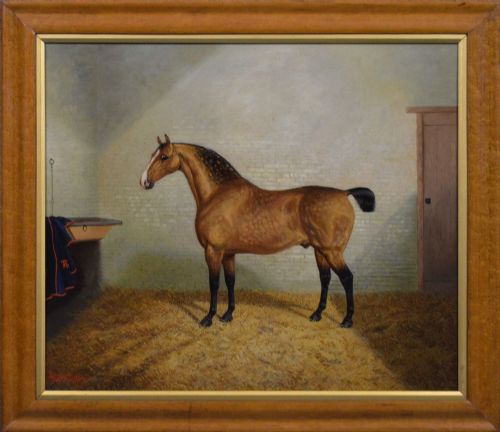
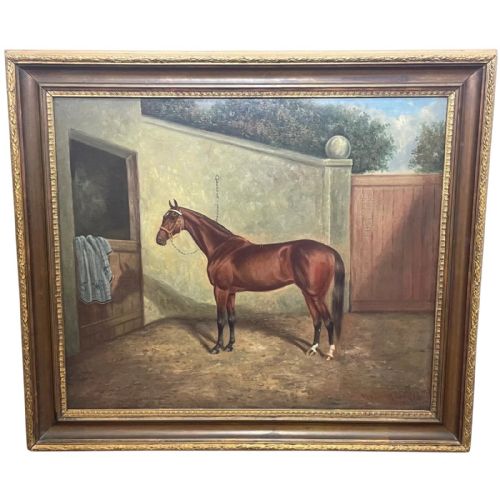
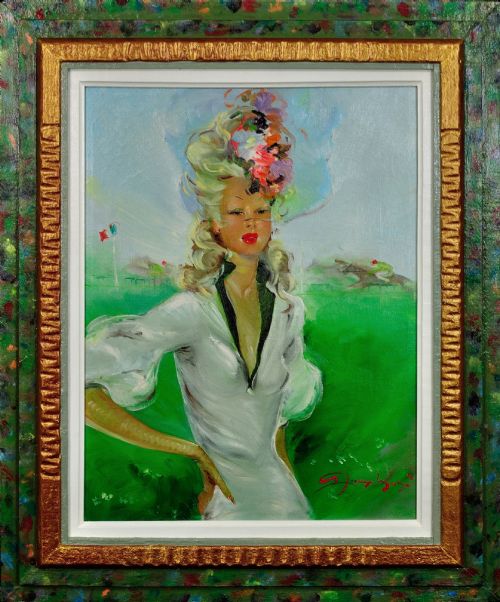
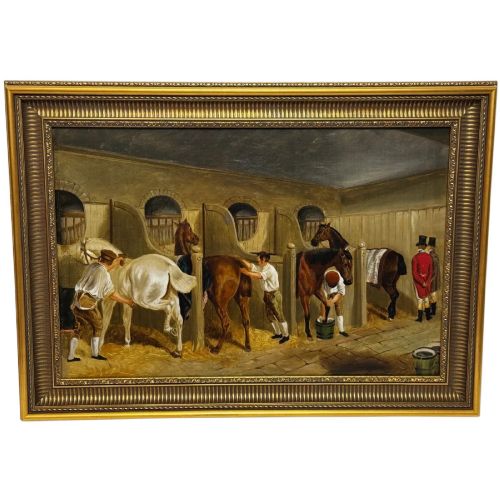
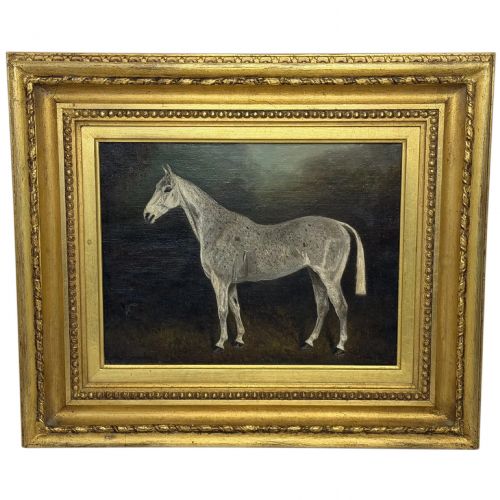
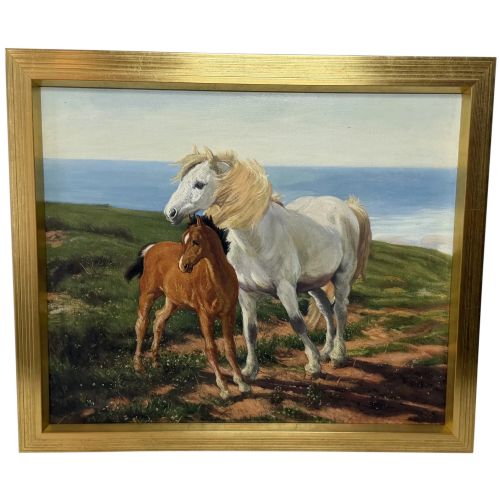
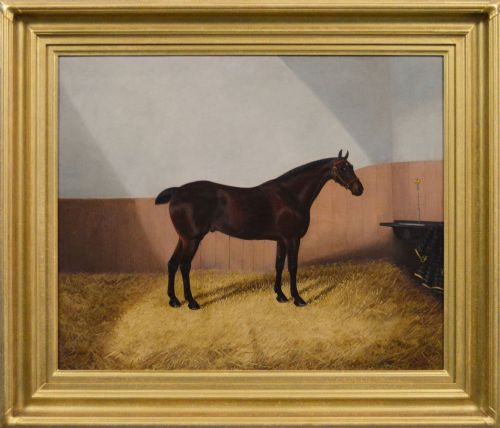

Gilt Framed Equestrian Portrait
A gilt framed equestrian portrait captures the power and presence of horses through Victorian and twentieth-century painting traditions.
Gilt Framed Equestrian Portrait
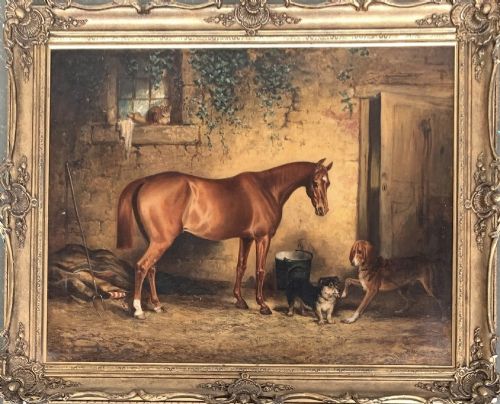
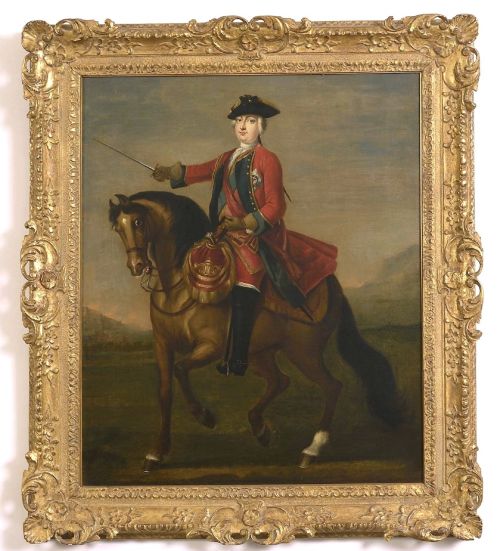
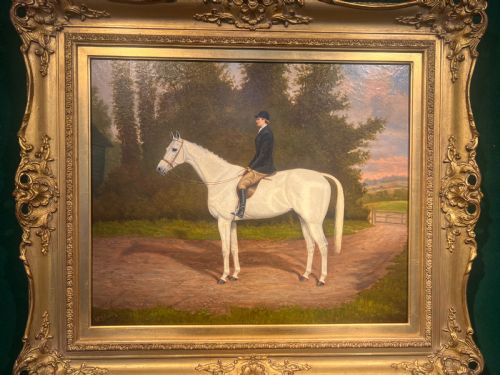
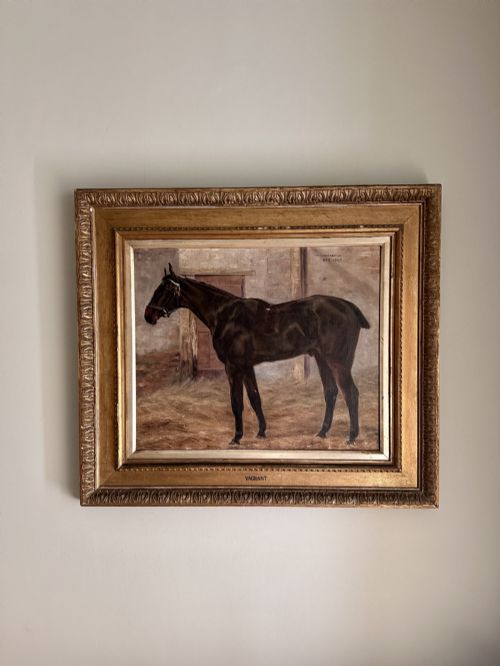
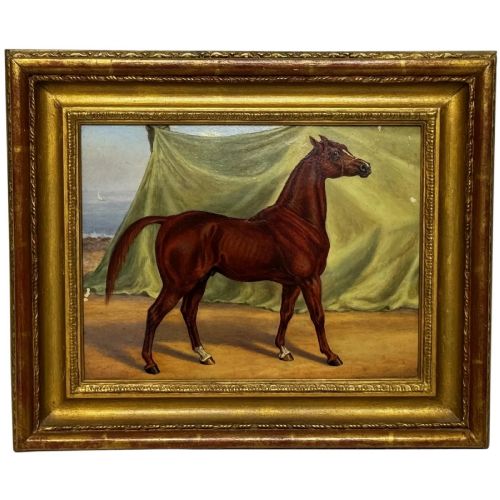
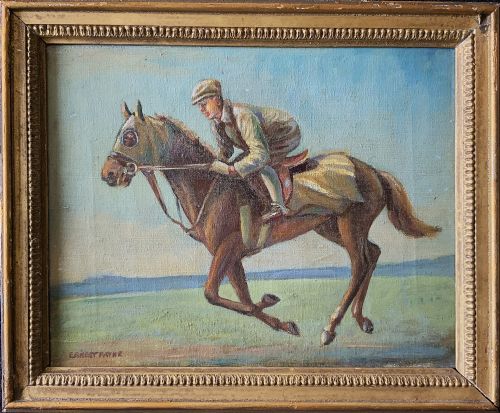
A gilt framed equestrian portrait brings together equine subjects and ornamental gold-finished surrounds. These works span the Georgian, Victorian, Edwardian and mid-century periods, recording specific racehorses, hunters and ponies alongside their jockeys or grooms.
The selection on this page relies heavily on nineteenth-century oil paintings set in canvas and wood. Buyers encounter depictions ranging from titled thoroughbred champions in stables to expansive sporting landscapes.
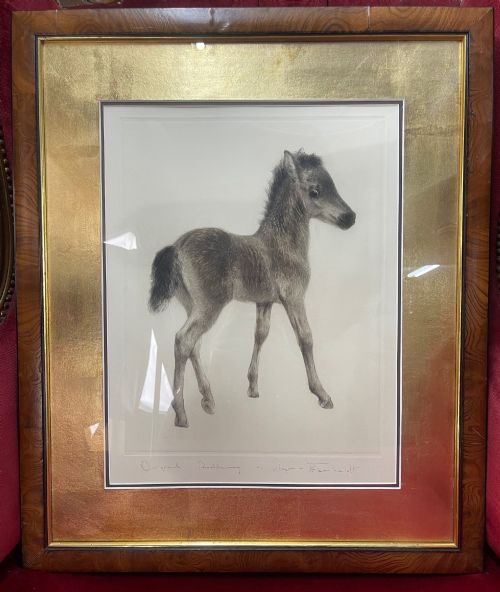
Paintings vary from intimate studies of foals to large Victorian canvas records with documented provenance. Each piece reflects the social importance of horses in British sporting and domestic life.
Materials and construction
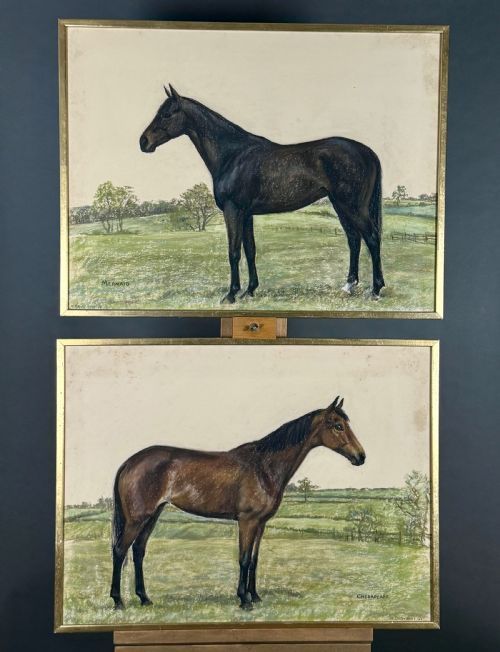
Artists painted primarily in oil on canvas, applying pigment to capture the sheen of horse coats and the textures of leather tack. Pastels on paper and drypoint prints also appear within the selection.
The surrounds consist of wood frames finished with gold leaf, giltwood or applied gesso decoration. These decorative mouldings reflect the interior aesthetics of the periods in which the artworks were produced.
Several portraits faithfully record famous Victorian racehorses alongside their jockeys, preserving equine celebrities in gold leaf.
Assessing quality
Quality rests in the anatomical accuracy of the horse and the handling of light across muscle and coat. Skilled artists convey the individuality of the animal and the specific qualities of its environment.
The integrity of the original gilt frame contributes significantly to the overall piece. Hand-carved mouldings and well-preserved gold leaf elevate the visual impact of the canvas within it.
Henry Barraud·John Wootton·Thomas Hudson·Kurt Meyer-Eberhardt·Albert Clark·Jean-Gabriel Domergue·Fred Fitzpatrick·Ernest Payne·C R Breytle·Thomas Walker Bretland·Edward Lloyd of Ellesmere·John Alfred Wheeler·Valentine Thomas Garland·Samuel Spode·Benjamin Cam Norton·Edwin Frederic Holt·Alexander Maclean·Clifton Tomson·Alfred Wheeler·Robert Cleminson·Alfred Moginie Bryant·Alfred Grenfell Haigh·Abraham Cooper RA
The Gilt Framed Equestrian Portrait Glossary
- Giltwood
- Wood carved and coated with gold leaf or metallic powder. This material provides the ornate border common in traditional picture frames.
- Drypoint
- A printmaking technique where an artist scratches a design directly into a metal plate with a sharp needle. This process creates soft, velvety lines in the printed image.
- Canvas
- A heavy woven fabric stretched over a wooden stretcher bar to serve as a support for oil paint. It remains the primary substrate for traditional paintings.
- Provenance
- The documented history of ownership of an artwork. Clear provenance links a painting to specific estates, galleries or historic collections.
Gilt Framed Equestrian Portrait: Frequently Asked Questions
What periods do these portraits date from?
The works span from the eighteenth century through the Victorian era to the mid-twentieth century. Each piece aligns with the sporting art conventions of its specific decade of creation.
Victorian examples dominate the selection, often featuring named racehorses, hunters or estate animals recorded by specialist equestrian artists.
How are the frames constructed?
Most frames utilise carved wood treated with gold leaf, gilt or gesso finishes. These ornamental surrounds complement the traditional oil paintings they enclose.
Frames often feature distinct nineteenth-century moulding styles that match the age and origin of the canvas inside.
What subjects appear in these works?
Subjects include named thoroughbred racehorses, Derby winners, stable hands, jockeys and hunting scenes. Many pieces record specific animals owned by prominent figures or kept at notable stables.
Alongside oil paintings, the selection includes drypoint prints of foals and pastel studies of horses and ponies.
How do I display an oil painting safely?
Keep paintings away from direct sunlight and dramatic shifts in room temperature or humidity. Stable environments protect both the canvas support and the delicate gilt frame.
Hang the artwork securely using appropriate wall fixings that match the weight of the wood and canvas assembly.