

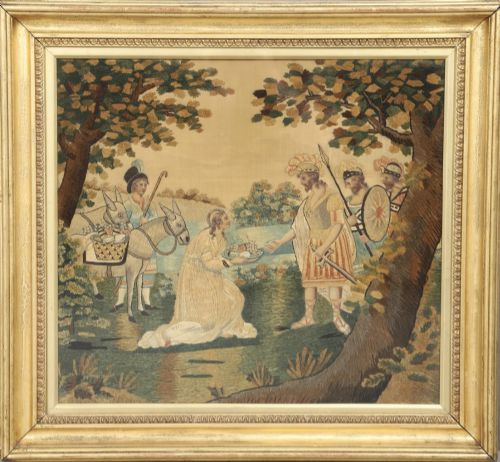
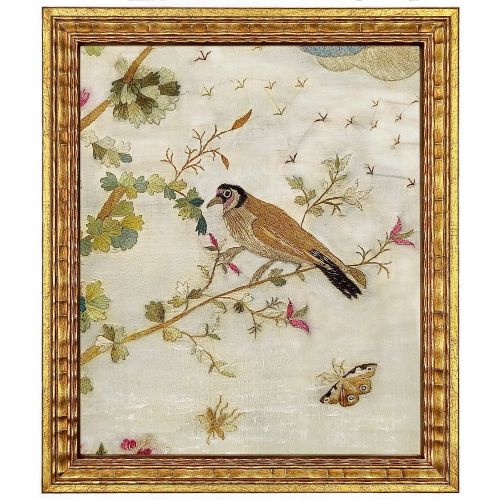
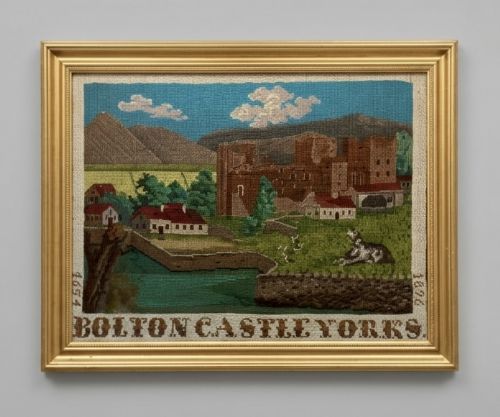
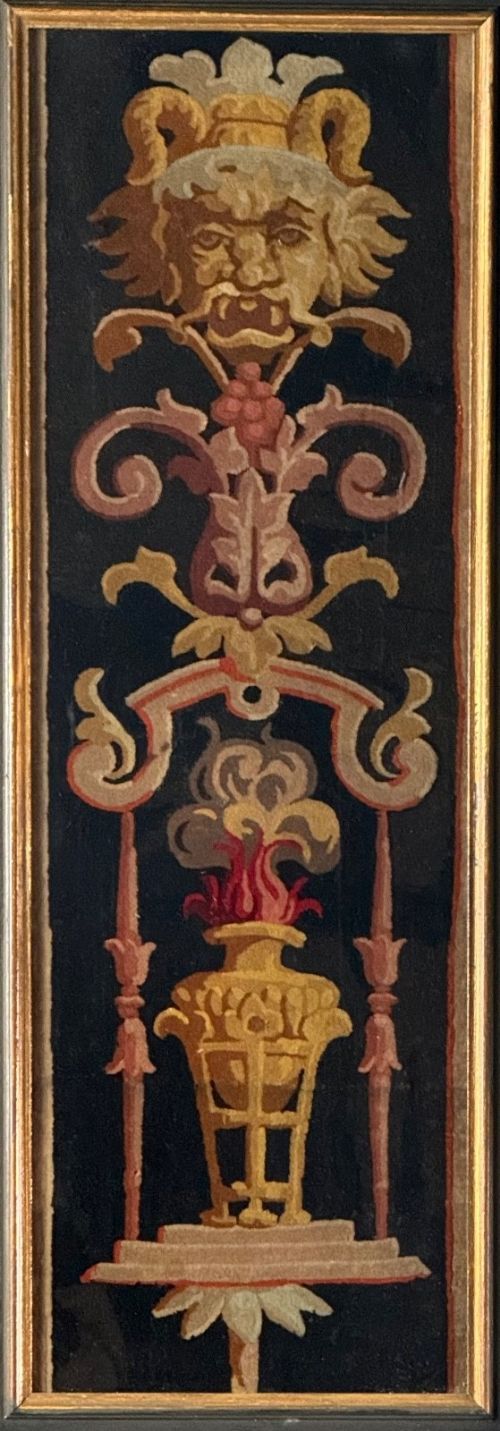
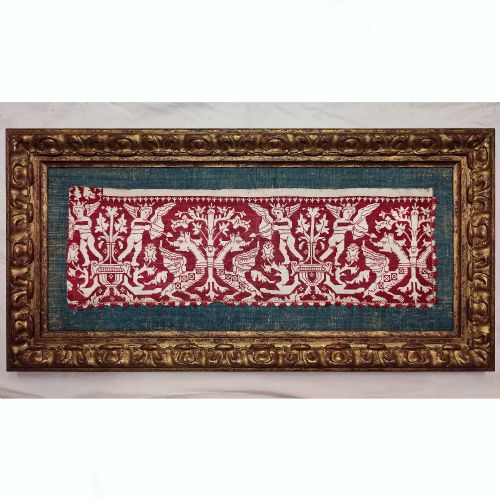


Gilt Framed Embroidery Panel
A gilt framed embroidery panel brings centuries of meticulous needlecraft onto the wall, preserved behind glass within gleaming gilded moulding.
Gilt Framed Embroidery Panel
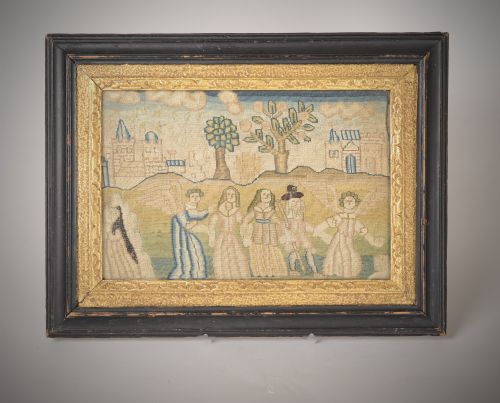
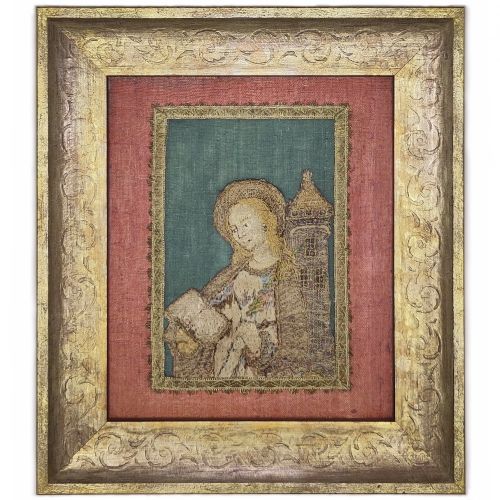
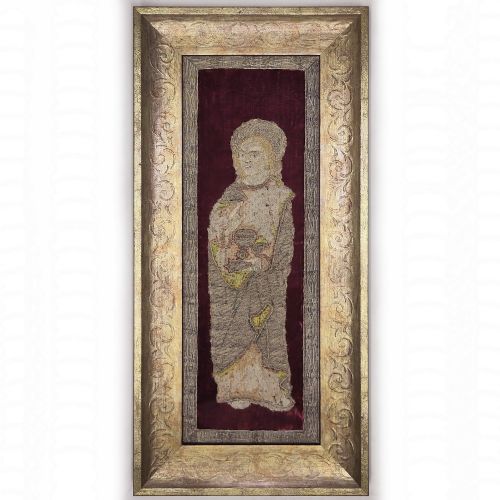
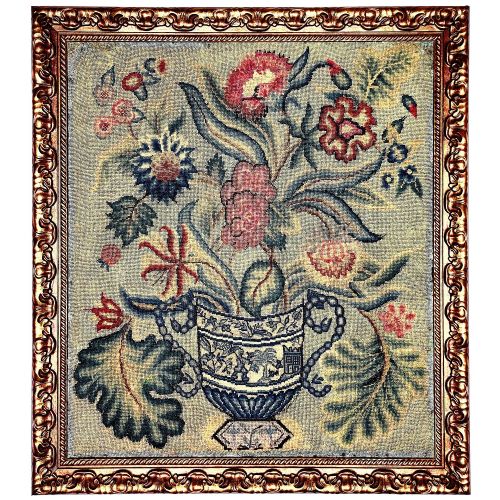
A gilt framed embroidery panel comprises textile art mounted under glass and secured within a gilded wooden moulding, bringing historical handiwork into interior decoration as wall art. When searching for a gilt framed embroidery panel, collectors encounter diverse forms ranging from small devotional silk pictures to expansive pastoral scenes.
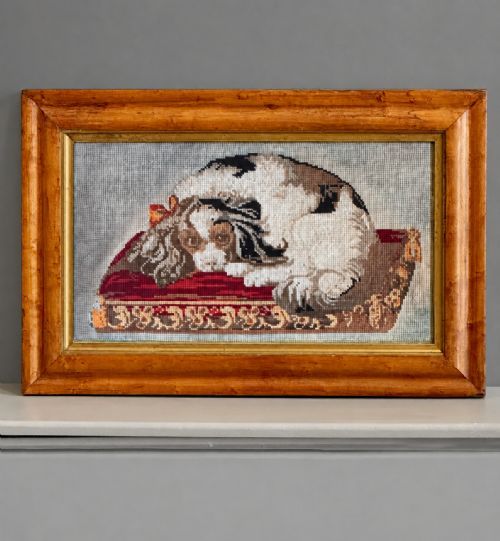
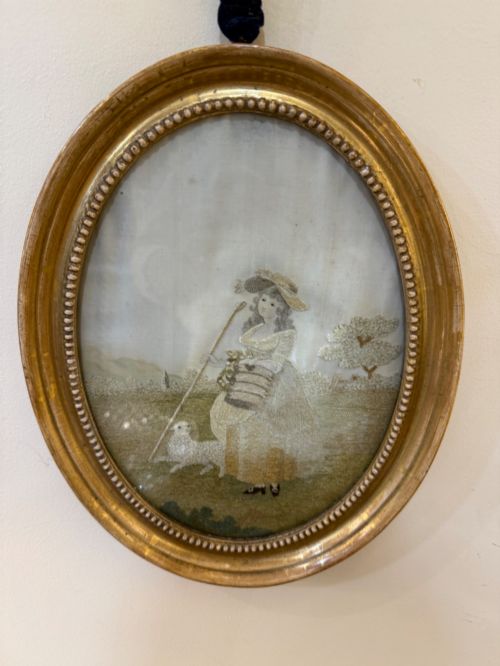
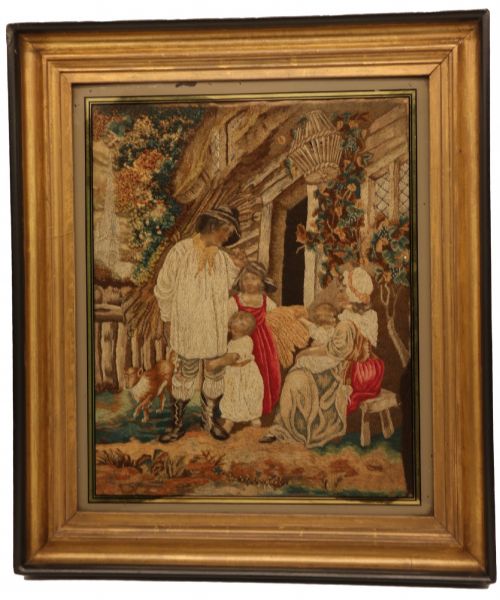
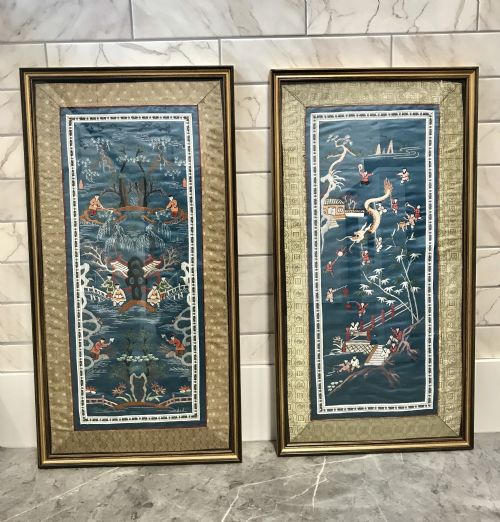
The selections span from seventeenth-century Italian and continental borders to nineteenth-century Victorian Berlin work, showcasing needlework samplers, beadwork fragments, and crewel work. Most examples date from the eighteenth and nineteenth centuries, reflecting Georgian and Victorian domestic and decorative pursuits.
Makers utilised various techniques including silk embroidery, wool needlepoint, and metal thread work upon linen or canvas backings. These textiles often survived centuries because their protective frames and glass shields guarded delicate fibres from light and handling.
How they were made
Craftsmen and women stitched intricate patterns using silk, wool, and metal threads onto linen or canvas grounds, sometimes combining needlework with hand-painted silk details. These fabrics were then stretched over backing boards and housed within water-gilded or burr maple frames.
Gilding involved applying thin layers of gold leaf to wooden moulding, often over a prepared gesso base, creating the luminous borders characteristic of these pieces. Protection under glass ensured that fragile textile fibres and metallic threads retained their integrity over generations.
Gilt Framed Embroidery Panel Retail Price Guide 2026
Typical asking prices for gilt framed embroidery panel among the pieces listed under this phrase on Sellingantiques today, from the lower quarter to the upper quarter. They describe what is for sale here now, not the wider market.
Current listings feature textile art spanning from the seventeenth century to the Victorian era, utilising wool, silk, canvas, and glass.
What varies in quality
The distinction between ordinary and exceptional pieces lies in the fineness of the stitchery, the complexity of the design, and the harmony of the palette. Masterworks display intricate shading, sophisticated composition, and superior handling of difficult materials like silk and metal thread.
Frame craftsmanship also dictates overall quality, with hand-carved, water-gilded wooden frames representing a higher standard of production than simpler mouldings. The condition of the underlying textile and the preservation of original framing elements significantly influence the visual impact of the piece.
The Gilt Framed Embroidery Panel Glossary
- Berlin work
- A style of counted-thread embroidery popular in the nineteenth century, typically stitched in wool on canvas using patterned charts. This technique allowed makers to produce vivid, highly detailed pictorial scenes.
- Giltwood
- Wood that has been coated with gold leaf or gold paint, frequently used for decorative furniture and picture frames. Water gilding represents the traditional method applied to finer antique frames.
- Crewel work
- Embroidery executed with wool yarn on a fine linen or cotton twill fabric, traditionally utilising a wide variety of stitches. It creates robust, textured patterns often seen in historical hangings and panels.
- Sampler
- A piece of needlework produced by a maker to demonstrate proficiency in various stitches and alphabets. Early examples often record the name and age of the maker.
- Metal thread
- Flat or twisted strips of gilt or silvered metal wound around a silk or core fibre, used in advanced embroidery to add metallic sheen. It appears frequently in ecclesiastical and formal continental panels.
Gilt Framed Embroidery Panel: Frequently Asked Questions
How should I hang a gilt framed embroidery panel?
Display your panel away from direct sunlight and strong artificial heat sources to protect delicate silk and wool fibres from fading and drying out. Secure the frame using appropriate wall fixings that match the weight of the gilded wood and glass.
Maintain stable indoor humidity levels to prevent the wooden frame and backing materials from warping over time. Periodic inspection of the hanging wire and rear fixings ensures the piece remains securely mounted on the wall.
What periods do these embroidered panels come from?
The pieces span multiple centuries, with significant representation from the seventeenth, eighteenth, and nineteenth centuries. Early examples include seventeenth-century continental borders and fragments, while later items encompass Georgian silk pictures and Victorian Berlin work.
Stylistic indicators such as costume, framing techniques, and stitching materials help distinguish between Georgian pastoral scenes and later nineteenth-century commemorative or needlepoint works.
Are these panels usually in their original frames?
Many panels retain their period frames, such as water-gilded oval surrounds, burr maple mouldings, or simple walnut sections appropriate to their era. Original frames contribute significantly to the historical integrity and aesthetic appeal of the textile.
Some pieces have been reframed over the centuries to suit changing interior tastes or to replace damaged housings. Examining the interface between the textile, backing, and frame often reveals whether the pairing is contemporary to the creation of the embroidery.