

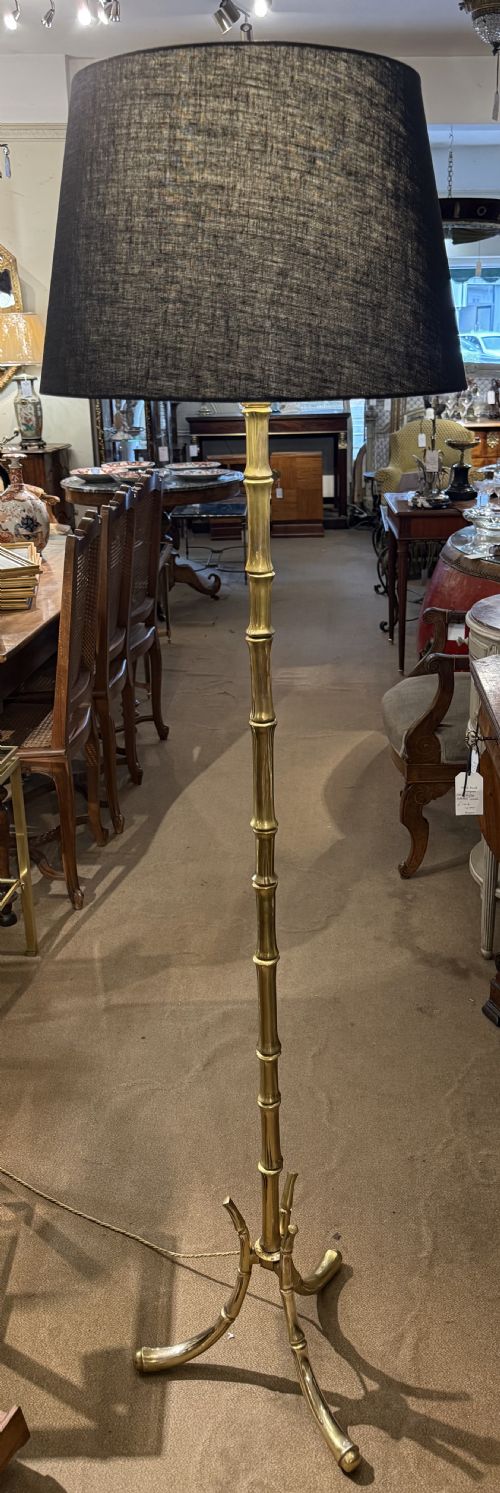
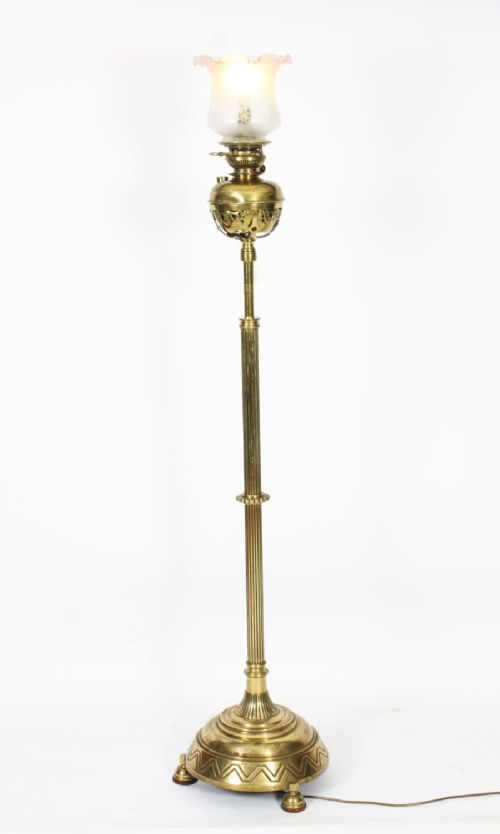
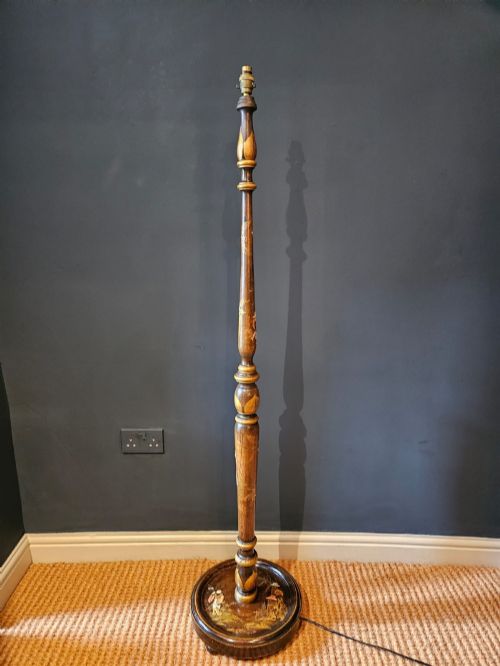
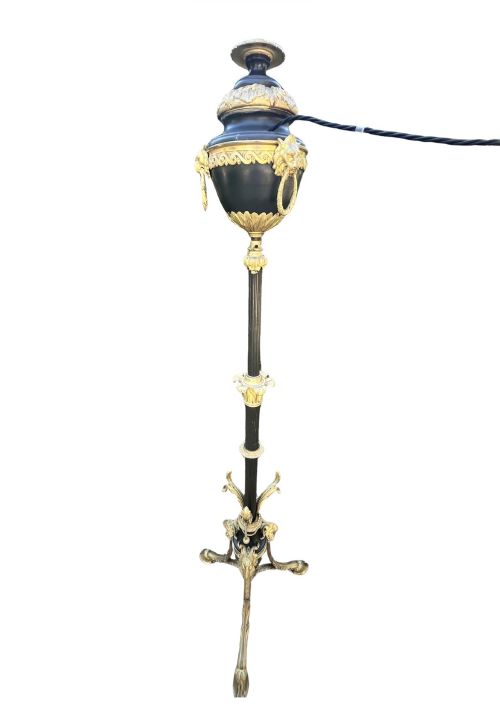
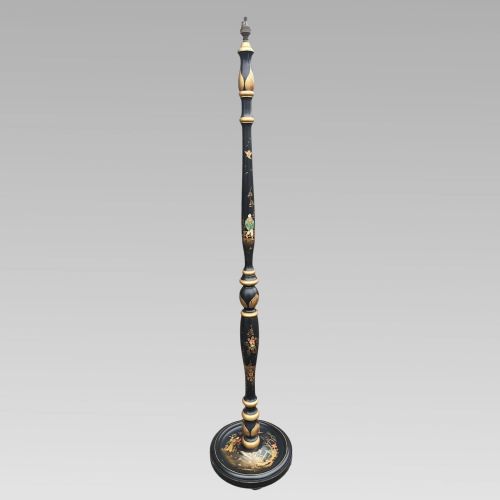
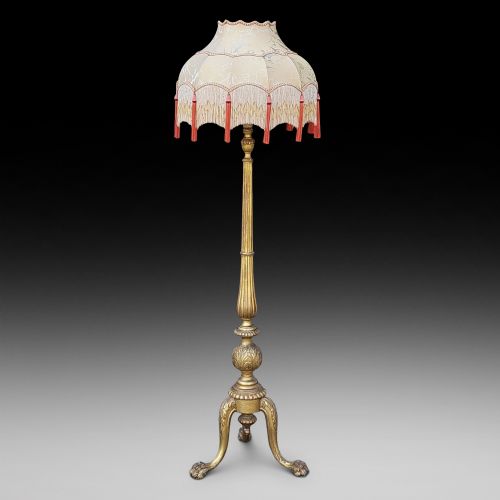
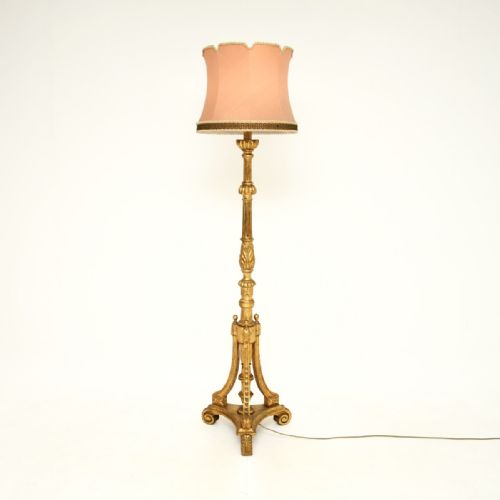
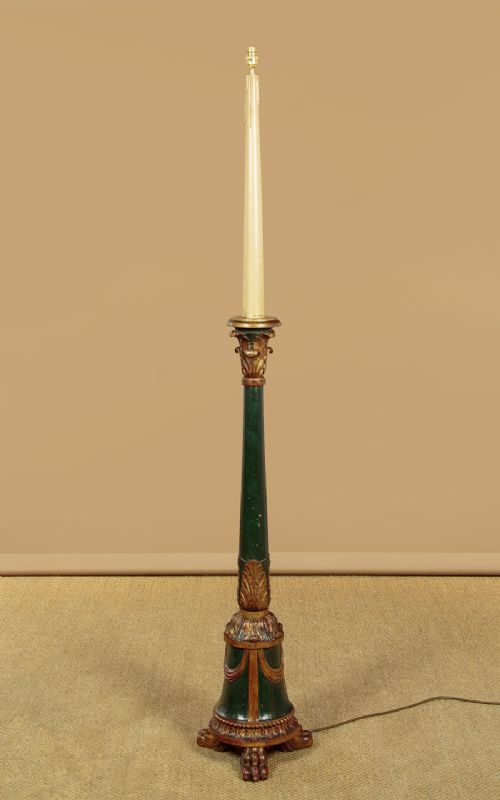
Gilt Floor Light
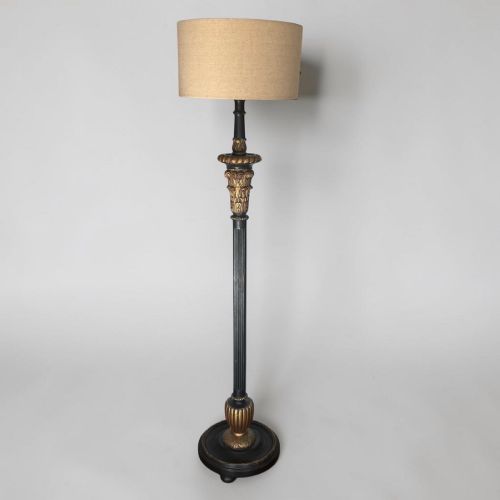
These gilt floor light examples bring vertical presence and reflective warmth to a room through gilded surfaces and tall proportions.
Gilt Floor Light
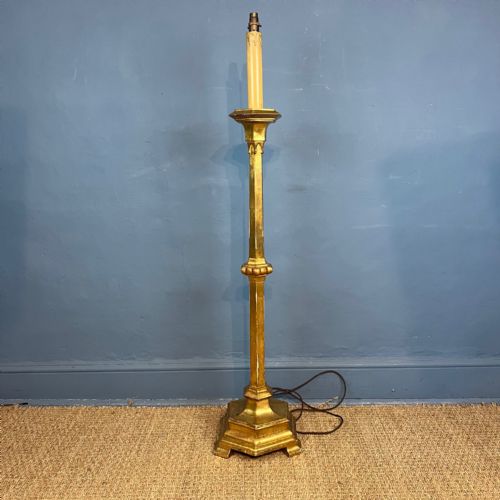
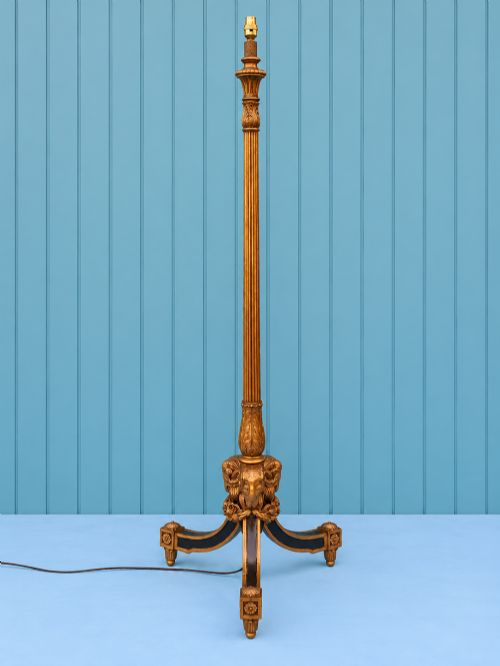
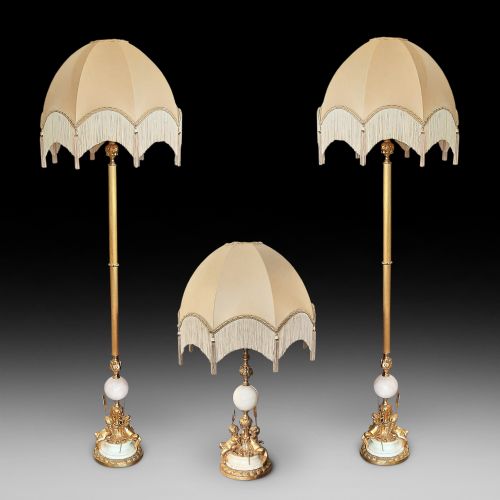
A gilt floor light combines tall upright illumination with gilded or metallic surface treatments, appearing across standard lamps, floor lamps, and torcheres. These pieces range from upright wooden columns to figural stands and tripod bases.
The selection on this page draws on periods spanning the nineteenth century through the 1930s. Edwardian and 1930s examples sit alongside Victorian pieces and earlier interpretations.
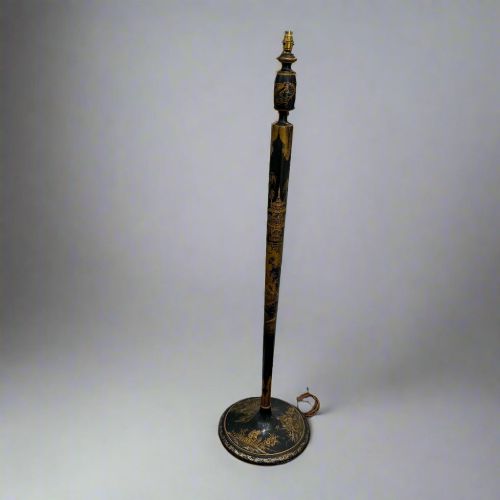
Design vocabulary encompasses Neoclassical, Chinoiserie, and Italian Florentine styles. Buyers frequently encounter Chinoiserie decorated standards alongside carved giltwood and ormolu models.
Materials and construction
Construction relies on timber, gesso, and cast bronze, transformed through carving and metalworking. Artisans shaped wood and applied gesso before layering gold leaf or parcel gilt finishes.
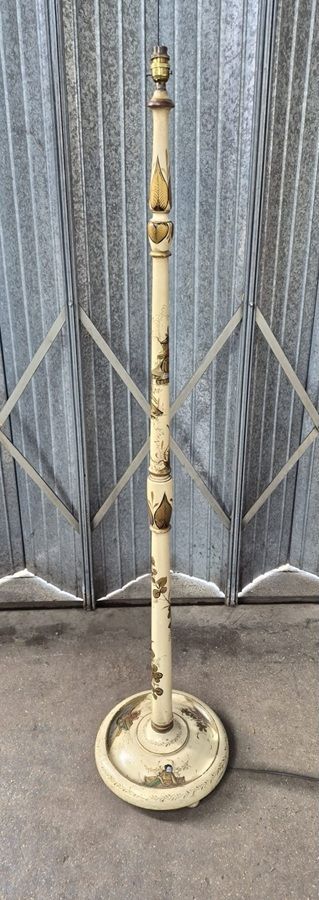
Surface decoration frequently involves polychrome paintwork, black lacquer, or red lacquer, particularly on Chinoiserie standards. Ormolu and patinated bronze feature on heavier metal torcheres and candlesticks.
Gilt Floor Light Retail Price Guide 2026
Typical asking prices for gilt floor light among the pieces listed under this phrase on Sellingantiques today, from the lower quarter to the upper quarter. They describe what is for sale here now, not the wider market.
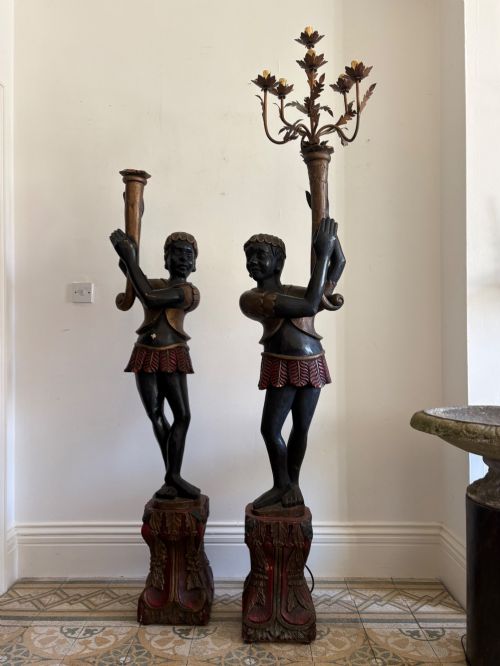
Venetian figures on stands hold their ground alongside classical columns, bringing painted polychrome characters directly into the living space.
Assessing craftsmanship
Quality rests in the crispness of carved detail and the depth of the gilding. Hand-carved giltwood standards show sharper foliage and fluting than moulded alternatives, while genuine gesso provides a finer base for leaf application.
The integrity of the structural frame dictates stability in taller pieces. Tripod bases and heavy bronze columns require sound joinery to support upright vertical loads without lean.
Maison Bagues·François-Christophe-Armand Toussaint·Coutan
The Gilt Floor Light Glossary
- Giltwood
- Wood that has been treated with gold leaf or a gold-coloured finish. This material forms the primary structure for many decorative standard lamps.
- Torchiere
- A tall stand or floor lamp designed to hold a light source high above the ground. These often take the form of columns or figural supports.
- Ormolu
- Gilded bronze used for decorative mounts and fittings. It appears on nineteenth-century pieces to add metallic detail.
- Mecca
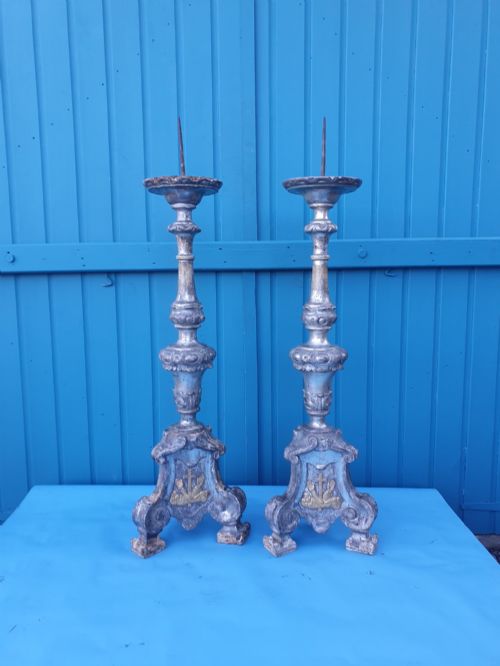
- A transparent golden varnish applied over silver or tin leaf to imitate gold. This technique produces a distinct warm metallic tone on Italian altar-type candlesticks.
- Gesso
- A plaster-like mixture applied to wood surfaces to create a smooth layer for gilding. It allows carvers to achieve fine relief details before applying leaf.
Gilt Floor Light: Frequently Asked Questions
How do I date a gilt floor light?
Dating relies on stylistic markers such as Neoclassical columns, Edwardian Chinoiserie lacquer, or 1930s proportions. Material composition and wiring remnants also offer clues to the decade of origin.
Comparison with documented periods helps establish whether a piece belongs to the nineteenth century or later revival eras.
Where were these lamps placed?
These tall standards stood in principal reception rooms, drawing rooms, and boudoirs to provide ambient illumination. Their height allowed light to project across large spaces.
Figural torcheres and altar candlesticks often served decorative display functions alongside their lighting purpose.
How do I care for giltwood?
Dusting requires a soft dry cloth to protect the delicate gold leaf and gesso layers from abrasion. Moisture and chemical polishes damage the underlying metallic finish.
Placing the lamp away from direct heat sources prevents the wood from drying and cracking beneath the gilding.
What is the difference between standard lamps and torcheres?
Standard lamps were designed specifically to hold electrical lamp fittings for interior domestic lighting. Their design prioritises a stable shaft and a shade platform.
Torcheres originated as candle stands and tall decorative torch holders, though many later adapt for electric illumination while retaining their slender columnar form.