
Gilt Crystal Ceiling Light
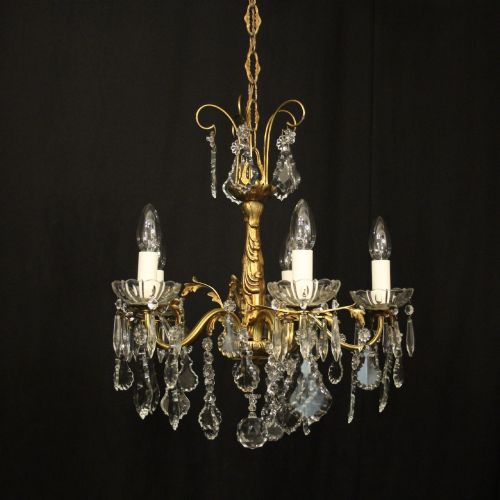
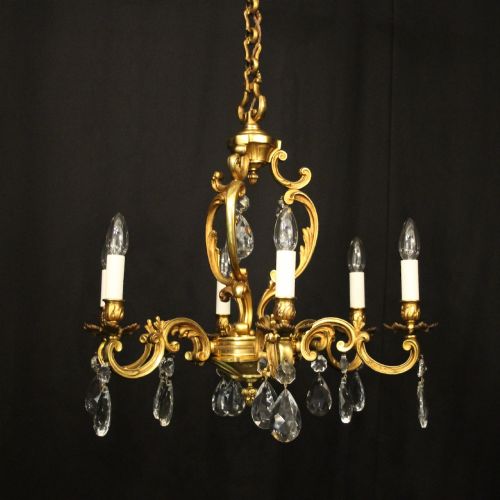
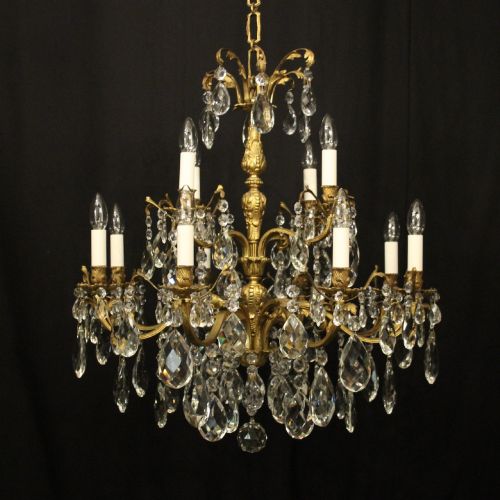
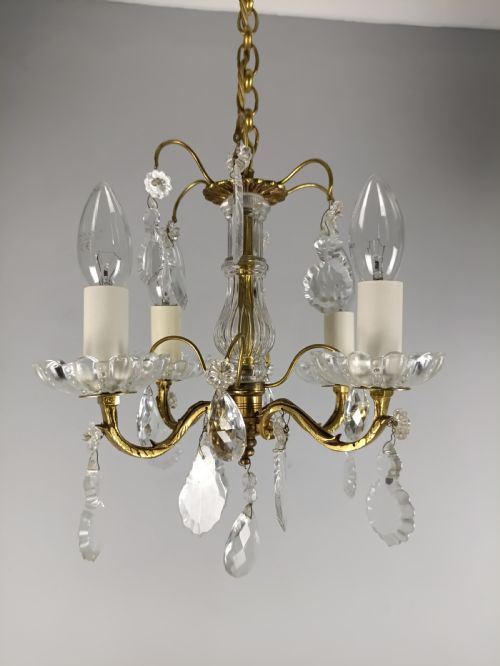
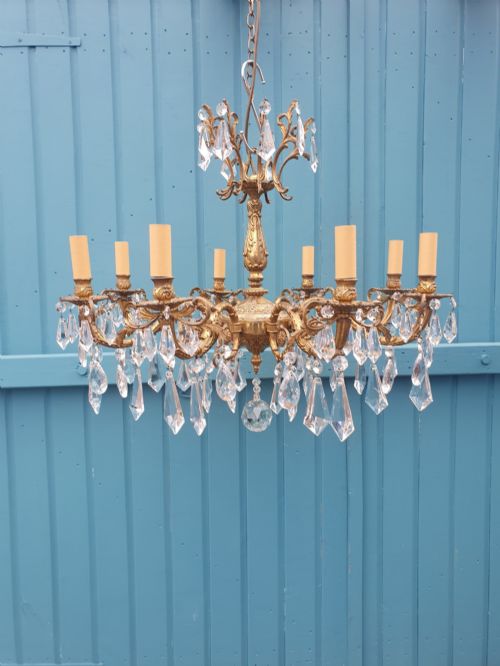
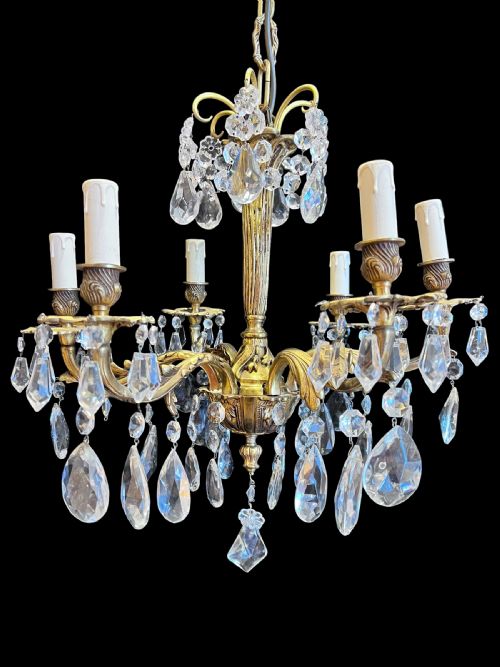
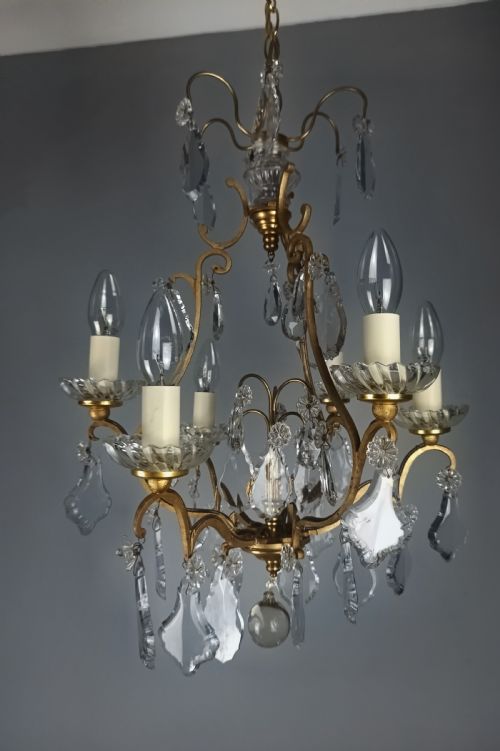
These gilt crystal ceiling light fixtures bring warmth and sparkle to a room through gilded frames and hanging glass prisms.
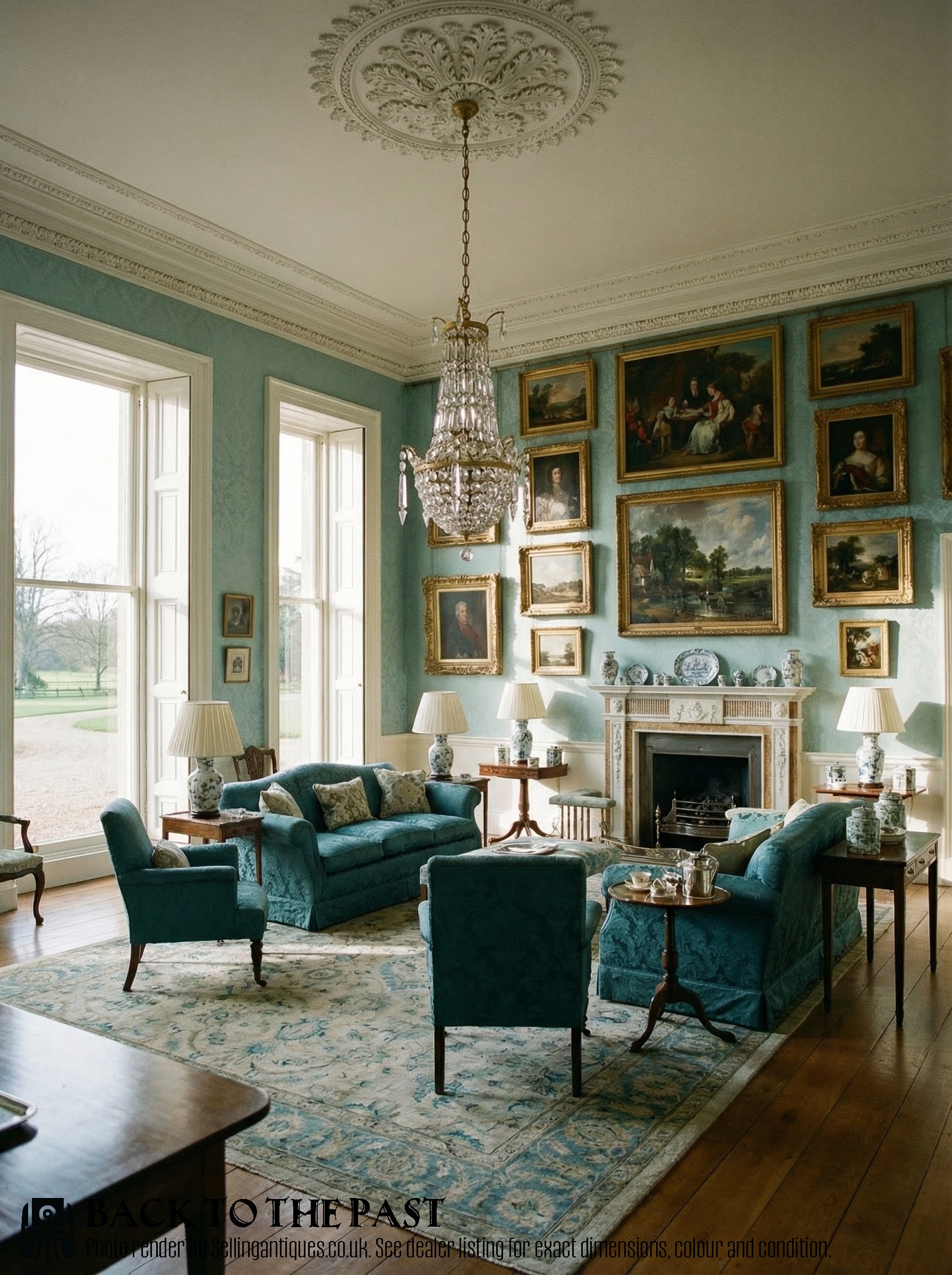
Gilt Crystal Ceiling Light
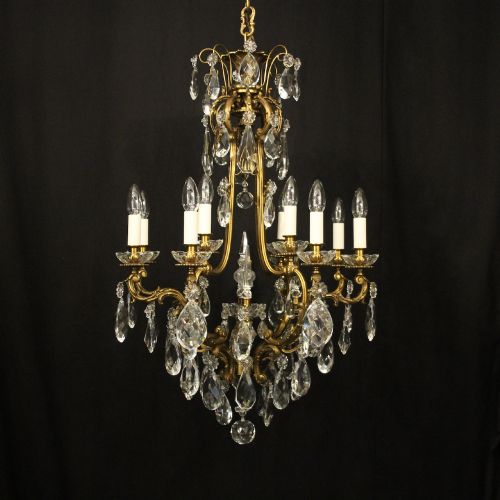
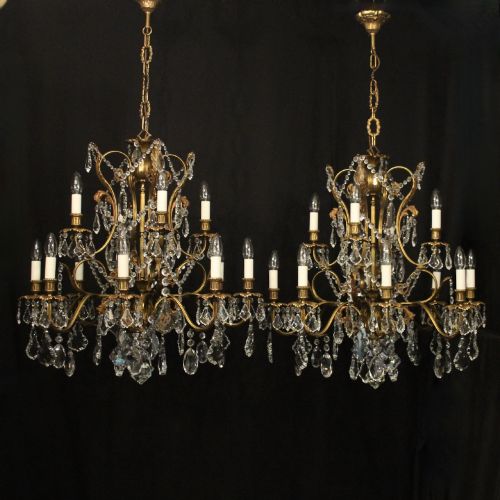
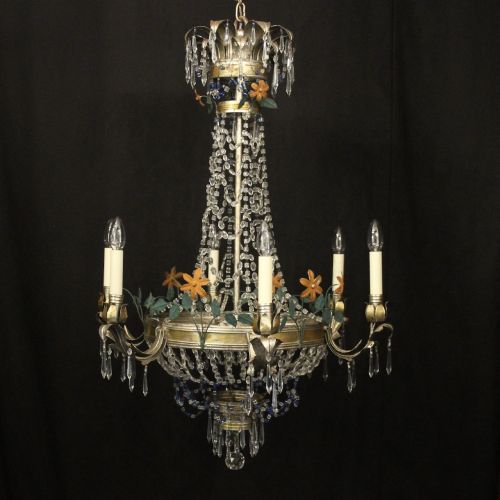
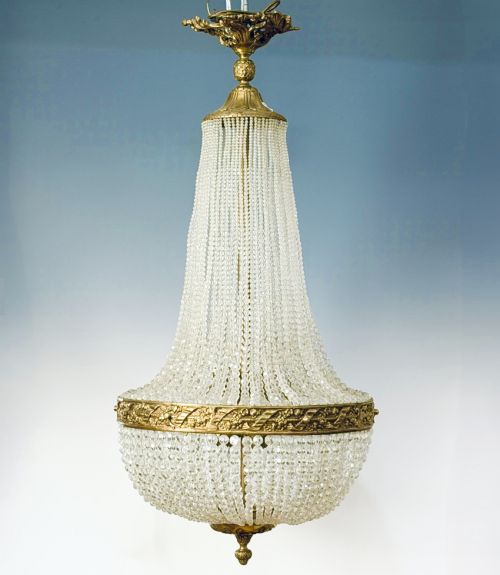
When you search for a gilt crystal ceiling light, you encounter decorative chandeliers and hanging fixtures originating mainly from French and Italian workshops. The selection on this page largely spans the late nineteenth century through to the 1930s, encompassing styles such as French Empire, Rococo Revival, and Florentine.
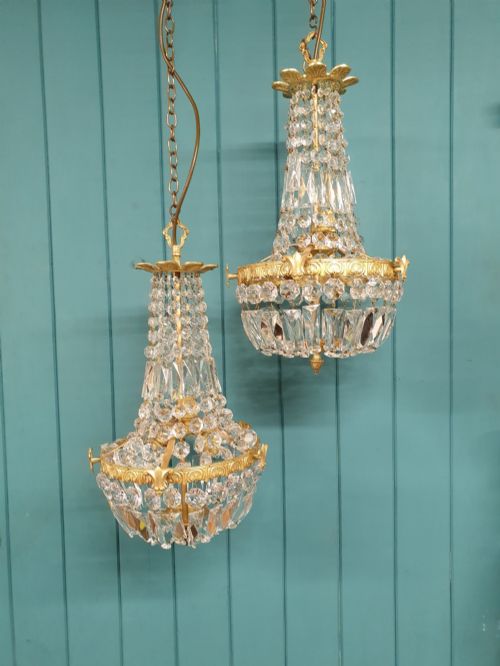
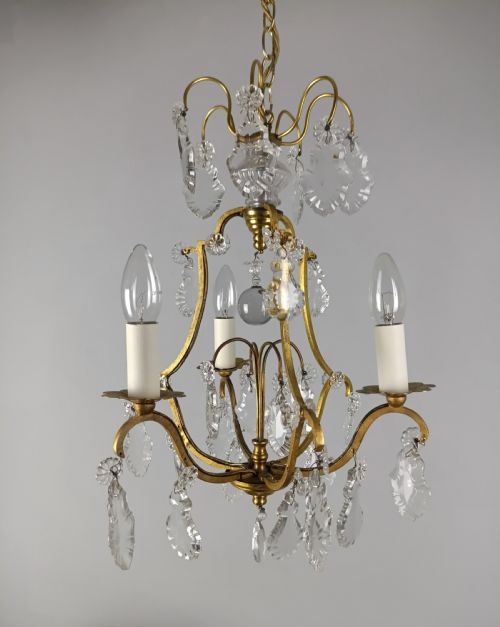
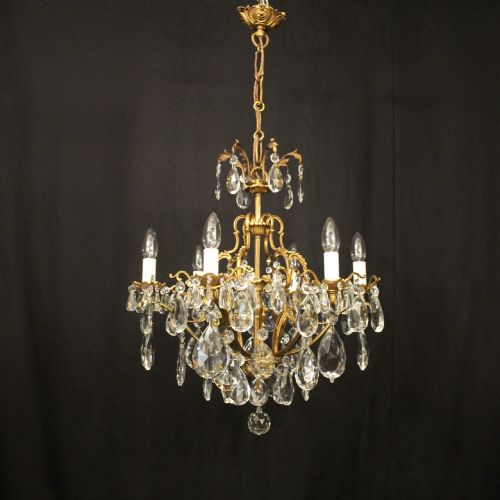
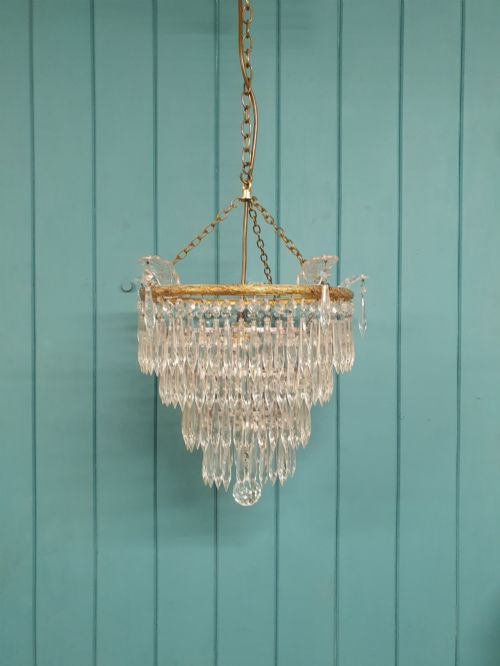
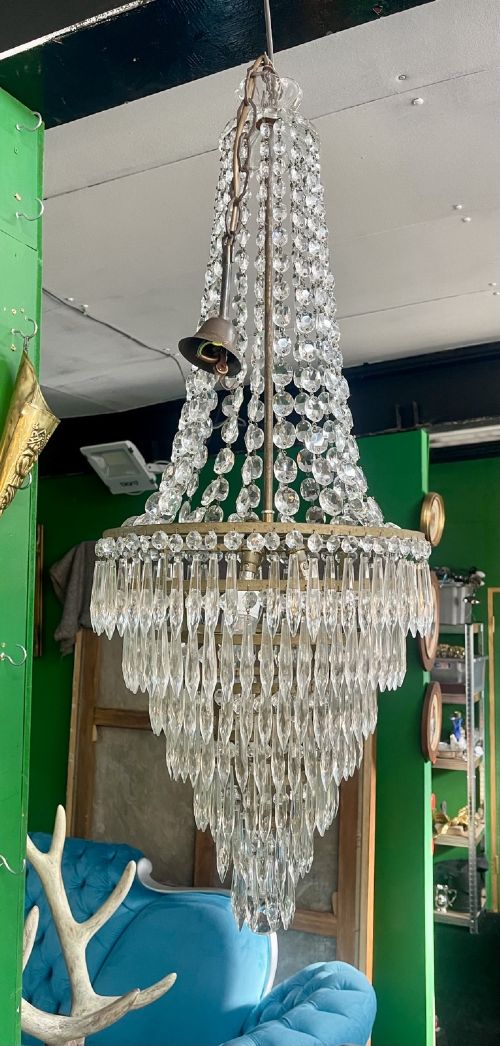
You will frequently meet multi-armed chandeliers featuring birdcage frames, tent and waterfall drops, or winged cherubs. Examples range from compact single-light fixtures to large multi-branched centrepieces hung with coloured or clear crystal drops.
How they were made
Makers constructed the structural frames using brass, bronze, spelter, toleware, or wrought iron, which they then gilded, silver-gilded, or painted. These metal frameworks support numerous arms and candle branches designed to hold lights.
Artisans adorned the frames with cut glass and crystal components, including teardrops, coffin prisms, and porcelain flowers. Individual glass pieces link together using wire loops to create cascading waterfall and tent arrangements.
Several chandeliers feature charming gilded cherubs holding crystal spikes, ready to illuminate your ceiling with celestial mischief.
What varies in quality
The sophistication of the metal casting and the richness of the gilding set examples apart. Heavier cast bronze frames with detailed chasing display a depth absent in simpler pressed brass or painted alternatives.
The cut and clarity of the crystal components also determine the overall standard. Pieces set with heavy, hand-cut glass prisms refract light with greater precision than plain moulded glass drops.
The Gilt Crystal Ceiling Light Glossary
- Birdcage chandelier
- A metal frame constructed with curved vertical straps resembling an open birdcage. This form typically supports interior candle arms and exterior crystal garlands.
- Tent and waterfall chandelier
- A design featuring an upper conical tent of glass beads attached to a crown, falling outward into a wider cascading fringe of crystal drops.
- Coffin prism
- A long, flat-backed crystal pendant with a pointed or bevelled lower edge. These prisms hang from the arms and bobeches to catch and disperse the light.
- Spelter
- An alloy of zinc and lead utilised as a cost-effective alternative to bronze for cast decorative figures. Makers often gilded these figures to resemble solid brass or bronze.
- Toleware
- Painted sheet metal utilised for decorative ceiling light components and drip pans. This material allowed makers to introduce polychrome colour alongside gilded elements.
Gilt Crystal Ceiling Light: Frequently Asked Questions
How do I hang a heavy antique chandelier?
These fixtures require direct support from a structural ceiling joist using an appropriate metal hook or mounting bracket. Independent weight-bearing assessment ensures safety before hanging.
Electricians should handle the wiring connection to the ceiling supply. Many older chandeliers require modern rewiring to meet current safety standards.
How do I clean the crystal drops?
Careful maintenance involves washing individual glass and crystal pieces by hand in warm soapy water. Rinsing them thoroughly prevents residue buildup and restores maximum light refraction.
Leaving the drops attached to the frame while cleaning risks damaging the delicate wire links. Removing the prisms allows safe access to both the glass and the gilded metal framework.
What rooms suit a tent and waterfall chandelier?
These large, ornate fixtures work well in spaces with higher ceilings where the cascading crystals can hang without obstruction. Dining rooms and entrance halls provide traditional settings for such statement pieces.
Proportion remains key when selecting a light for a room. Smaller single-light or compact multi-arm variants suit lower residential ceilings.
How can I tell French styles from Italian styles?
French pieces often display Empire or Rococo Revival characteristics with formal symmetry, architectural tents, and cast bronze or gilded brass frames. Cherubs and birdcage forms frequently appear in these French designs.
Italian examples, particularly Florentine pieces, often incorporate leafy gilt motifs, carved wooden elements, and porcelain flowers. These designs lean towards organic, flowing ornamentation rather than strict architectural symmetry.