
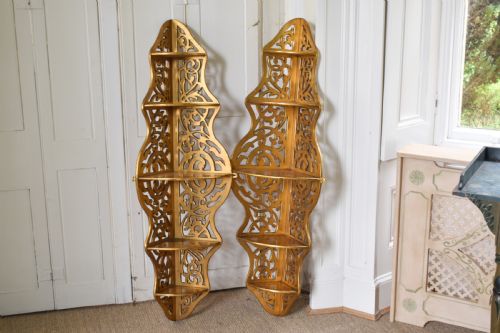
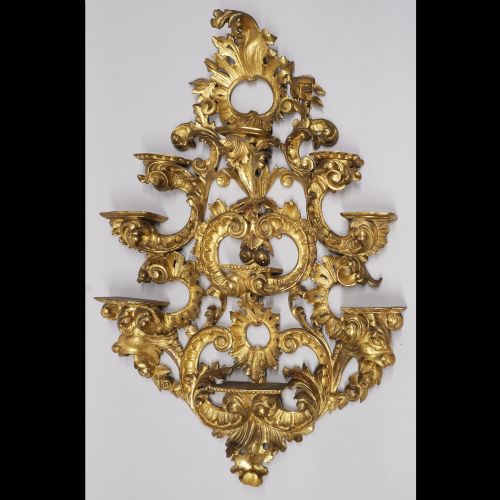


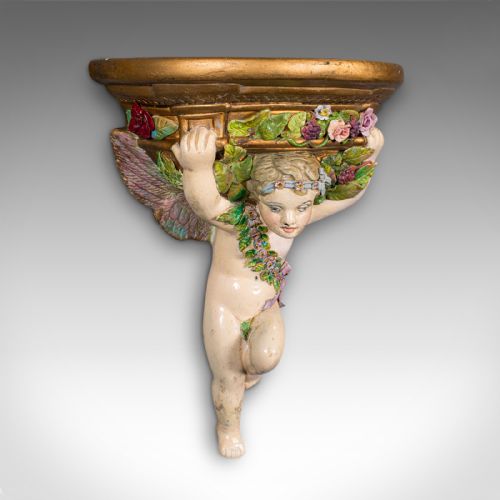


Gilt Carved Shelf Bracket
These gilt carved shelf bracket designs bring architectural richness to interiors through gilded surfaces and sculptural wooden forms.
Gilt Carved Shelf Bracket
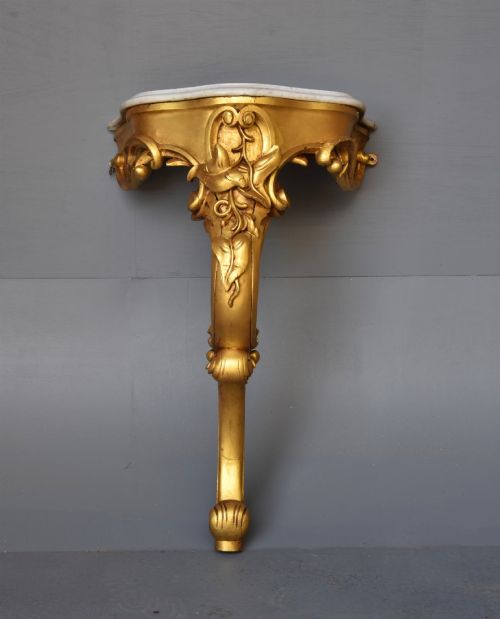
A gilt carved shelf bracket provides a decorative projection for supporting ornaments, small clocks, or mirrors upon a wall. You meet these pieces most frequently in Victorian and nineteenth-century English, French, and Italian examples.
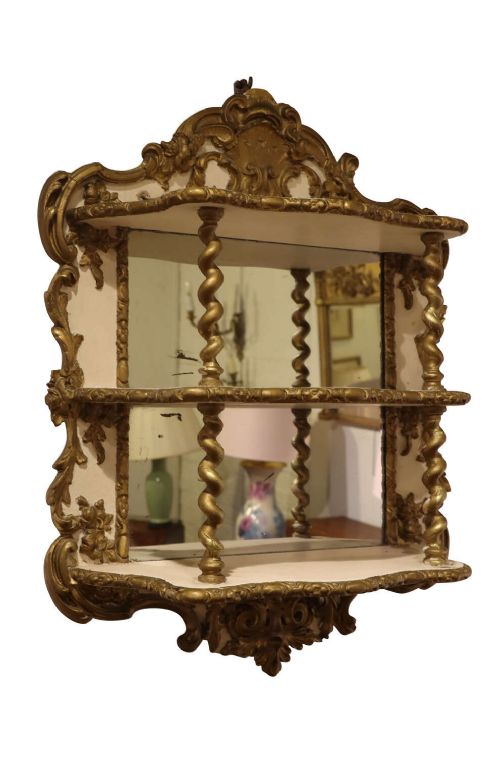
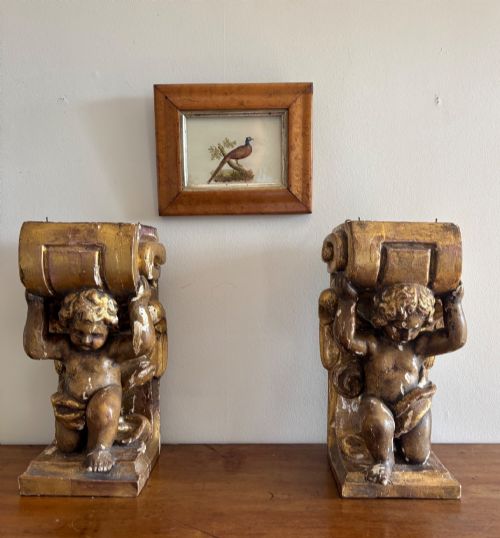
The selection includes matched pairs of carved wall brackets alongside related furniture forms such as console tables, pier glasses, and corner shelves. Pieces range from simple eighteenth-century painted and gilded supports to elaborate nineteenth-century revivals.
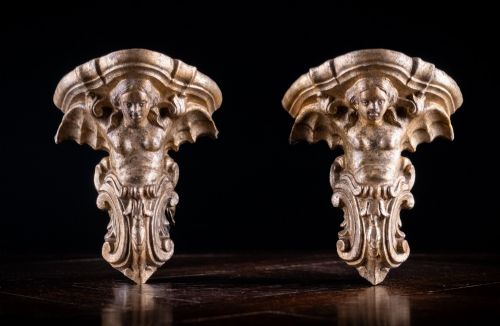
Makers utilised various formats, including winged sirens, cherubs, and classical motifs, to anchor these functional ledges to the wall. Their primary function remains displaying precious objects while adding decorative depth to a room.
How they were made
Carvers shaped the underlying structure from solid timber, often utilising woods such as walnut or softer carved wood before applying decorative ornament. Gesso was then built up across the wooden surface to provide a smooth ground for subsequent gilding.
Artisans applied gold leaf over the prepared gesso and bole layers, burnishing selected areas to create contrast between matt and bright golden finishes. Some pieces incorporated painted elements or mirror glass panels to enhance the reflective quality of the wall mounts.
One winged siren keeps watch from a nineteenth-century wall bracket.
What varies in quality
Depth and crispness of the wood carving set superior brackets apart from simpler moulded or cast plaster alternatives. The sensitivity of the gesso application and the burnishing of the gold leaf determine how lively the surface appears under changing light.
The integrity of the underlying timber structure and the preservation of the original gilded surface govern the historical and visual merit of each bracket. Matched pairs executed with balanced symmetry command greater interest than solitary pieces.
Strahan of Dublin
The Gilt Carved Shelf Bracket Glossary
- Giltwood
- Timber that has been coated with gold leaf over a prepared gesso ground. This finish provides the characteristic metallic brilliance seen on period wall brackets and frames.
- Gesso
- A plaster mixture applied to carved wood to create a smooth, absorbent surface for gilding. It allows craftsmen to model sharp decorative details before applying gold leaf.
- Rococo Revival
- A nineteenth-century design movement that reinterprets eighteenth-century asymmetrical scrollwork and naturalistic motifs. It appears frequently on Victorian gilt wall furniture.
- Console Table
- A wall table supported by wall-fixed brackets or console legs rather than four independent floor legs. These often incorporate a matching mirror or shelf above.
Gilt Carved Shelf Bracket: Frequently Asked Questions
How do I hang a heavy wooden wall bracket safely?
Secure the bracket directly into a wall stud or use heavy-duty wall anchors rated for the weight of the timber and any object placed upon it. Ensure the mounting plate sits flush against the plaster.
Check that the internal fixing screws engage solidly with the primary wooden structure of the bracket rather than relying on decorative surface elements alone.
Can these brackets support heavy clocks and porcelain?
Most antique brackets were designed to hold modest decorative items, small mirrors, or mantel clock mounts rather than immense weight. Assess the structural attachment points before loading the shelf.
Keep objects centred on the wooden platform to maintain balance and prevent undue strain on the wall fixings.
How should I clean a gilded wooden surface?
Dust the gilt carved shelf bracket gently with a soft, dry ostrich feather duster or a clean dry artist brush. Avoid applying water, chemical sprays, or abrasive cloths.
Moisture and modern solvents will lift the delicate gold leaf and underlying gesso from the carved wooden base.
How do I distinguish eighteenth-century brackets from later revivals?
Examine the tooling marks on the reverse and the composition of the gesso layers under magnification. Eighteenth-century pieces typically show hand-wrought joinery and older patination on the timber.
Nineteenth-century revival pieces often display machine-sawn elements and brighter, more uniform Victorian gilding techniques.