





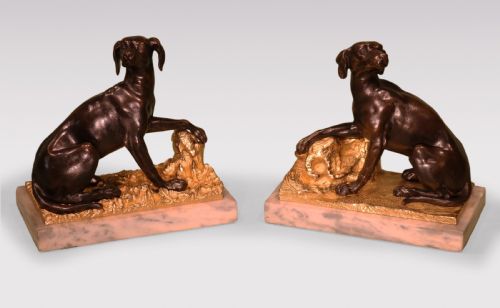
Gilt Bronze Sculpture Pair
A gilt bronze sculpture pair brings balanced presence to a room, matching figures cast in metal and finished with gold.
Gilt Bronze Sculpture Pair
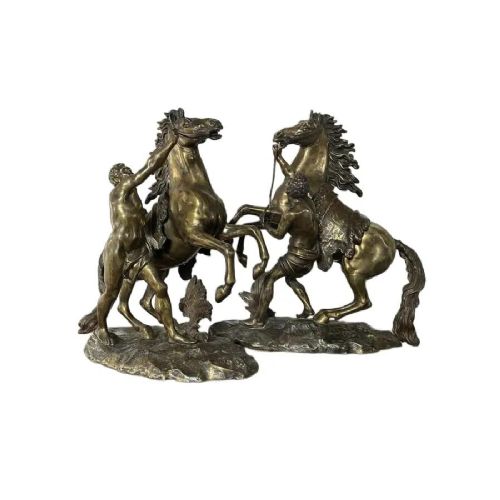
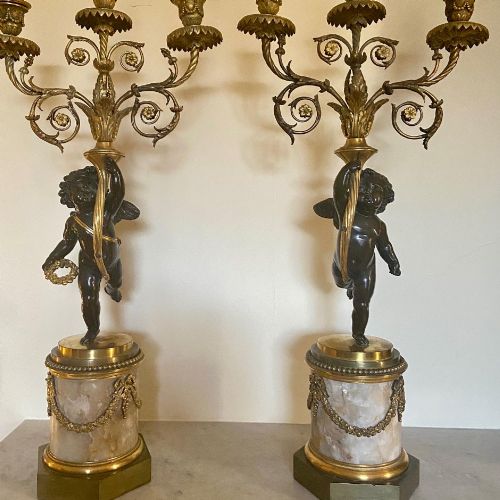
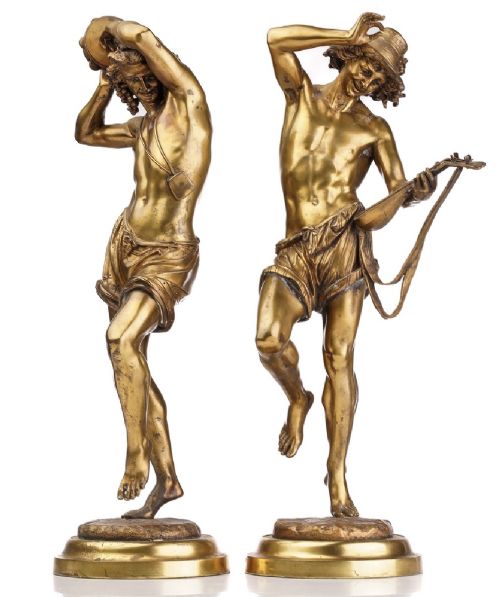
A gilt bronze sculpture pair consists of matching sculptural works cast in metal and finished with gold or ormolu, often paired with materials such as marble or fluorspar. These matched works appear across periods from the eighteenth century to the twentieth century, taking forms that include candelabra, figural torchères, animals, and human figures.
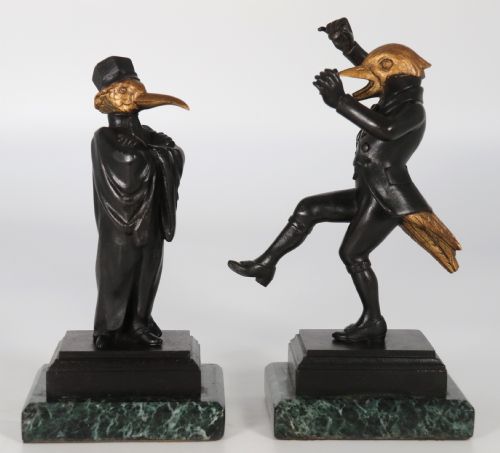
The versions most commonly met on this page span the nineteenth century, including French Neoclassical models, Victorian novelty pieces, and Animalier studies. Makers and artists represented include Louis Riche, Albert Ernest Carrier-Belleuse, François-Christophe-Armand Toussaint, and after François Redmond and Emile-Coriolan Guillemin.
Beyond French and European work, the selection encompasses Chinese Asian art and Tibetan temple lions. Forms range from statuettes and busts to large candelabra and pedestal mounts.
What varies in quality
The durability and depth of the gilt or ormolu surface finish also separate works, alongside the quality of any associated marble, wood, or stone bases.
Gilt Bronze Sculpture Pair Retail Price Guide 2026
Typical asking prices for gilt bronze sculpture pair among the pieces listed under this phrase on Sellingantiques today, from the lower quarter to the upper quarter. They describe what is for sale here now, not the wider market.
Listings feature works spanning the eighteenth, nineteenth, and twentieth centuries, utilising bronze, marble, ormolu, and fluorspar.
François Redmond·Emile-Coriolan Guillemin·Louis Riche·François-Christophe-Armand Toussaint·Albert Ernest Carrier-Belleuse
The Gilt Bronze Sculpture Pair Glossary
- Ormolu
- A gold-coloured alloy of copper, zinc, and sometimes nickel used to gild bronze objects. This technique was widely utilised by French metalworkers to create decorative mounts and figural highlights.
- Patinated bronze
- Bronze treated with chemicals or heat to produce a specific surface colour or dark tone. This finish often contrasts with bright gilt sections.
- Animalier
- A nineteenth-century artistic style focusing on realistic depictions of animals. Sculptors in this tradition studied anatomy closely.
- Grand Tour
- A cultural journey undertaken by wealthy Europeans that inspired the creation of souvenirs and classical sculptures. Many nineteenth-century bronzes reflect this aesthetic.
- Putti
- Depictions of small winged infants or cherubs found frequently in classical and eighteenth-century art. They appear often in candelabra and decorative sculpture.
Gilt Bronze Sculpture Pair: Frequently Asked Questions
What is a gilt bronze sculpture pair?
A gilt bronze sculpture pair comprises two matching decorative figures or functional objects cast in bronze and finished with gold or ormolu.
These pieces range from classical human figures and animals to candelabra and architectural mounts produced across multiple centuries.
How do I care for gilt bronze?
Care for gilt bronze requires gentle dusting with a soft, dry cloth to protect the delicate gold surface.
Avoid chemical cleaners, polishes, and excessive moisture, which can strip or damage the historic gilding and patination.
Where were these sculptures made?
These sculptures originate from various regions, with a strong representation of nineteenth-century French workshops and studios.
Other pieces reflect Chinese Asian art, Tibetan craftsmanship, and Italian Grand Tour production.
How are pairs matched?
Pairs are matched by their original design, size, casting technique, and surface finish, often created as symmetrical ornaments for mantelpieces or furniture.
Over time, matching pieces have been preserved together to maintain their decorative balance and unified appearance.