



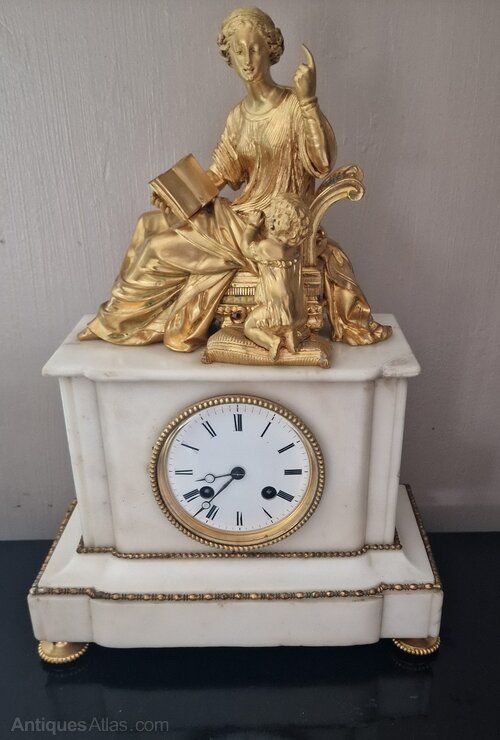
Gilt Bronze Pendule Clock
These gilt bronze pendule clock pieces bring sculptural weight and precise French horology into a room, favoured for their rich gilding and classical forms.
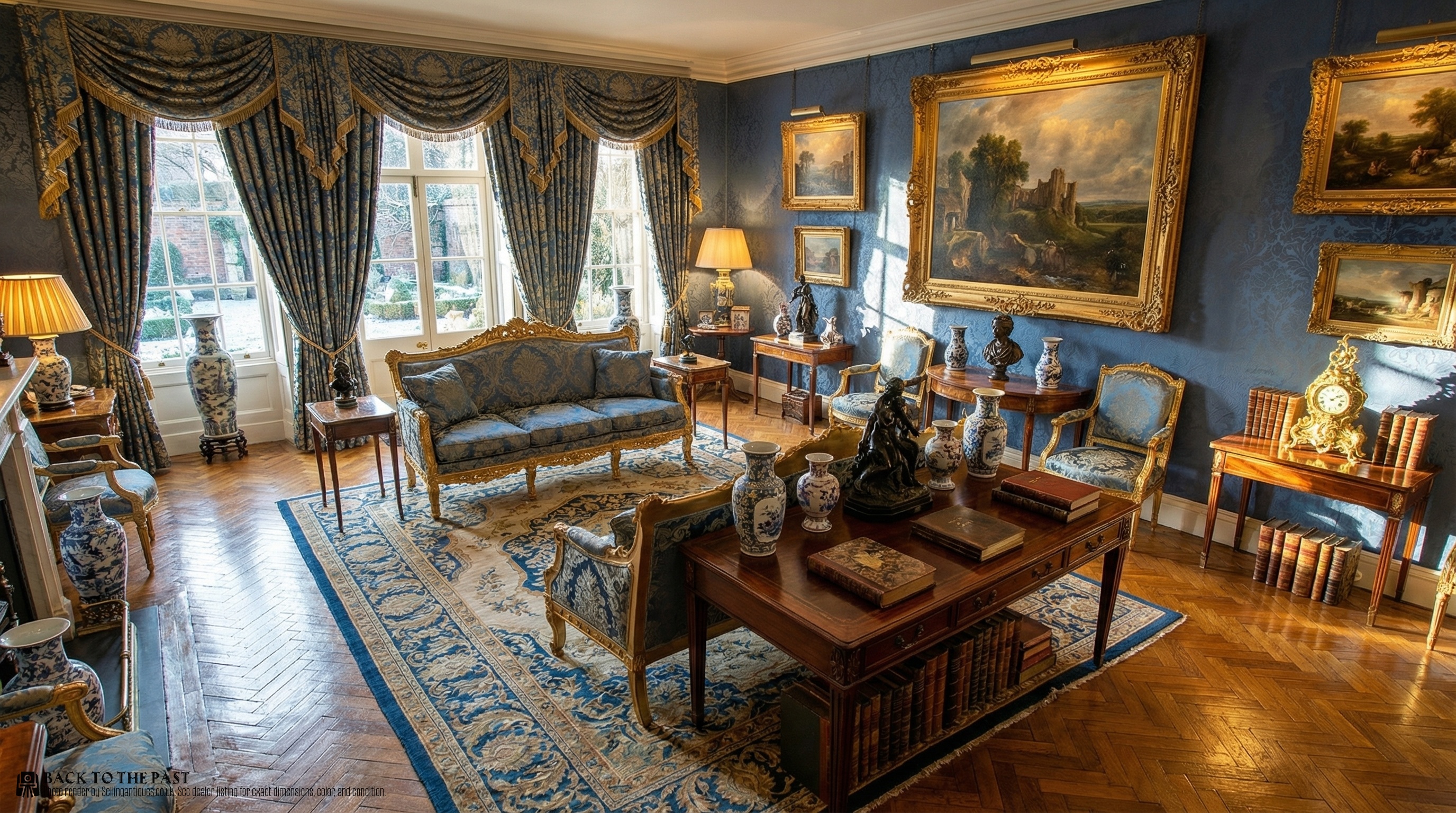
Gilt Bronze Pendule Clock
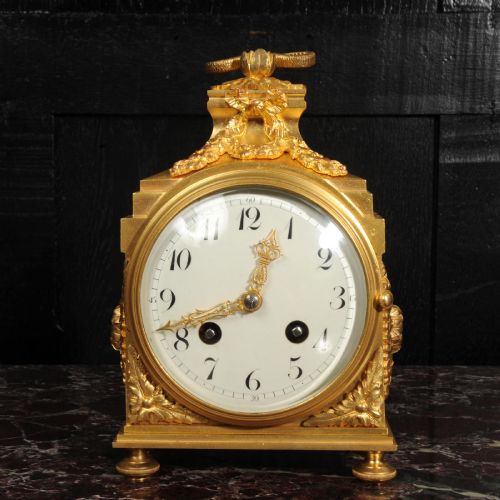
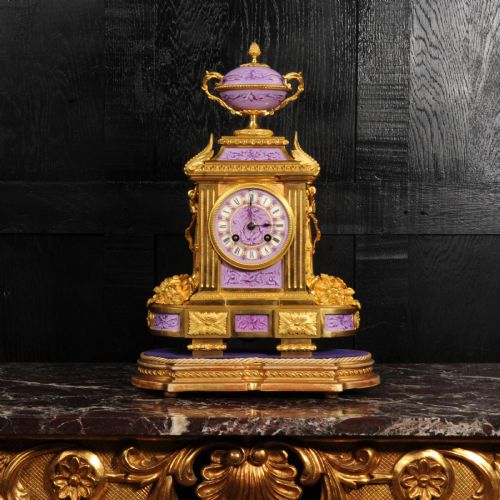
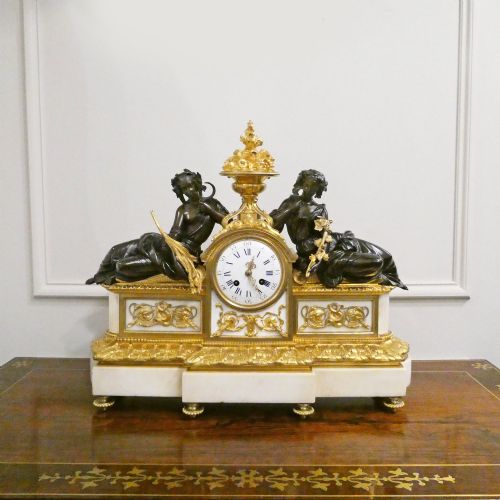
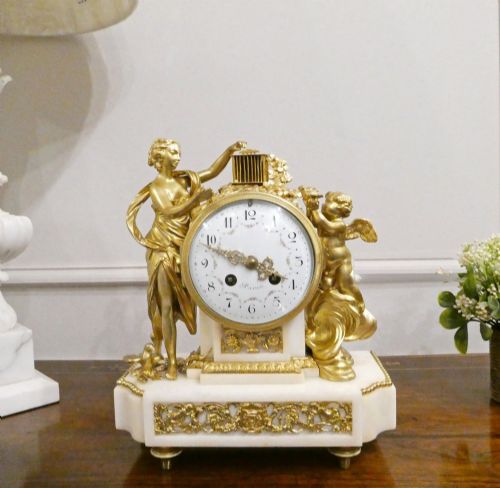
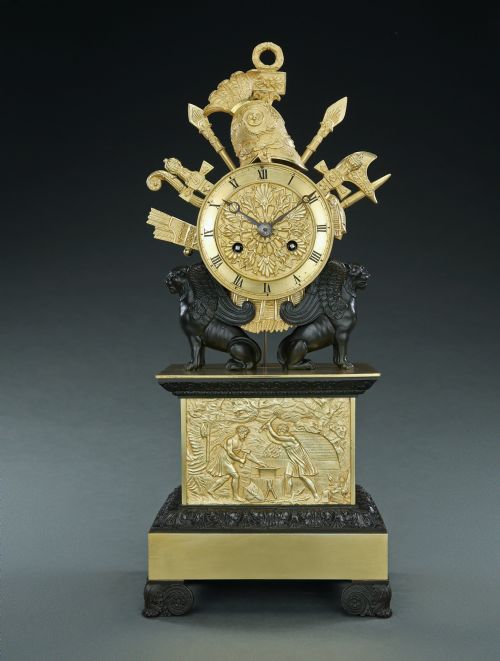
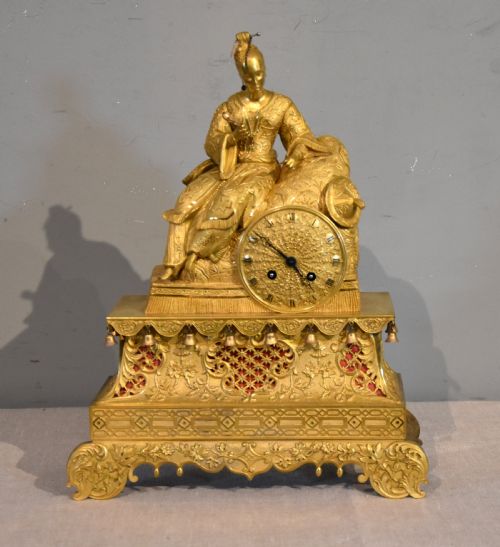
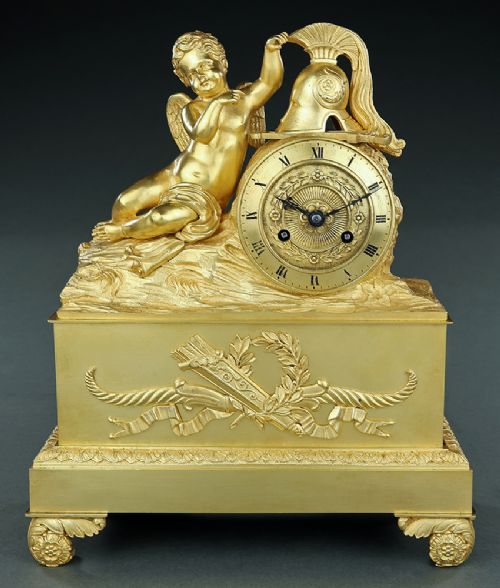
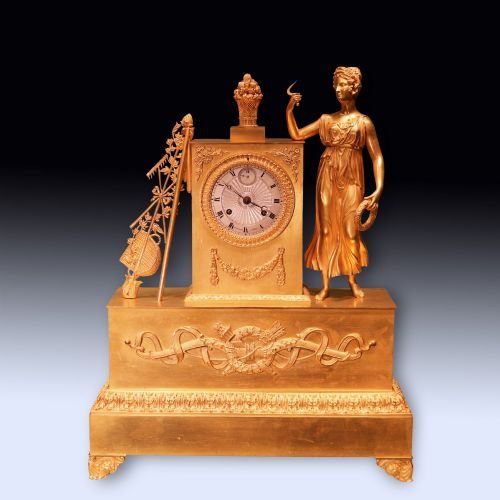
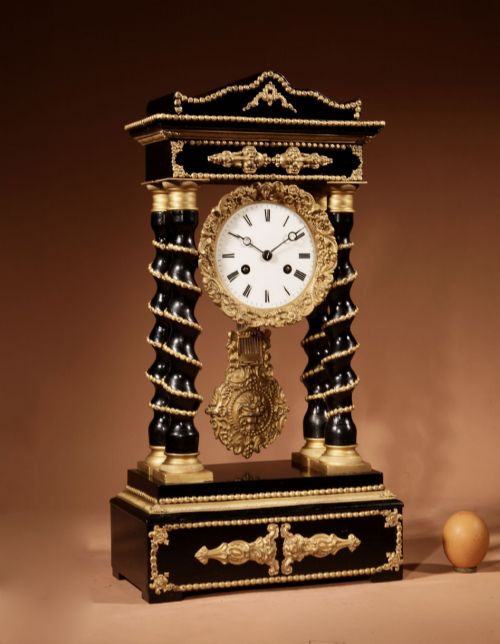
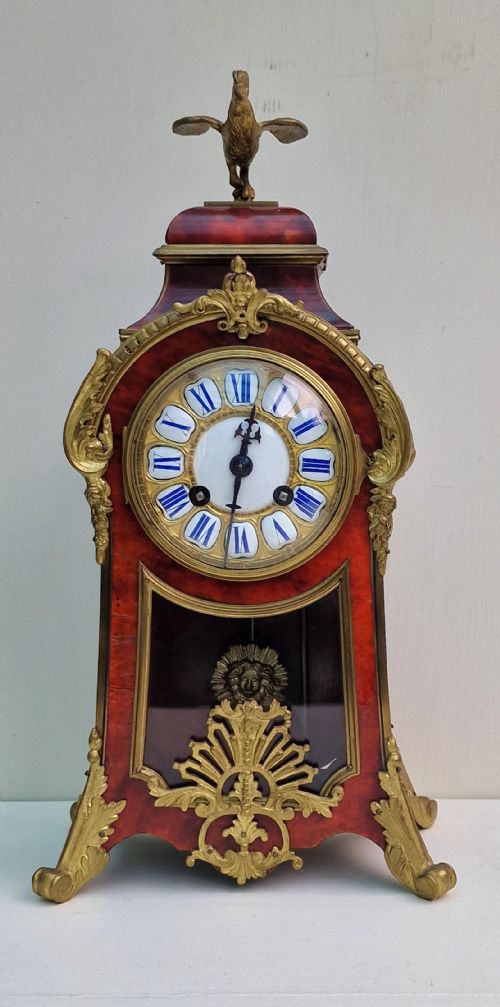
When you search for a gilt bronze pendule clock, you encounter nineteenth-century French mantel pieces built around heavy cast metal and detailed enamel dials. The items on this page lean heavily towards French Empire, Louis XVI, and Rococo Revival designs, alongside portico and figural models.
Most examples originate from French workshops spanning the mid-to-late nineteenth century, though earlier eighteenth-century influences shape the decorative vocabulary. These objects function as both timekeepers and sculptural centerpieces, frequently combining bronze work with marble bases or porcelain panels.
Materials and technique
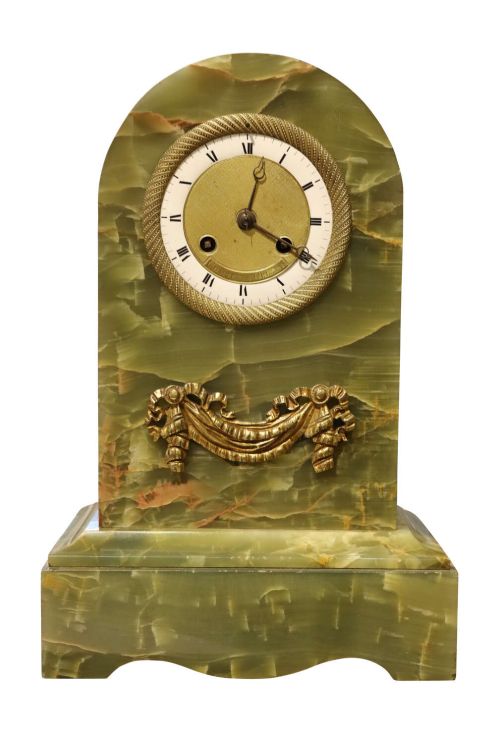
Makers shaped the cases using cast bronze, applying mercury gilding or ormolu to achieve a bright, durable metallic finish. They paired the metalwork with contrasting components such as white marble, green onyx, tortoiseshell, or hand-painted Sèvres porcelain panels.
Movements relied on brass gear trains, often driven by springs and regulated by pendulums, housed behind glazed bezels and enamelled numeral dials. Cabinetmakers and metalworkers collaborated to integrate these mechanical works into ornate architectural or figural housings.
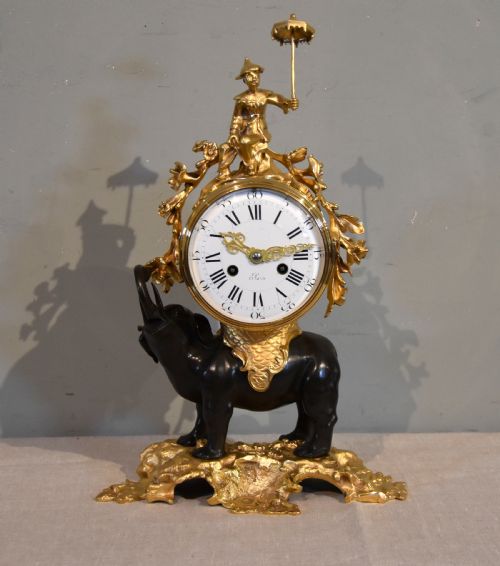
Several clocks abandon traditional shapes entirely to house their dials inside bronze elephants and cascading waterfalls.
Quality variations
The sophistication of the bronze casting and the crispness of the chasing define the upper tier of these clocks, where artisans hand-tooled the metal after casting. Weaker examples show soft surface details and repetitive, shallow stamping rather than deep, hand-finished relief.
The reputation of the horologist also alters the standing of a piece, with movements signed by known Paris makers commanding greater attention. Furthermore, the original integration of components - such as matching porcelain plaques and undamaged fire gilding - separates superior survivors from heavily altered pieces.
Achille Brocot·Charles à Orléans·Vincenti·Henry Dasson·Leroy Paris·Henri Marc·Japy Freres·PH Mourey·Samuel Marti·Charpentier Paris·Pons de Paul·Dehné of Paris·Leroy and Fils
The Gilt Bronze Pendule Clock Glossary
- Ormolu
- Gilt bronze produced by applying a mercury and gold amalgam to a bronze base and heating it. This historic technique creates a warm, enduring golden lustre.
- Pendule
- The French term for a pendulum clock. It typically denotes decorative mantel and shelf timepieces.
- Champlevé
- An enamelling technique where troughs are dug into a metal surface and filled with vitreous paste before firing. It creates colourful geometric or floral patterns across the bronze case.
- Portico clock
- A distinct architectural clock style featuring a dial suspended between two vertical pillars. This design gained popularity during the Empire and Louis XVI periods.
Gilt Bronze Pendule Clock: Frequently Asked Questions
How do I wind a pendule clock?
Most eight-day movements require a key inserted into the dial holes to tension the springs every week. Care must be taken not to overwind the mechanism.
Moving the hands should be done slowly and strictly in a clockwise direction to avoid damaging the internal strike train.
Where should I place a heavy bronze clock?
These pieces require a sturdy, level mantelpiece or console table capable of supporting substantial marble and bronze weight. Stability is essential for the pendulum to beat evenly.
Keep the clock away from direct sunlight, damp areas, and extreme temperature fluctuations to protect the gilding and dial enamel.
How do I distinguish Empire from Rococo styles?
Empire clocks feature rigid symmetry, military trophies, classical columns, and references to antiquity. They project a sense of imperial power and strict geometry.
In contrast, Rococo styles embrace asymmetrical curves, naturalistic foliage, scrolls, and playful figural scenes, avoiding straight lines entirely.
What is fire gilding?
Fire gilding, or ormolu, involves coating bronze in liquid gold amalgam and heating it until the mercury evaporates. This leaves a permanent, bonded gold layer on the metal.
This method differs significantly from modern electroplating, producing a deeper, richer hue that resists wearing away.