

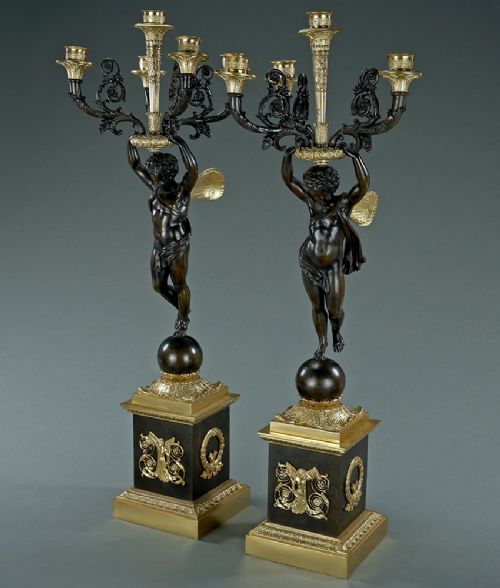
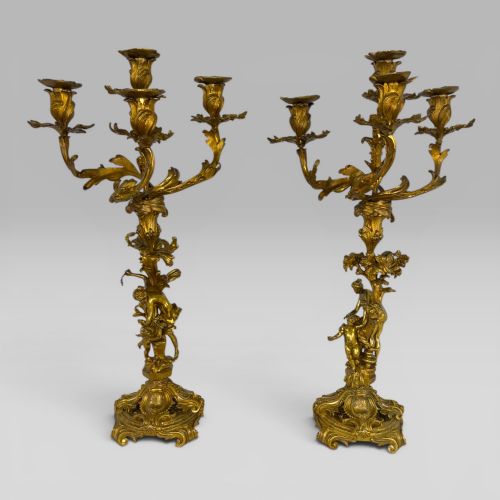


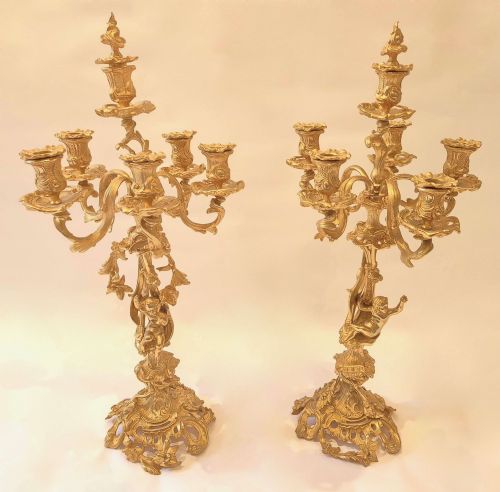


Gilt Bronze Cherub Candelabra
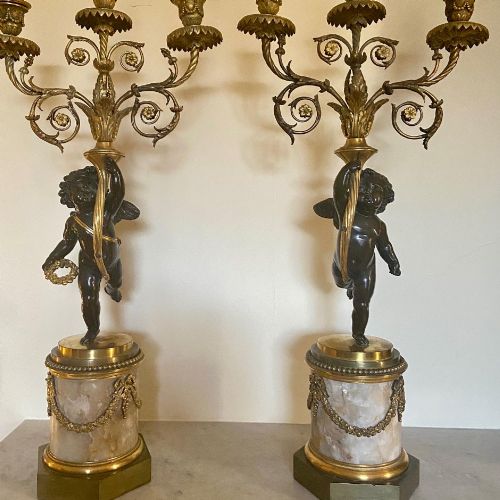
These gilt bronze cherub candelabra combine cast metal figures with candle branches, offering classical French decorative elegance for a mantelpiece.
Gilt Bronze Cherub Candelabra
When searching for gilt bronze cherub candelabra, buyers encounter figural lighting pieces originating predominantly from nineteenth-century France. These decorative objects integrate winged putti or cherubs holding candle branches, often forming matching pairs designed to sit upon mantelpieces or sideboards.
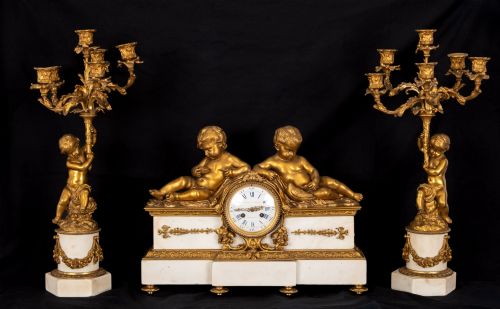
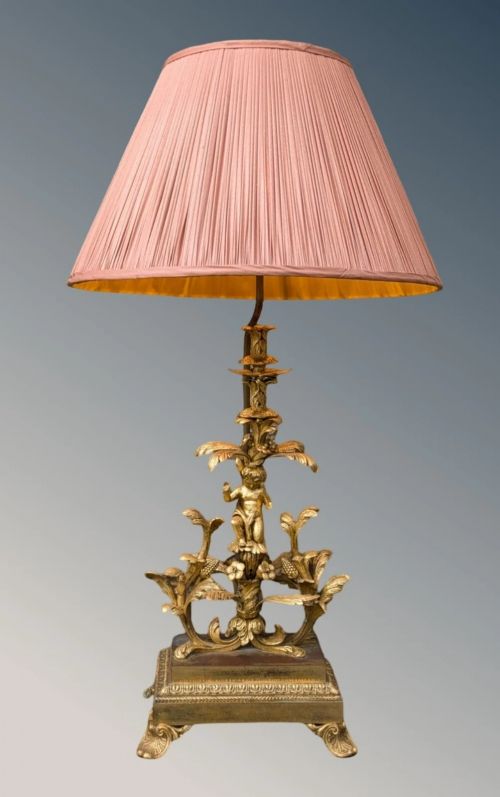
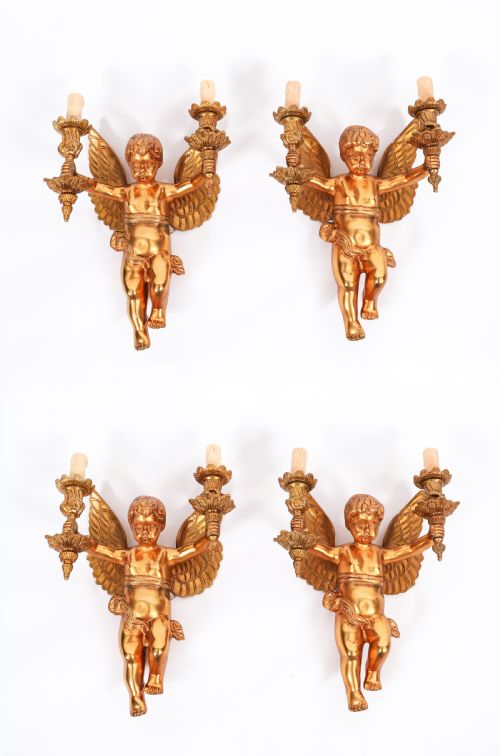
The most common versions on this page date from the Victorian era and reflect Louis XVI or Rococo Revival styles. They appear alongside related garniture clock sets, wall sconces, and table lamps sharing identical bronze and marble vocabularies.
Materials and construction methods
The objects listed combine cast bronze, gilt bronze, and ormolu with contrasting elements of white marble, red marble, and porphyry bases. Artisans employed mercury gilding or electroplating to achieve the bright golden surface finish characteristic of ormolu, pairing it with patinated dark bronze for the figural bodies.
Individual components including putti figures, scroll arms, and drip pans were cast separately and assembled using threaded pins or screws. Marble components were turned on lathes or shaped by hand to provide heavy, stable footings for the elevated metalwork.
Gilt Bronze Cherub Candelabra Retail Price Guide 2026
Typical asking prices for gilt bronze cherub candelabra among the pieces listed under this phrase on Sellingantiques today, from the lower quarter to the upper quarter. They describe what is for sale here now, not the wider market.
Listings feature items from the eighteenth and nineteenth centuries, including Victorian pieces dated between 1860 and 1900.
Distinctions in craftsmanship
The integration of materials also defines the tier of execution, seen in the selection of unblemished statuary marble or hard mineral bases. Rigidity in the assembled candle branches and the precision of the joints separate standard production items from workshop pieces created after known models.
Francois Redmond·H Luppens Paris·Claude Clodion
The Gilt Bronze Cherub Candelabra Glossary
- Ormolu
- Gilt bronze produced by applying a mercury and gold amalgam to a bronze object and heating it to vaporise the mercury. This technique creates a durable golden coating found on many nineteenth-century French decorative items.
- Putto
- A plump, often winged child figure depicted in classical art and sculpture. They appear frequently holding candle arms in the listed candelabra and wall lights.
- Garniture
- A set of decorative objects designed to be displayed together, most commonly a mantel clock accompanied by a matching pair of candelabra or vases.
- Patinated Bronze
- Bronze treated with chemical solutions to produce a darkened surface coloration. This dark finish contrasts directly against the bright ormolu elements on figural pieces.
- Candelabra
- A branched candlestick holding multiple lights. The examples here typically support two, three, or five branches surrounding a central cherub figure.
Gilt Bronze Cherub Candelabra: Frequently Asked Questions
What periods do these candelabra date from?
The pieces listed span the eighteenth and nineteenth centuries, with the majority originating from the Victorian period between 1860 and 1900. French workshops produced these designs extensively during the Second Empire and the late nineteenth-century revival movements.
Stylistic markers tie them to Louis XVI and Rococo revivals, utilising classical motifs and symmetrical scrollwork popular during those decades.
How were these candelabra used originally?
These items served as functional lighting devices for salons and dining rooms before the widespread adoption of electricity. Placed in pairs on mantelpieces or console tables, they held wax candles to illuminate grand interiors.
Frequently they formed part of a clock garniture set, sitting alongside a matching mantel clock to create a balanced decorative arrangement on furniture.
Are these candelabra sold as matching pairs?
The majority of listings on this page offer matched pairs designed for symmetrical placement on either side of a clock or architectural feature. Matching pairs share identical casting moulds, base materials, and branch configurations.
Single pieces and larger sets of wall lights or chandeliers also appear, maintaining the same bronze and marble material vocabulary.
How do I distinguish Louis XVI style from Rococo Revival?
Louis XVI style pieces display neoclassical symmetry, straight lines, urn motifs, and restrained foliage patterns. They emphasise architectural balance and geometric order in their bases and candle arms.
By contrast, Rococo Revival pieces embrace asymmetrical scrollwork, C-scrolls, naturalistic plant forms, and flowing organic curves. Both styles frequently incorporate putti figures within the same nineteenth-century manufacturing period.