




Gilt Bronze Burner
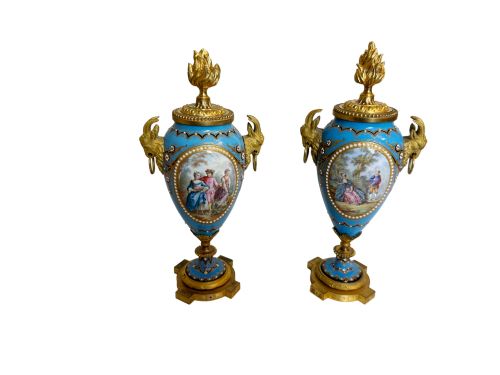
These gilt bronze burner pieces are heavy decorative vessels designed for burning incense, bringing classical French and Asian forms into your room.
Gilt Bronze Burner
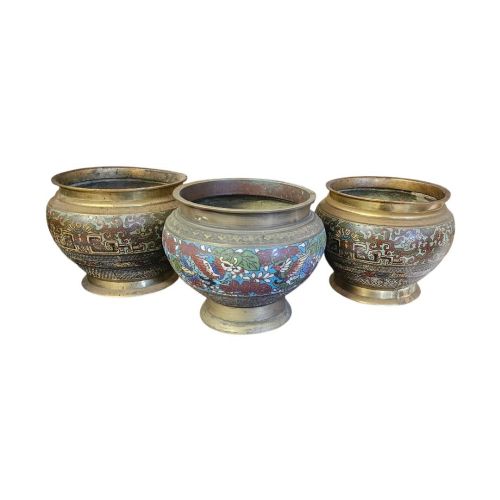
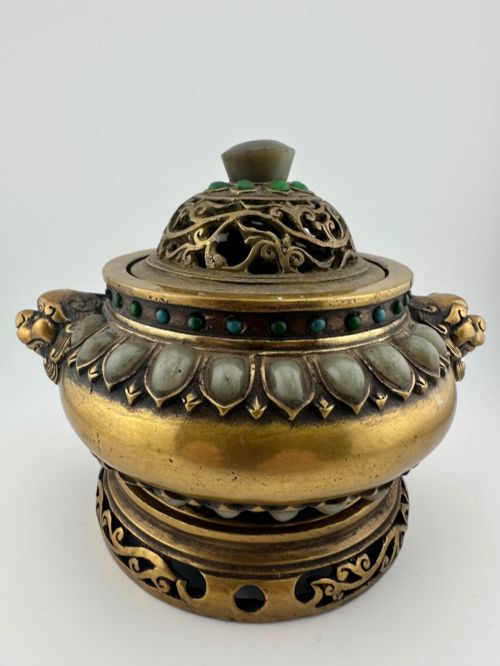
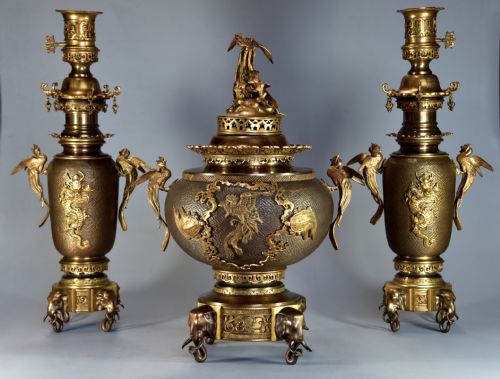
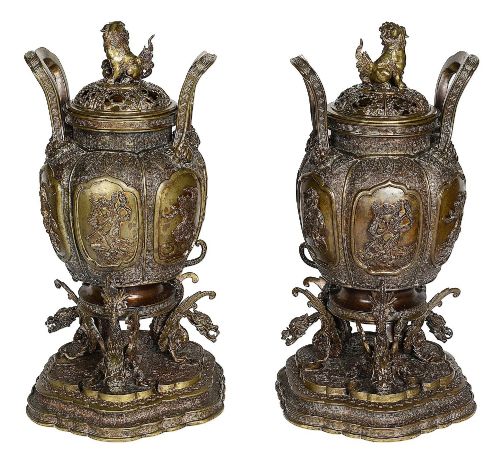
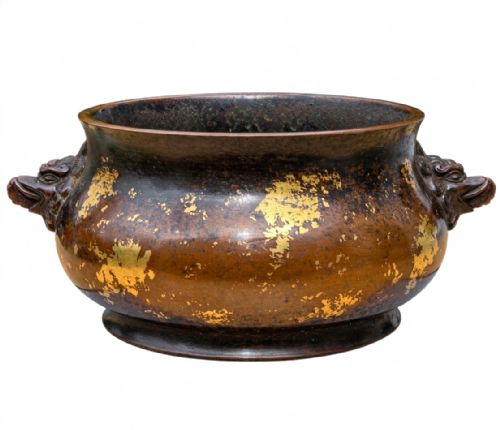
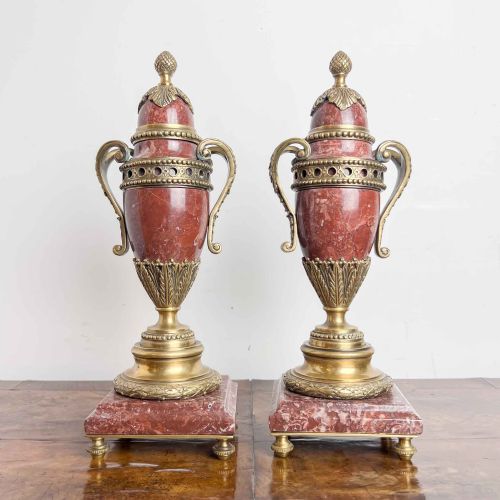
A gilt bronze burner takes several distinct forms, most commonly appearing as French cassolettes, censers, or Japanese koro vessels across this selection. You will frequently meet 19th-century French examples styled in the Louis XVI manner, alongside Qing dynasty Chinese bronzes and Meiji period Japanese pieces.
The objects serve primarily as decorative urns, jardinieres, and garniture sets rather than utilitarian items. Their presence ranges from Grand Tour marble vases mounted in ormolu to heavy cast bronze censers bearing traditional mask handles.
Asian examples often incorporate cloisonne or champleve enamel and hardstone inlays into the metal body. Meanwhile, European pieces pair the gilded metal with green or rouge marble, onyx, and patinated bronze finishes.
What varies in quality
The refinement of the casting and chasing separates standard production from superior examples. Crisp detailing on mounts, handles, and decorative motifs indicates a higher level of workshop skill.
The choice of complementary materials dictates the standing of the piece. Selected marbles, heavy gauge bronze, and well-executed enamel work distinguish the finer specimens from simpler variants.
Materials appearing across the selection include green marble, rouge marble, onyx, jade, and champleve enamel paired with gilt and patinated bronze.
The Gilt Bronze Burner Glossary
- Cassolette
- A dual-purpose decorative vessel that functions as a vase or can be reversed to serve as a burner. These objects typically feature a removable lid and mounted bodies.
- Koro
- A traditional Japanese incense burner, frequently cast in bronze and supported on small feet. They often include pierced lids to allow scented smoke to escape.
- Ormolu
- Finely ground high-carat gold applied to a bronze base using a mercury amalgamation technique, popular in French decorative arts. The finish yields a rich, warm metallic lustre.
- Cloisonne
- An enamelling technique where thin metal wires are soldered to a metal body to create cells, which are then filled with coloured paste and fired. This method produces intricate, multi-coloured geometric or floral patterns.
Gilt Bronze Burner: Frequently Asked Questions
What is the difference between a cassolette and a censer?
A cassolette is a reversible vessel that acts as either a covered urn or an incense burner, often made of marble mounted with gilt bronze.
A censer is specifically designed to hold burning incense, usually featuring a pierced cover and a stable bowl form without the dual-purpose reversible function.
How do I distinguish French and Asian burners?
French pieces from the nineteenth century frequently utilise ormolu mounts paired with coloured marble, onyx, or patinated bronze, often reflecting neoclassical revival styles.
Asian pieces rely on cast bronze bodies decorated with cloisonne enamel, champleve, or hardstone inlays, following distinct cultural traditions such as the Meiji period or Qing dynasty.
Were these items meant to be used?
While originally created to burn incense or perfume interior spaces, many surviving examples served primarily as decorative garniture sets and mantel ornaments.
Their physical condition often reflects this ornamental role, preserving delicate gilding and enamel work that might otherwise show heavy wear from frequent functional use.
How should I care for gilt bronze and marble?
Dust surfaces gently with a soft, dry cloth to prevent the accumulation of grit on the delicate gilt bronze and polished stone.
Avoid using abrasive cleaners, polishes, or chemical solvents, as these can strip the gold leaf or damage the underlying patination and marble.