



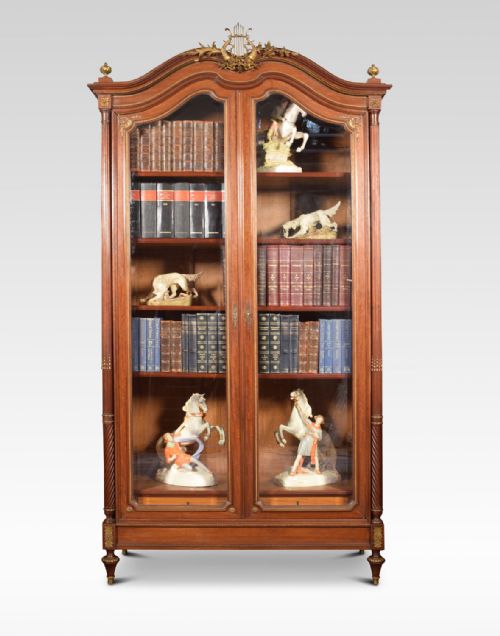

Gilt Brass Vitrine
A gilt brass vitrine brings the brilliance of nineteenth-century French display furniture into a room, holding precious objects behind clear glass.
Gilt Brass Vitrine
When you search for a gilt brass vitrine, you look for glazed cabinets and display tables designed to showcase small collections under glass. These pieces originate predominantly from the nineteenth century, reflecting historical revival movements that dominated French decorative arts.
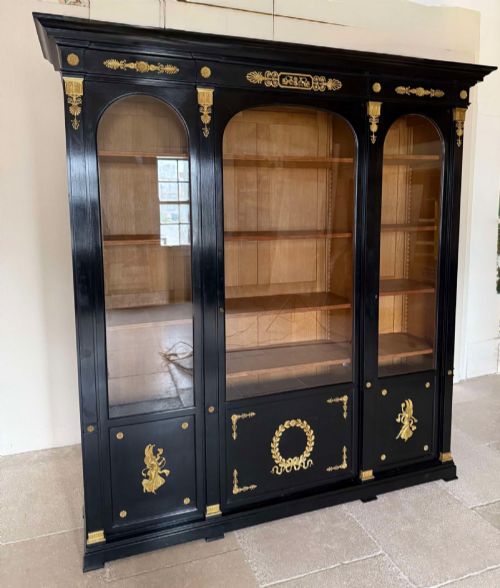
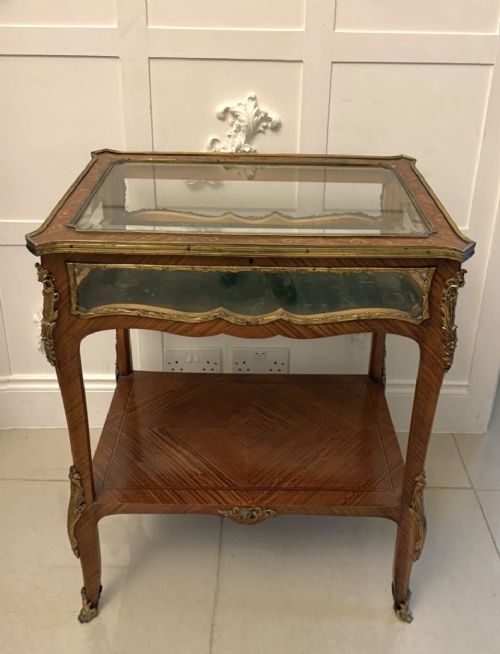
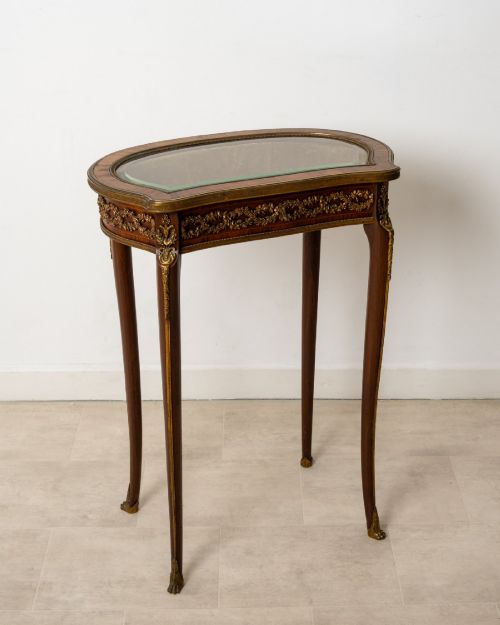
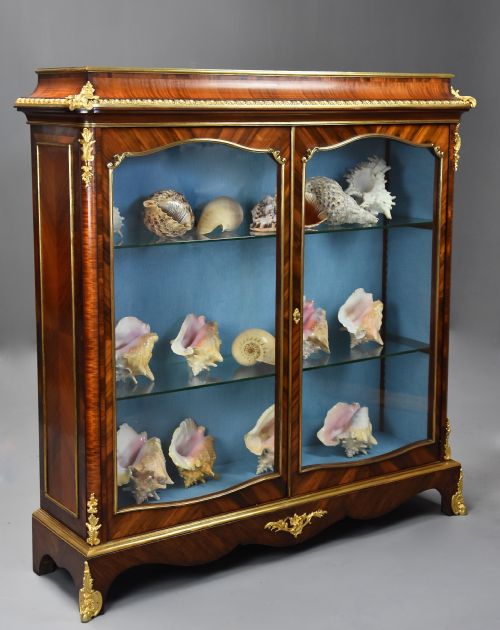
You are most likely to meet French Louis XVI style and Louis XV revival pieces on this page, often featuring mounted brass, ormolu, or gilt bronze. Cabinet forms range from upright display cases and bookcases to low bijouterie tables intended for tabletop viewing.
Makers and workshops of the period utilised rich timbers alongside gilded metal mounts to create formal presentation furniture for domestic interiors. The resulting forms combine structural timber carcases with transparent glazing to protect items while keeping them visible.
How they were made
Cabinet makers built these carcases using hardwoods such as mahogany and kingwood, frequently applying veneers over foundational timber structures. Boulle work and Vernis Martin techniques occasionally appear on surface panels, adding decorative painted scenes or tortoiseshell and brass inlay.
Gilt bronze, ormolu, and brass mounts were cast, chased, and secured to the exterior to accentuate structural lines and door frames. Velvet linings frequently pad the interior bases of display areas to cushion objects placed inside.
Gilt Brass Vitrine Retail Price Guide 2026
Typical asking prices for gilt brass vitrine among the pieces listed under this phrase on Sellingantiques today, from the lower quarter to the upper quarter. They describe what is for sale here now, not the wider market.
Many a Victorian collector filled these tiny glass shelves with miniature teapots until the cabinet bowed under the sheer weight of porcelain.
What varies in quality
The refinement of the cast metal mounts largely determines the grade of a piece, with finely chased ormolu showing crisp detail rather than soft edges. Cabinetwork precision, from the tight fit of glazed doors to the selection of figured kingwood or mahogany veneers, separates standard production from superior workshops.
Attribution to documented makers such as Paul Sormani or pieces associated with François Linke elevate the standing of a vitrine within the nineteenth-century corpus. The integration of marble tops and intact velvet interior linings further distinguishes more ambitious cabinet forms.
François Linke·Paul Sormani
The Gilt Brass Vitrine Glossary
- Ormolu
- Gilded bronze mounts applied to furniture. This technique involves coating metal with a gold amalgam and heating it to leave a rich surface.
- Bijouterie table
- A glass-topped display table designed for jewellery and small ornaments. These tables typically feature hinged or lifting glazed lids.
- Kingwood
- A dense, heavily figured Brazilian timber utilised for decorative veneers. It displays rich contrasting dark and light grain patterns.
- Vernis Martin
- A simulated Japanese lacquer technique developed in eighteenth-century France. Cabinet makers revived this method in the nineteenth century for decorative panels.
- Boulle work
- Marquetry consisting of tortoiseshell and brass inlay. This technique creates elaborate contrasting patterns across cabinet surfaces.
Gilt Brass Vitrine: Frequently Asked Questions
What is a gilt brass vitrine used for?
These cabinets and tables serve to display porcelain, silver, and small curiosities while protecting them from dust.
Interior velvet linings provide a soft bed for delicate items, and glass panels allow uninterrupted viewing from multiple angles.
How do I identify a 19th-century vitrine?
Nineteenth-century examples frequently employ French revival styles such as Louis XVI or Rococo, utilising mahogany or kingwood veneers.
Cast metal mounts, hand-chased ormolu, and historical construction methods help confirm the period of manufacture.
Where should I place a display table?
Bijouterie tables suit drawing rooms or studies where they can sit as central freestanding pieces or against panelled walls.
Their glass tops require placement away from direct foot traffic to protect the delicate legs and mounted brass details.
What is the difference between a vitrine and a bookcase?
A vitrine prioritises glazed visibility on multiple sides for decorative objects rather than heavy book storage.
Bookcase variations incorporate similar glazed doors but are engineered primarily to hold volumes on internal timber shelves.