

Gilt Brass Lantern
A gilt brass lantern brings a warm, reflective glow to an entrance hall or high-ceilinged corridor.
Gilt Brass Lantern
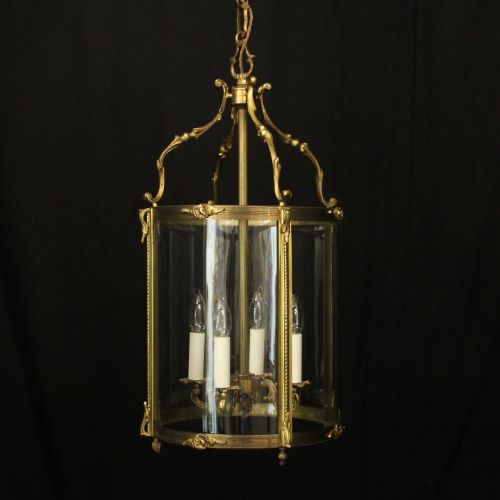
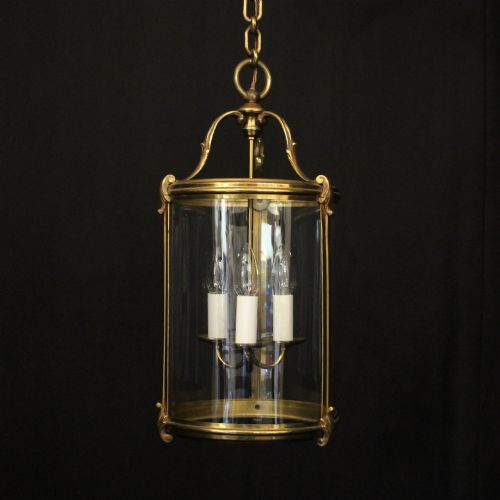
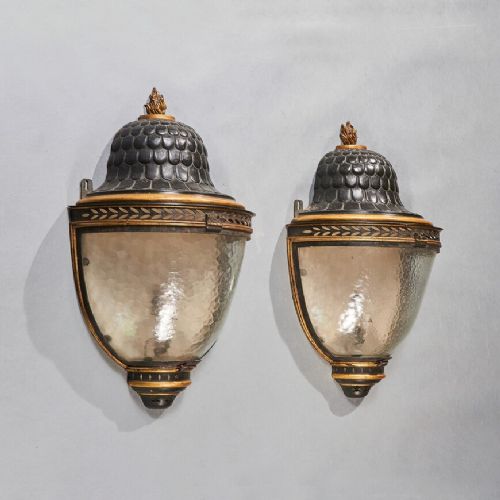
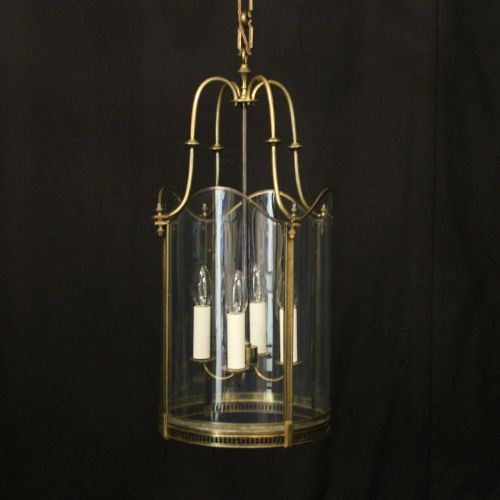
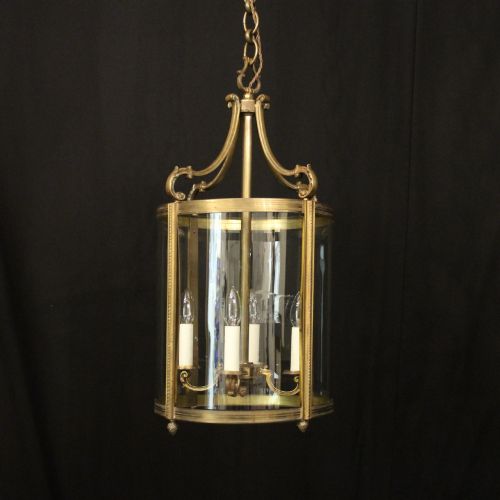
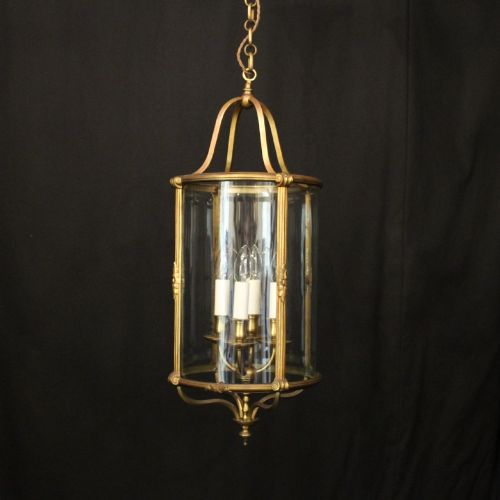
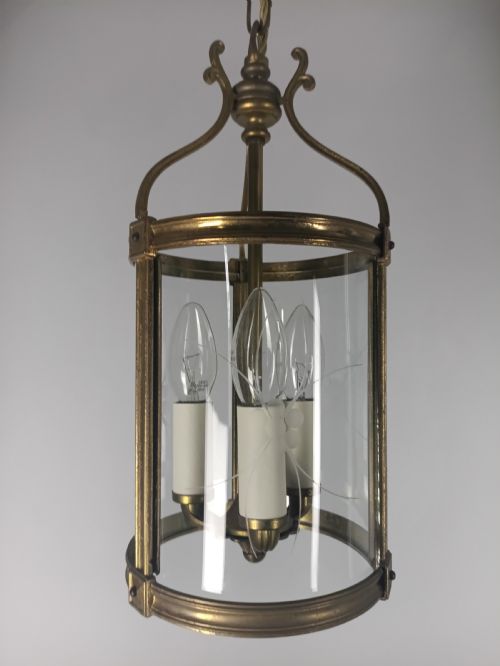
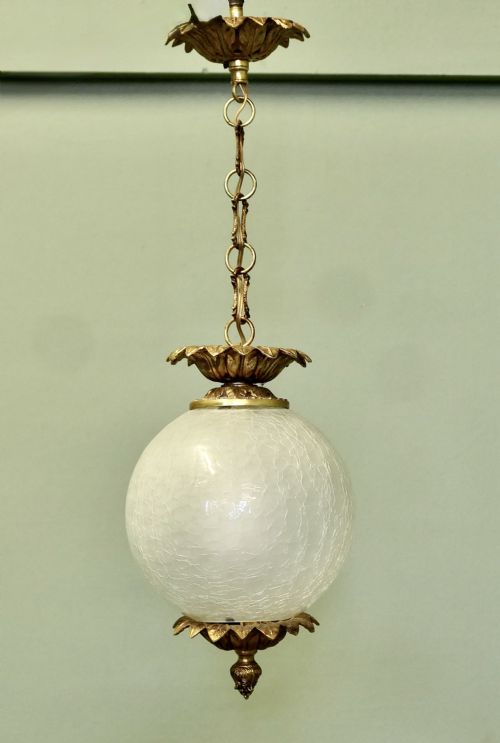
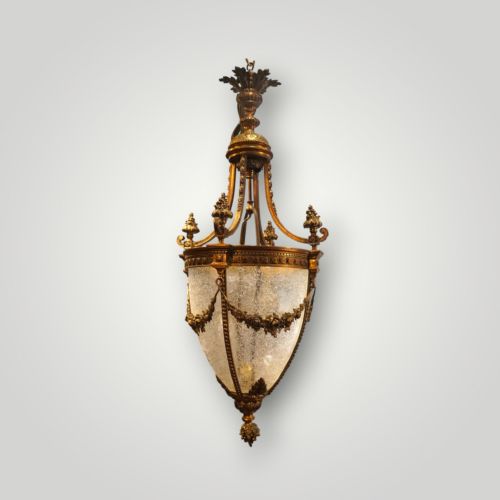
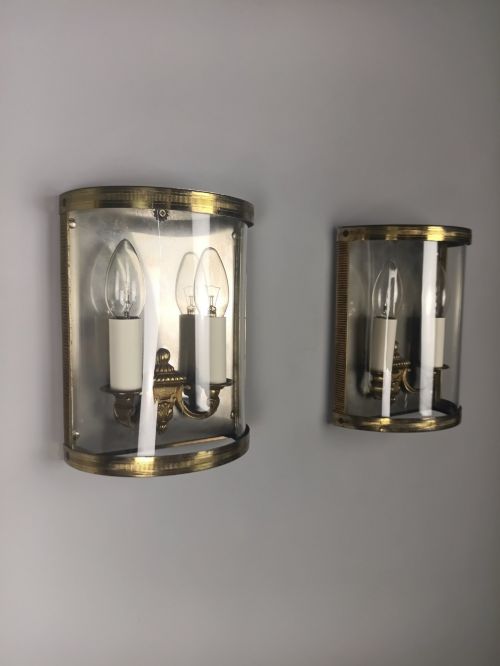
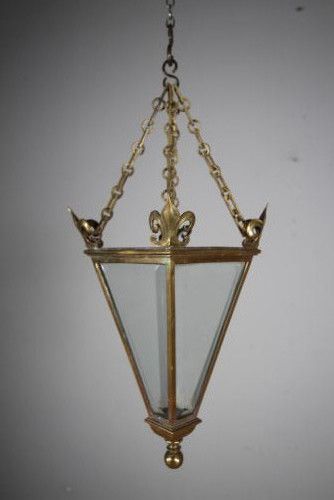
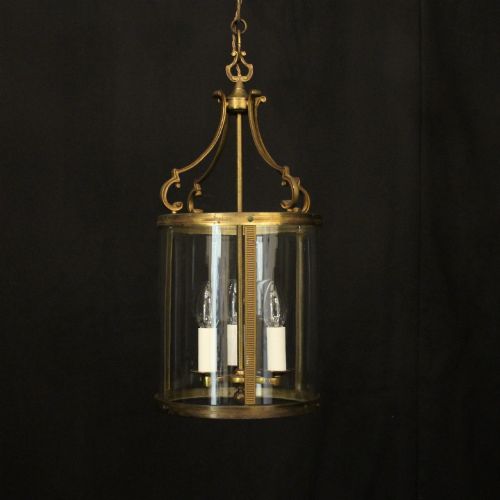
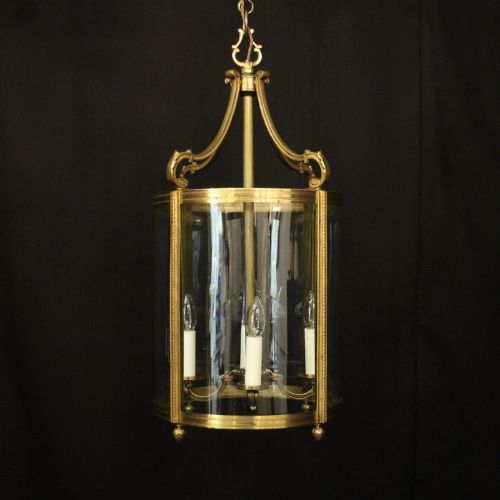
A gilt brass lantern is an interior hanging or wall-mounted light fixture designed principally for hallways, vestibules, and reception spaces. The forms seen span from simple hexagonal pendants to large multi-light hall fixtures and half-lantern wall lights.
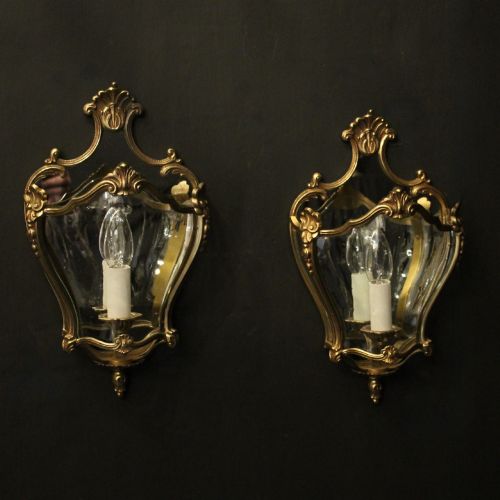
The most common examples on this page are French in origin, dating from the nineteenth century into the 1930s, often drawing on Louis XVI or Rococo decorative styles. These pieces combine metal frames with glass panels designed to diffuse interior candlepower or electric illumination.
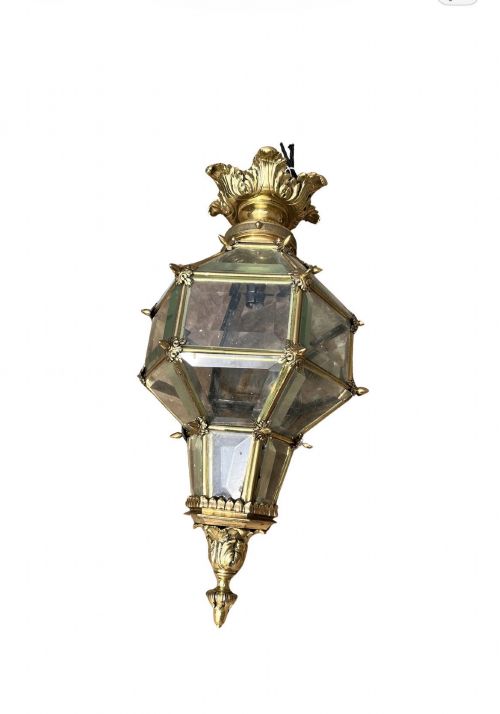
Beyond standard hall pendants, the category includes variations such as convex and bow-fronted designs, cylindrical shapes, and paired wall sconces. Many of these lighting fixtures reflect historical palace interiors, particularly the styles associated with Versailles.
How they were made
The primary structural material is brass, finished with a layer of applied gold tone through gilding, resulting in either gilt brass, ormolu, or gilded bronze. Frames are cast or fabricated into structural sections, incorporating decorative motifs like foliage, scrolls, or architectural banding.
Panels are formed from glass, which frequently appears as flat bevelled panes, curved convex glass, or etched and stained variations. These glass elements are held securely within the metal framework using traditional glazing techniques to enclose the light source.
Gilt Brass Lantern Retail Price Guide 2026
Typical asking prices for gilt brass lantern among the pieces listed under this phrase on Sellingantiques today, from the lower quarter to the upper quarter. They describe what is for sale here now, not the wider market.
Listings feature pieces spanning the Georgian era through the 1930s, executed in gilt brass, bronze, and glass.
What varies in quality
Quality in these lanterns is determined by the crispness of the metal casting and the depth of the gilding applied to the bronze or brass. Finer examples display sharp relief in decorative details like acanthus leaves and beaded borders rather than soft, simplified moulding.
The treatment of the glass further distinguishes the tier of a piece, with heavy bevelled edges or complex convex curves requiring greater skill to produce than plain flat panes. Structural weight and the integrity of the internal candle clusters or lamp holders also separate standard production from superior examples.
George Bullock·Perry And Co
The Gilt Brass Lantern Glossary
- Gilt bronze
- A metal object cast in bronze and coated with a thin layer of gold. This technique provides a durable, rich metallic finish that resists tarnishing over decades.
- Convex glass
- Curved glass panels that project outward from the frame. This shaping increases the spread of light and adds visual depth to the lantern silhouette.
- Ormolu
- Finely chased or gilt bronze applied to decorative arts. The term derives from the French for milled gold, describing the bright metallic finish seen on formal period pieces.
- Bevelled glass
- Glass panes with angled edges cut along the perimeter. This treatment catches and refracts light, creating prismatic colour effects when the fixture is illuminated.
- Hall lantern
- A ceiling-hung lighting fixture specifically scaled for narrow passageways and entrance spaces. These pieces direct illumination downward while casting ambient light through translucent sides.
Gilt Brass Lantern: Frequently Asked Questions
Where should I hang a gilt brass lantern?
These fixtures suit high-ceilinged entrance halls, stairwells, and wide corridors where their downward illumination and reflective metal frames can be fully appreciated. They also function well in period reception rooms as a central overhead light source.
Because many examples drop down on chains or rods, ceiling height is the primary consideration for placement. Half-lantern variations mount directly against walls, making them practical for narrower passageways where hanging pendants might obstruct movement.
How do I identify the period of a lantern?
Dating relies on stylistic cues combined with the construction methods visible in the metalwork and glass. Nineteenth-century examples often feature heavier cast bronze frames with detailed French Neoclassical or Rococo revival motifs.
Later pieces from the early twentieth century may incorporate simpler lines or Art Deco influences while retaining traditional brass materials. Examining the assembly joints and the type of glass panels helps confirm the era of manufacture.
Were these lanterns originally wired for electricity?
Most antique lanterns on the market were originally designed for candles or gas before being adapted for electric bulbs. Surviving pieces often show evidence of conversion work carried out during their working lives.
Many examples are subsequently rewired to meet modern standards while preserving the historic metal framework and glass panels. This allows the fixtures to operate safely with contemporary electrical systems.
What is the difference between brass and bronze?
Bronze is an alloy primarily composed of copper and tin, valued for its strength and ability to accept fine detail during casting. Brass is an alloy of copper and zinc, which tends to have a brighter yellow appearance.
In antique lighting, both metals frequently received a gilt surface finish, making visual distinction by colour alone difficult without examining the underlying metal composition.