

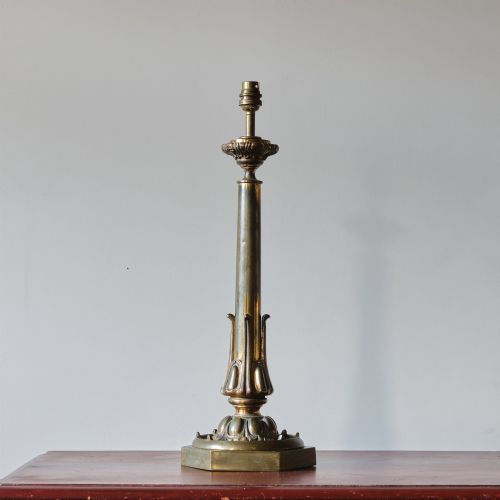
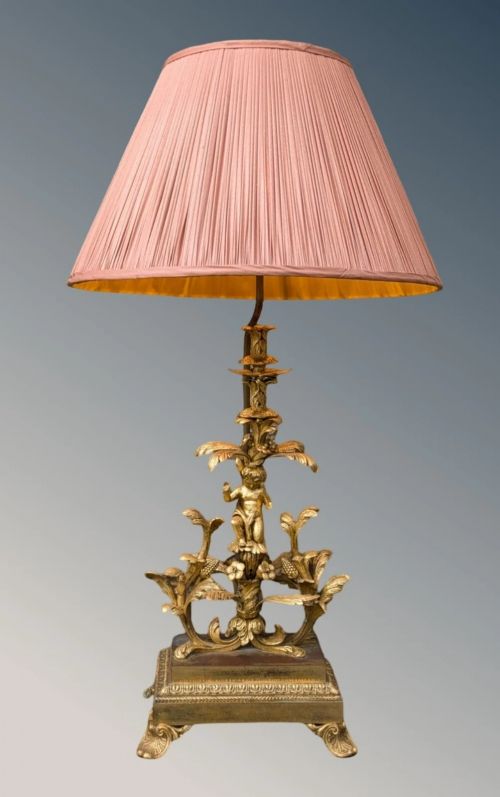
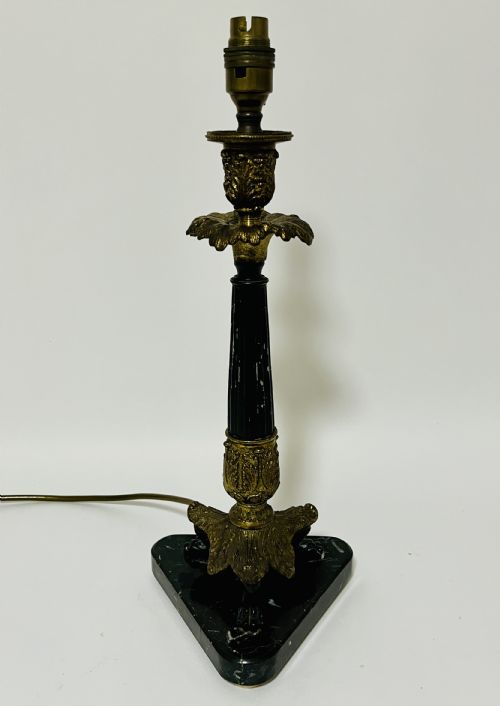




Gilt Brass Candlestick Lamp
These gilt brass candlestick lamps bring rich metallic warmth and period character to a room, turning utilitarian lighting into decorative sculpture.
Gilt Brass Candlestick Lamp
A gilt brass candlestick lamp repurposes historical lighting metalwork, transforming older altar candlesticks, bouillotte lamps, and candelabra into functional electric fixtures. Buyers seek these pieces for their decorative presence, which anchors a scheme with distinct historical weight.
The selections span the nineteenth century into the early twentieth century, showing strong French influence through styles like French Empire, Rococo Revival, and Louis XV. Many examples originate as converted altar pieces, columns, or multi-branch candelabra.
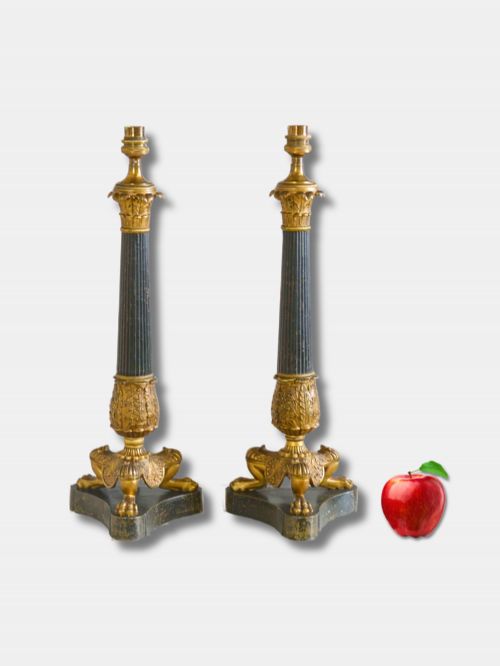
Table lamps and lamp bases dominate the current range, often appearing as matched pairs with cast bronze and ormolu detailing. These objects bridge functional illumination and ornamental antiques.
Materials and construction methods
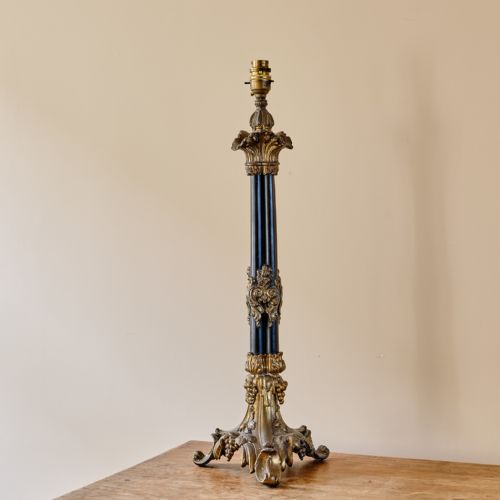
Manufacturers utilised brass, bronze, and gilt bronze, often enhancing the metallic surfaces with mercury gilding or ormolu finishes. Marble, blue glass, and painted toleware frequently accompany the metal structure to add contrasting texture and colour.
Craftsmen cast the metal components in sections before assembling columns, rams' heads, and lions' paw feet with mechanical fixings. Later adaptations incorporated electrical wiring into pieces originally designed for wax candles or oil.
Gilt Brass Candlestick Lamp Retail Price Guide 2026
Typical asking prices for gilt brass candlestick lamp among the pieces listed under this phrase on Sellingantiques today, from the lower quarter to the upper quarter. They describe what is for sale here now, not the wider market.
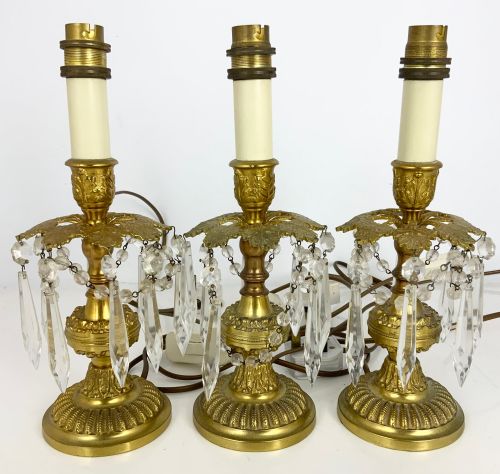
A few brass lamps still sport their glass lustres, ready to tinkle softly if someone walks past too quickly.
Differentiating quality across the range
The refinement of the casting work dictates much of the distinction between pieces, with finer examples displaying crisp chasing on foliage, animal motifs, and architectural fluting. Substantial weight and the use of heavy ormolu or gilt bronze rather than lighter gilt metal mark superior manufacture.
The integrity of the conversion process also matters, as does the retention of original supporting elements like marble plinths, lustres, or multi-branch configurations. Pairs demonstrate higher decorative utility and balance than single items.
Jean-Démosthène Dugourc
The Gilt Brass Candlestick Lamp Glossary
- Ormolu
- Finely ground high-carat gold applied to a bronze base using a mercury amalgamation process. This technique creates a durable, warm metallic lustre characteristic of French decorative objects.
- Bouillotte lamp
- An adjustable metal table lamp featuring a central shaft and a saucers-shaped base, traditionally used for card games. It often incorporates multiple candle arms beneath a shade.
- Candelabra
- A branched candlestick designed to hold multiple lights simultaneously. Many antique examples are later converted to electric table lamps.
- Toleware
- Painted or lacquered sheet metal used for decorative items such as lamp bases and shades. It introduces durable colour into lighting fixtures.
- Altar candlestick
- A tall, heavy candlestick originally made for church altars. These pieces frequently form the structural basis for converted tall table lamps.
Gilt Brass Candlestick Lamp: Frequently Asked Questions
What is a gilt brass candlestick lamp?
It is a lighting fixture created from antique metal candlesticks, columns, or altar pieces, typically cast in brass or bronze and finished with a gold-coloured gilt or ormolu surface.
These pieces combine historical metalwork with modern electrical fittings to serve as decorative table lamps.
How do I identify French Empire style?
French Empire pieces display classical motifs drawn from ancient Rome and Greece, such as lions' paw feet, columns, and symmetrical ornamentation.
They frequently combine dark patinated bronze with bright gilt ormolu highlights to create strong visual contrast.
Were these lamps originally electric?
Almost none of them started life with electric wiring, as the majority began as wax-burning candlesticks, bouillotte lamps, or altar candelabra.
Craftsmen converted them later by running wires through the central channels once used for oil or candles.
Are pairs common with these lamps?
Symmetrical pairs appear frequently among the listings, often originating from matching altar candlesticks or decorative garnitures.
Single lamps also exist, usually surviving as individual pieces from larger sets or repurposed mantel ornaments.