




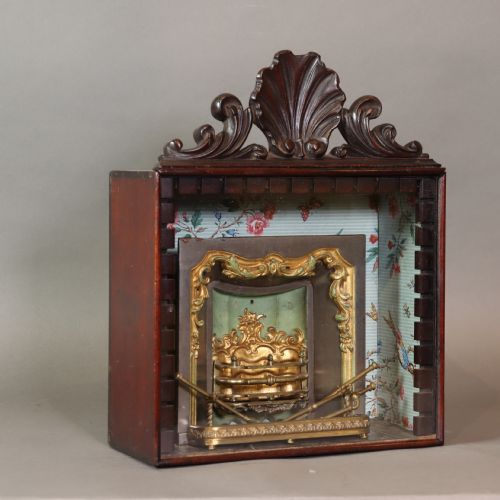


Gilt Brass Box
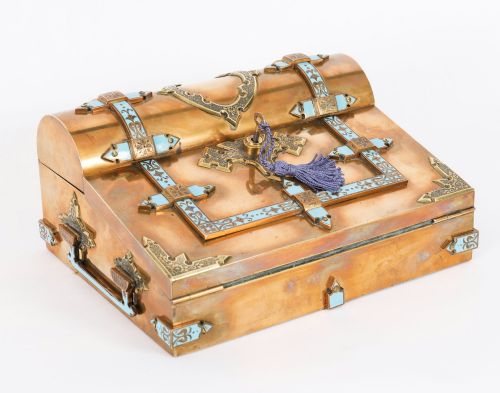
A gilt brass box brings together heavy golden metal and domestic function, offering a tactile way to store jewellery or keepsakes.
Gilt Brass Box
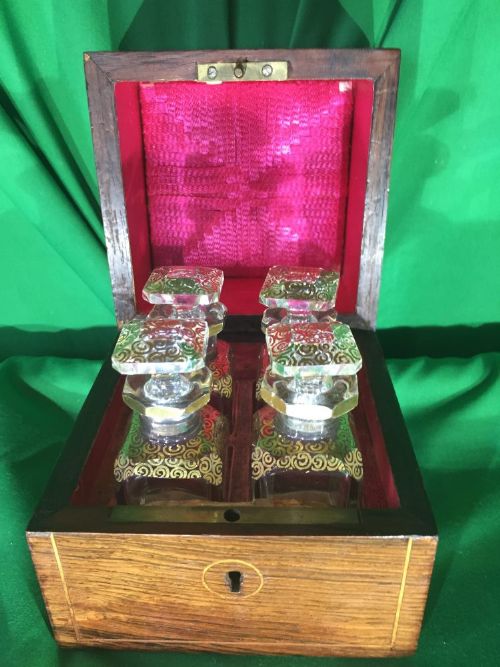
A gilt brass box serves various domestic purposes, appearing frequently as a trinket, jewellery, or pill box across the nineteenth century.
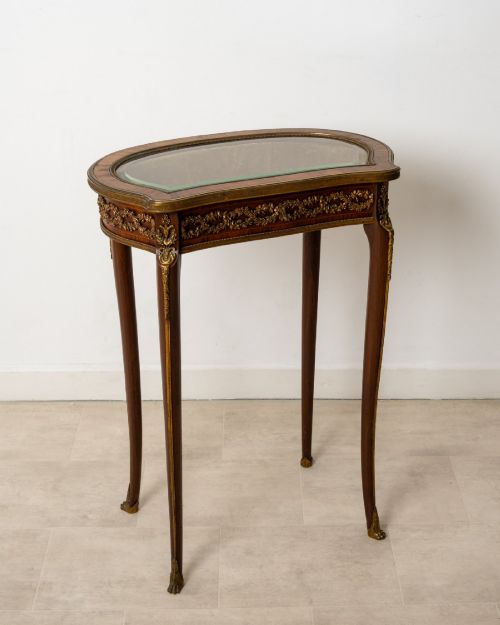
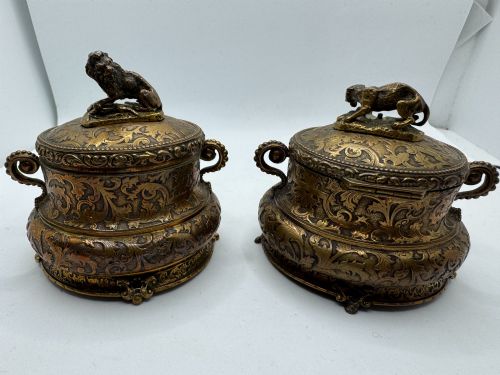
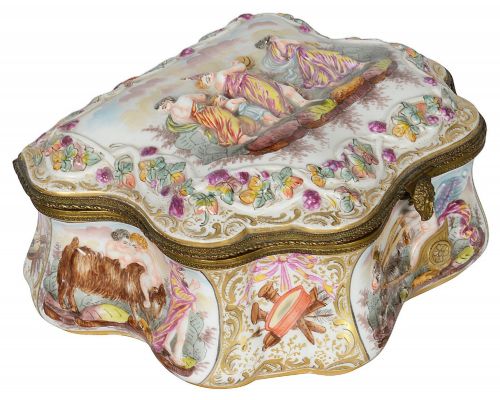
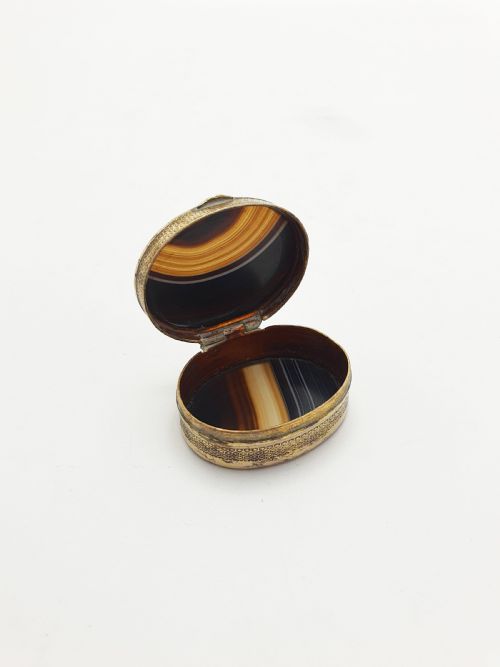
These pieces range from simple nineteenth-century French caskets mounted with glass panels to Victorian desk accessories inset with hardstone agate.
The phrase encompasses small portable items meant for personal items as well as larger table caskets designed for display.
How They Were Made
Maker's workshops cast brass or bronze frames before applying a surface layer of gold gilt, often combining the metal with bevelled glass or panels of porcelain.
Many examples incorporate decorative panels of hardstone, such as banded agate or carnelian, secured directly into the metal armature.
Interior compartments frequently feature linings of silk or velvet to cushion small personal treasures.
Gilt Brass Box Retail Price Guide 2026
Typical asking prices for gilt brass box among the pieces listed under this phrase on Sellingantiques today, from the lower quarter to the upper quarter. They describe what is for sale here now, not the wider market.
Listings feature eighteenth-century pieces alongside nineteenth-century Victorian and Edwardian examples, combining brass, glass, and agate materials.
What Varies in Quality
The weight of the cast metal and the crispness of the chased decoration distinguish finer examples from standard production pieces.
Detailing on hinges, clasps, and fit of lids indicates the level of care taken during initial construction in the workshop.
Howell And James·Karl Griesbaum·Inaba Company·P And F Shafer·Drocourt
The Gilt Brass Box Glossary
- Gilt Brass
- Brass that has been treated with a thin layer of gold applied to the surface. This finish provides the characteristic golden warmth seen on nineteenth-century caskets.
- Ormolu
- A method of applying finely ground gold-mercury amalgam to a bronze or brass object. The term translates from French and denotes high-status decorative metalwork.
- Agate
- A crystalline rock variety of quartz used for decorative inlays on lids and panels. It appears frequently on Victorian and French hardstone boxes.
- Champlevé
- An enamelling technique where troughs are carved into the metal surface and filled with vitreous enamel. These coloured areas then fire flat with the surrounding metal.
Gilt Brass Box: Frequently Asked Questions
What fits inside a gilt brass box?
These containers traditionally held small personal items such as rings, pins, and visiting cards. Deeper versions accommodate larger jewellery or trinkets.
Today they serve the same function while functioning as decorative tabletop objects.
How are these boxes dated?
Stylistic indicators such as Rococo Revival curves or Art Nouveau vegetal lines help place objects in specific decades. Material combinations and hinge construction also point to nineteenth-century origins.
Many pieces reflect the manufacturing styles popular during the Victorian and Napoleon III periods.
Where were they made?
Production centred largely in France and England during the nineteenth century. Workshops in Paris produced numerous ormolu and glass caskets.
English makers frequently combined brass mounts with native woods like rosewood and coromandel.
How do I care for the surface?
The gilt layer requires gentle dusting with a soft dry cloth. Abrasive cleaners strip the gold finish from the underlying brass entirely.
Velvet and silk interiors benefit from occasional air circulation away from direct sunlight.