




Gillow Attributed Furniture
Gillow attributed furniture brings precision cabinet-making and fine woods into a room, offering functional pieces with distinct maker pedigree.
Gillow Attributed Furniture
Gillow attributed furniture spans centuries of British cabinet-making, encompassing practical household items designed with rigorous attention to structural utility and refined proportion. When searching for gillow attributed furniture, buyers encounter a prevalence of Regency and Georgian examples alongside later Victorian interpretations.
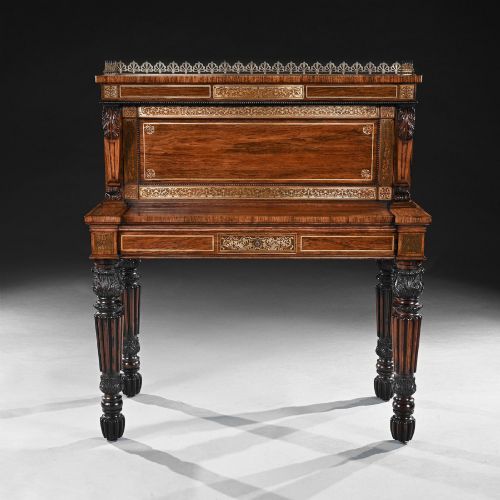
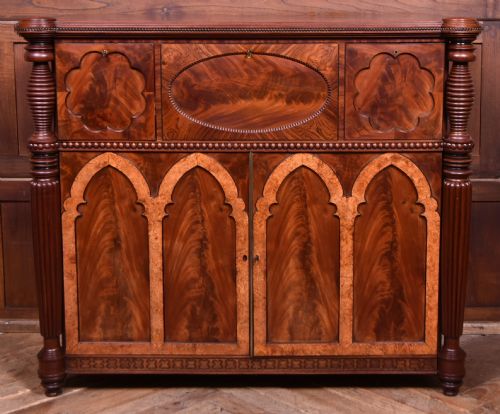
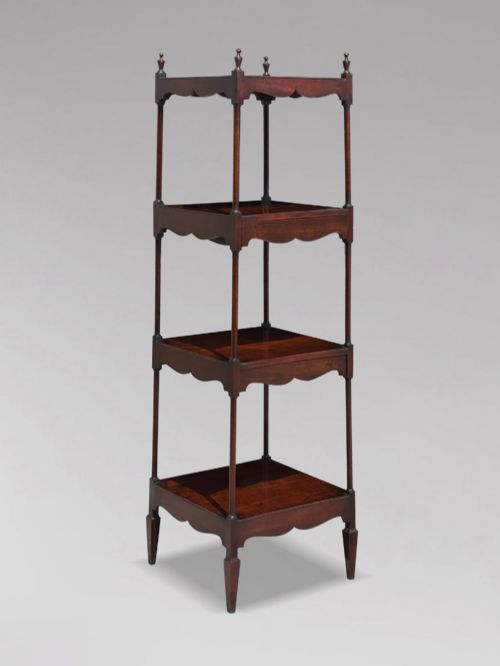
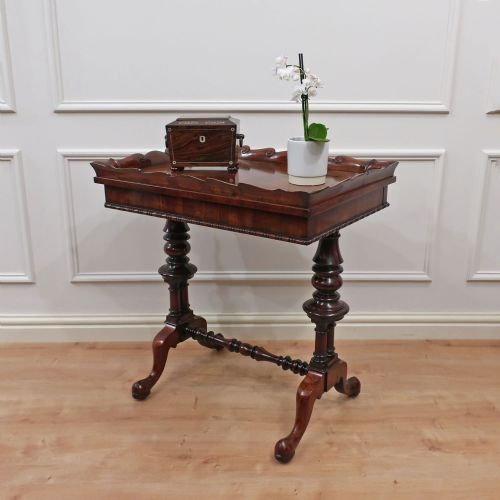
The selection ranges widely across domestic forms, including side tables, dining tables, whatnots, writing tables, and secretaire cabinets. Pieces from the Regency period and the 18th century dominate the selection, often rendered in rich timbers suited to formal and informal rooms alike.
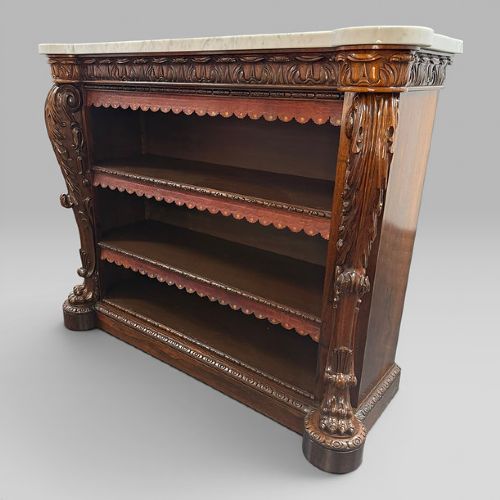
Workshops in both Lancaster and London produced these utilitarian and decorative items, employing specialised forms such as tier stands, open bookcases, and library tables. Each object reflects the changing stylistic demands of its era, moving from Georgian restraint through Regency exuberance to Aesthetic Movement design.
Materials and Construction
Makers utilised dense cabinet timbers such as mahogany, rosewood, and satinwood, frequently selecting flame mahogany and burr walnut for prominent surfaces. These primary woods provided a stable canvas for detailed work.
Decoration relied on precision brass inlay, gilt brass mounts, and contrasting ebonised wood details rather than excessive carving. Construction methods ensured structural longevity in pieces subject to daily domestic use, such as extending dining tables and writing desks.
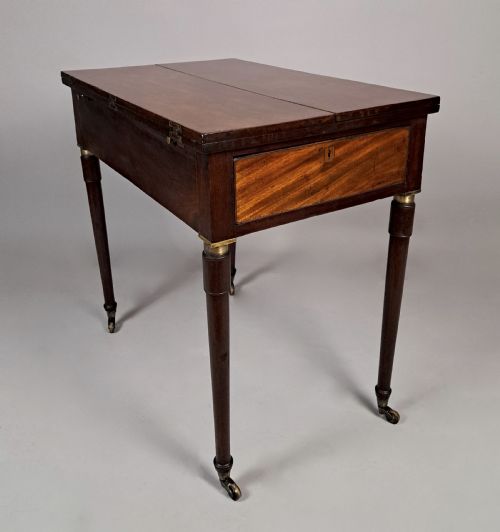
Several items include clever folding mechanisms designed for travellers.
Factors of Distinction
Quality rests in the selection of timber veneers and the crispness of brass detailing, where superior grain alignment distinguishes finer examples. The handling of secondary timbers inside drawers and carcases reveals the underlying standards of the workshop.
Proportion and restraint separate the best pieces from simpler workshop output. Refined turning on legs, precise joinery in multi-tier whatnots, and balanced hardware placement indicate an elevated level of execution.
Gillows of Lancaster·Bruce Talbert
The Gillow Attributed Furniture Glossary
- Whatnot
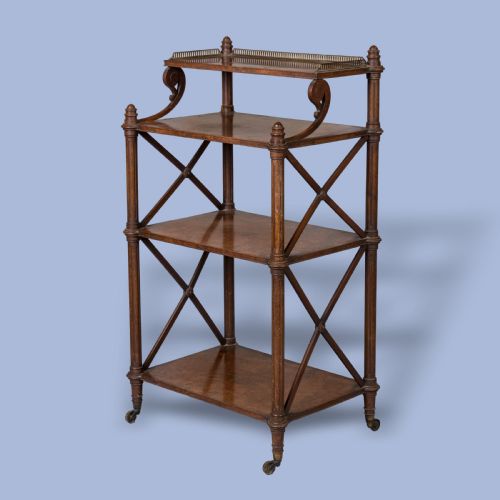
- A set of open shelves supported by pillars, designed for displaying ornaments or holding books. These tiered pieces often feature small drawers incorporated into the lower section.
- Secretaire
- A cabinet or desk featuring a pull-down writing flap that conceals small drawers and pigeonholes. This form combines the storage capacity of a chest with the utility of a writing table.
- Regency
- A British design period spanning the early 19th century, characterised by classical restraint, architectural lines, and Grecian or Egyptian motifs. Furniture from this era often utilises dark woods highlighted with brass.
- Ebonised
- Wood treated with a dark stain or finish to imitate ebony. This technique provided sharp visual contrast against lighter inlay materials on tables and chairs.
- Canterbury
- A low stand with partitioned vertical sections, originally designed to hold sheet music or folios. The form typically includes a small drawer beneath the open compartments.
Gillow Attributed Furniture: Frequently Asked Questions
How do I recognise these pieces?
Recognition relies on identifying specific construction methods, timber choices, and hardware styles associated with documented workshop output. Details such as stamped signatures, characteristic drawer linings, and specific brass inlay patterns help connect unsigned pieces to the firm.
Comparison with documented examples from Lancaster and London workshops provides further confirmation of origin. The integration of practical utility with refined aesthetics remains a consistent hallmark across the forms.
Where were these items made?
Production took place primarily in workshops located in Lancaster and London. These centres allowed the firm to supply both regional estates and fashionable metropolitan townhouses.
Craftsmen in both locations adhered to rigorous standards of timber selection and joinery. Transport links facilitated the distribution of finished tables, cabinets, and seating across the country.
How should I care for the wood?
Maintenance requires keeping pieces away from direct heat sources and strong sunlight to prevent timber splitting and veneer lifting. Regular dusting with a soft, dry cloth preserves the finish without abrasive build-up.
Occasional application of appropriate microcrystalline wax nourishes polish on mahogany, rosewood, and walnut surfaces. Avoiding excess moisture during cleaning protects delicate brass inlays and ebonised details.
Can I use a writing table daily?
These pieces were built for active domestic service, utilising robust framing and durable hardwood surfaces designed for regular writing and administrative tasks. Proper placement on level flooring prevents undue strain on joints and moving desk flaps.
Routine use benefits from employing blotters to protect antique timber finishes from ink and friction. The underlying stability of campaign and library tables makes them well-suited to contemporary workspaces.