

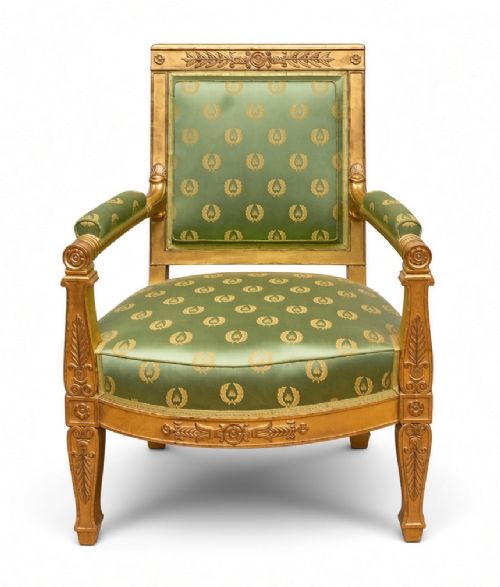
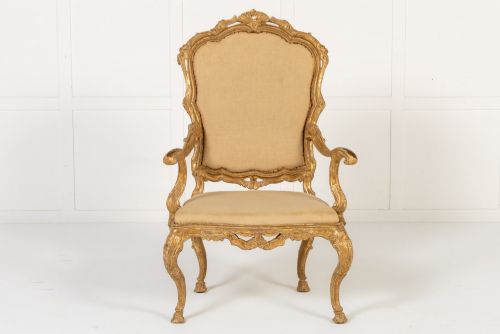


Gilded Wooden Chair
A gilded wooden chair brings unmistakable presence to a room, combining carved timber with the reflective warmth of gold leaf.
Gilded Wooden Chair
A gilded wooden chair encompasses seating from the eighteenth century through to the early twentieth century, spanning formal armchairs and lighter side chairs. When searching for a gilded wooden chair, buyers encounter diverse forms including grand armchairs, side chairs, and specialised seating such as sedan chairs and nursing chairs.
The selection here draws from varied periods including the Regency era, the nineteenth century, and specific styles like Louis XVI and Italian Rococo. These pieces originate from French, Italian, and British workshops, demonstrating broad stylistic influences across different decades.
Materials and construction methods
Construction relies upon robust timbers like beech and ebonised wood, forming the structural carcass which supports subsequent decorative finishes. Artisans applied gold leaf and giltwood directly to the prepared wooden surfaces to achieve a luminous metallic sheen.
Upholstery and detailing incorporate traditional materials such as fabric, velvet, cane, brass, and simulated bamboo elements. These integrated components provide both structural support and textural contrast against the reflective gilded frames.
Gilded Wooden Chair Retail Price Guide 2026
Typical asking prices for gilded wooden chair among the pieces listed under this phrase on Sellingantiques today, from the lower quarter to the upper quarter. They describe what is for sale here now, not the wider market.
One unexpected seating option includes a historic sedan chair designed for indoor or sheltered transit.
Assessing craftsmanship and execution
Quality manifests in the crispness of carved wooden details and the skillful application of gold leaf across complex contours. Superior examples display harmonious proportions and refined joinery that withstands centuries of use.
The integrity of the underlying timber and the preservation of original ebonised or painted surfaces significantly influence the character of each piece. Variations in the execution of stylistic elements, from Louis XVI revival forms to Aesthetic Movement designs, distinguish workshop outputs.
Jacob Desmalter·Bruce J Talbert
The Gilded Wooden Chair Glossary
- Giltwood
- Timber that has been decorated with thin sheets of gold leaf applied over a prepared gesso ground. This finish provides a durable and brilliant metallic surface.
- Ebonised
- Wood treated with a dark stain or finish to imitate ebony. This dark ground frequently provides high contrast for gilded highlights.
- Fauteuil
- An open-armed French armchair featuring upholstered back and armrests with exposed wooden framing. It represents a standard form in formal seating design.
- Cane
- Woven material made from stripped rattan or bamboo used for seat and back panels. It offers a lightweight and flexible seating surface.
- Restauration
- A stylistic period bridging the neoclassical and later nineteenth-century designs, particularly prominent in French furniture production. Pieces from this era balance classical restraint with emerging decorative tastes.
Gilded Wooden Chair: Frequently Asked Questions
How do I clean a gilded wooden chair?
Dust the gilded surfaces gently with a soft, dry brush or a clean microfiber cloth to prevent accumulation. Avoid all liquid cleaners, polishes, and abrasive materials that can lift delicate gold leaf.
Keep the chair away from direct sunlight and excessive humidity to protect both the timber frame and any applied finishes. Professional conservation is recommended if the gilding begins to flake or separate.
Are these chairs suitable for daily dining?
Many side chairs and dining chairs are built for regular use, though older frames require careful handling. Inspect the structural joints and cane or upholstered seats to ensure they can support weight comfortably.
Pairs and larger sets provide functional seating while maintaining a cohesive aesthetic in a dining space. Lighter salon or nursing chairs are better suited for occasional sitting rather than heavy daily service.
How can I identify a Regency period chair?
Regency chairs typically exhibit neoclassical influences with clean lines, classical motifs, and dark ebonised finishes paired with gilding. Look for characteristic leg shapes and structural proportions associated with early nineteenth-century British design.
Comparative details in the turned woodwork and brass accents help distinguish Regency pieces from later revivals. Documentation or provenance notes can further confirm the period of origin.
What is the difference between a salon chair and a fauteuil?
A fauteuil is specifically an open-armed French armchair designed with exposed wooden framing and upholstered comfort. Salon chairs encompass a broader category of lighter seating intended for formal entertaining rooms.
Salon chairs may lack arms entirely or feature compact proportions suited for flexible arrangement in a drawing room. Both types utilise decorative elements like gilding and painted finishes to project elegance.