

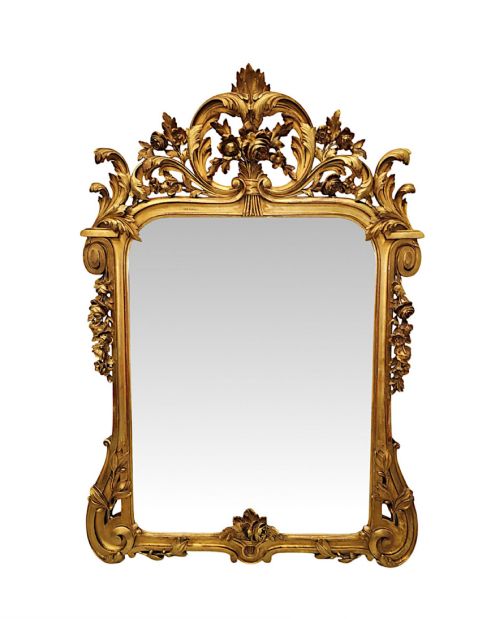
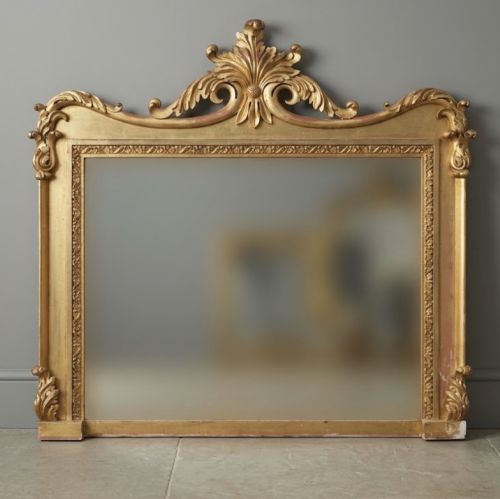

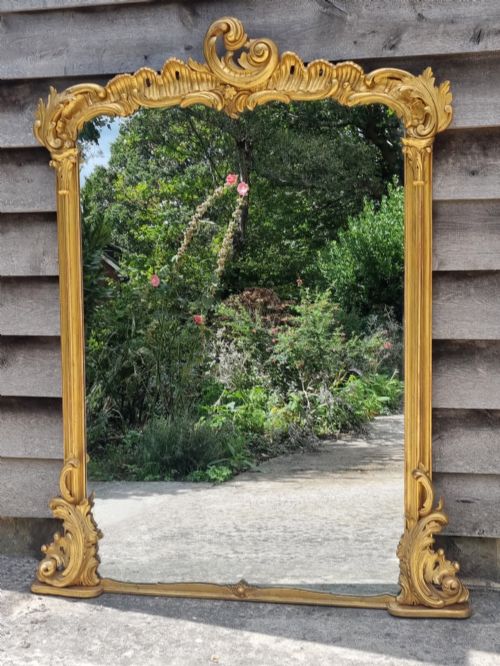
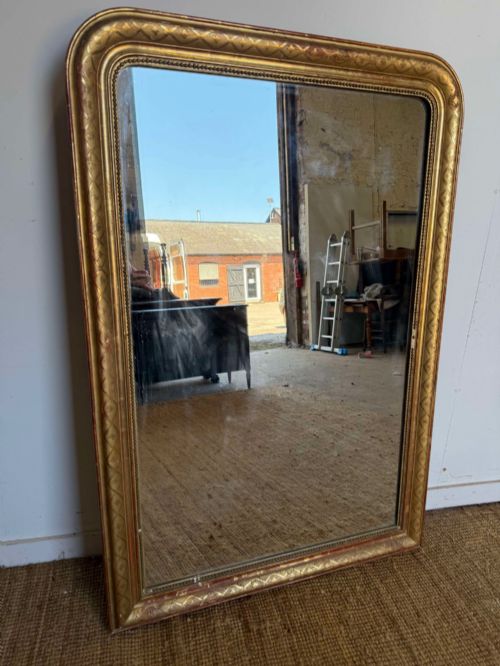
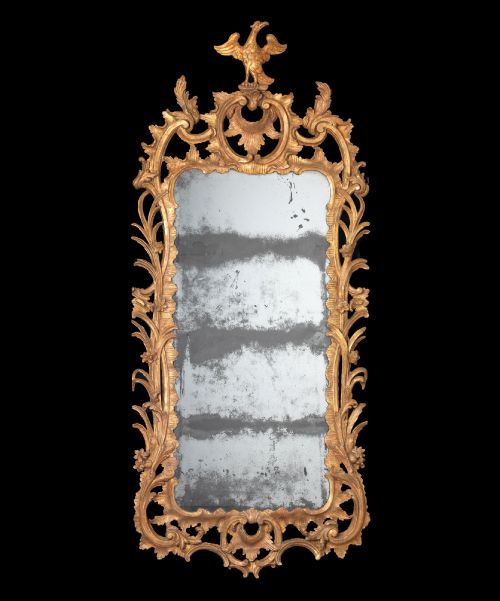
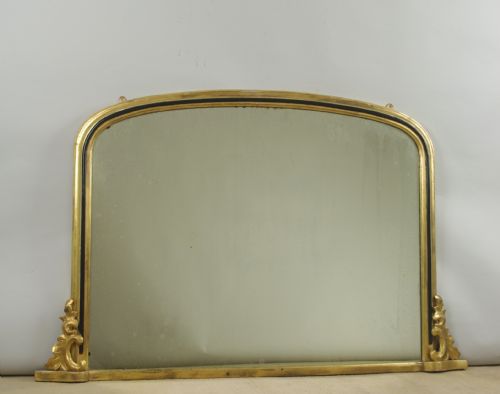
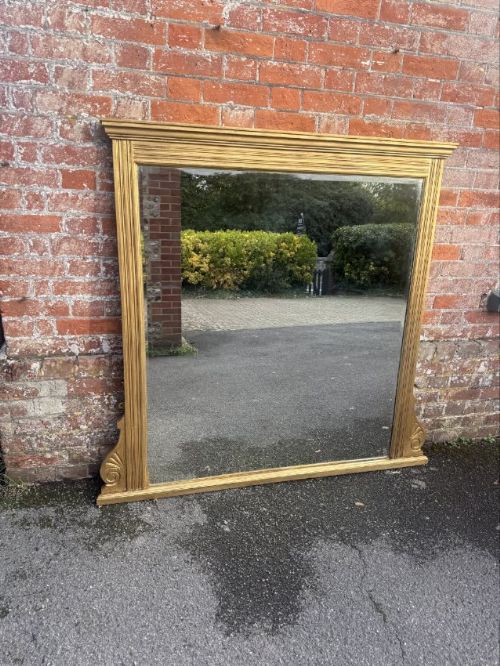
Gilded Wood Overmantel Mirror
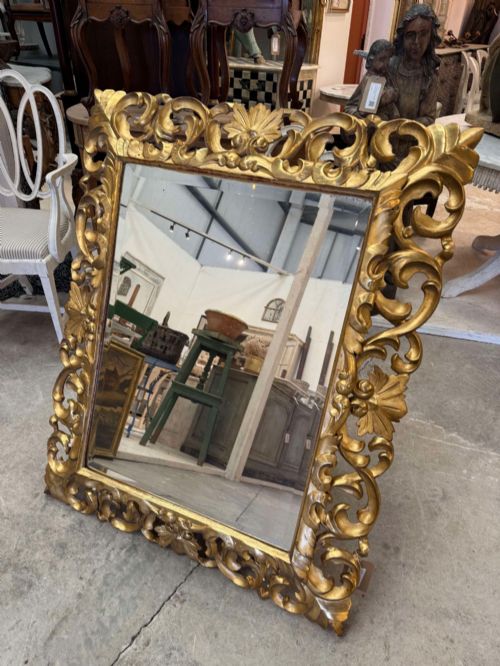
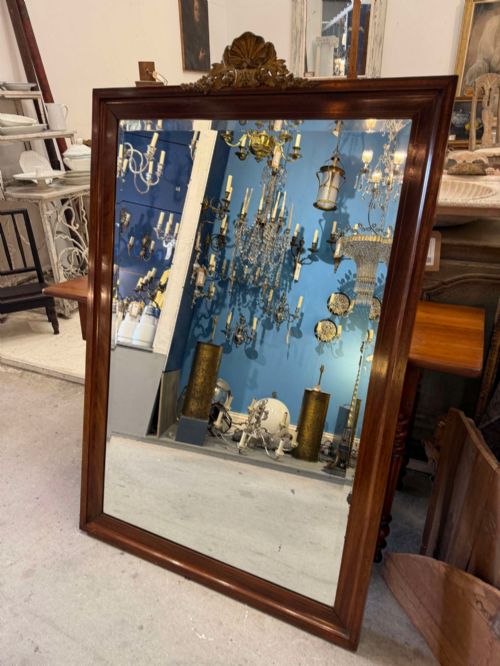
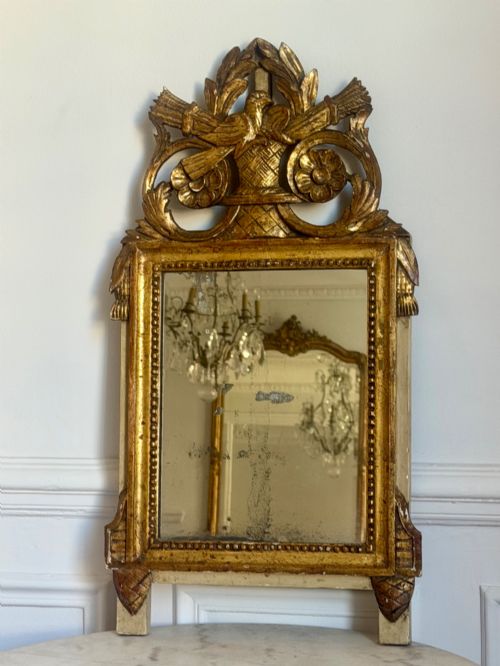
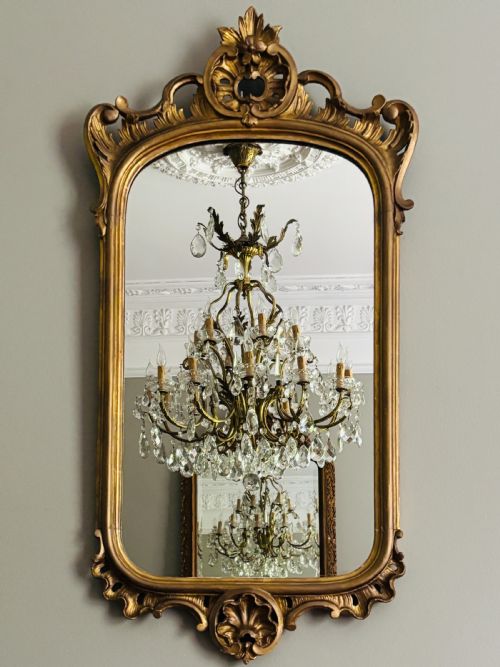
A gilded wood overmantel mirror brings proportion and bright reflection to a room, offering the grandeur of nineteenth-century reception rooms.
Gilded Wood Overmantel Mirror
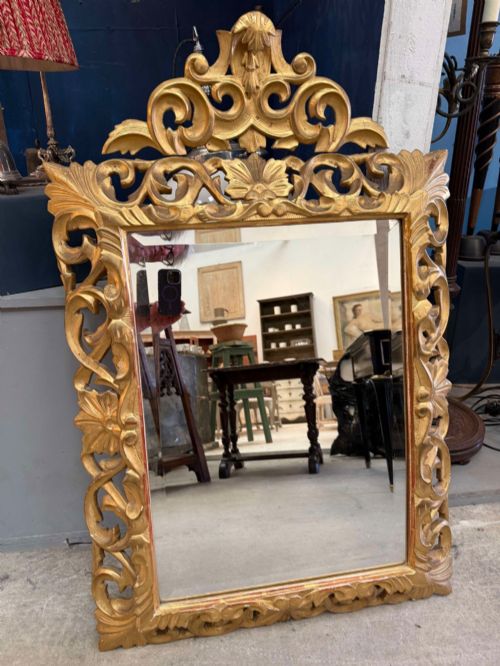
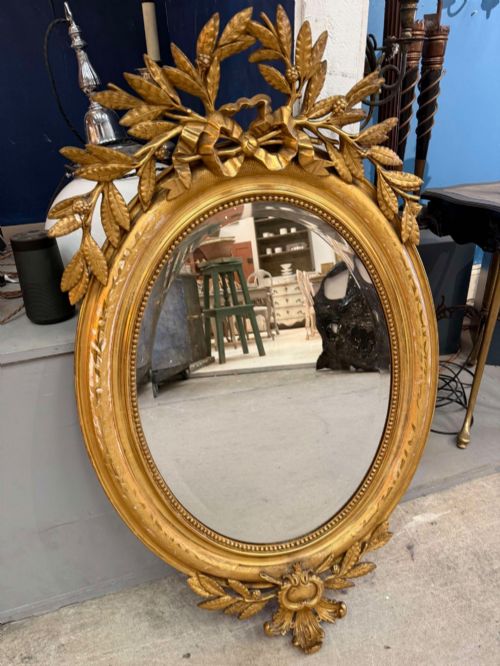
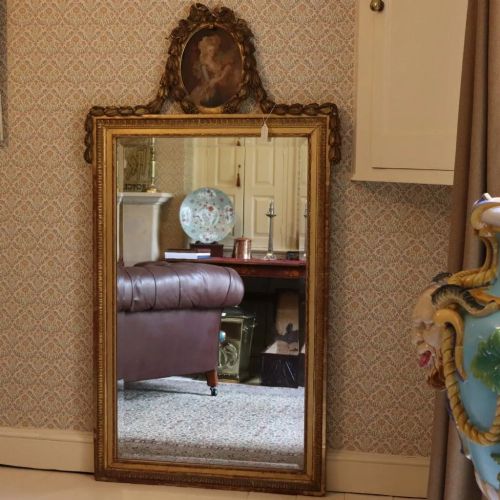
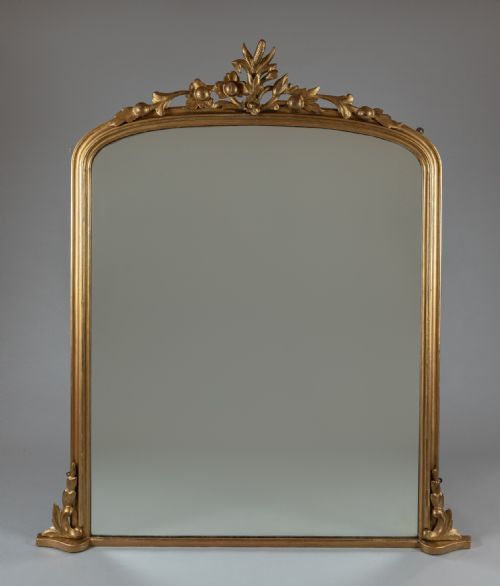
A gilded wood overmantel mirror is a substantial wall glass designed to hang above a fireplace mantel, reflecting light and anchoring the room. These pieces appear in forms such as English Victorian arched designs, French Louis Philippe styles, William IV ovals, and later Art Deco interpretations.
The buyer meets variations spanning English and French origins, running from the mid-nineteenth century up to the twentieth century. Large formats dominate, frequently featuring carved frames intended to sit securely above a hearth.
English examples often display arched tops with carved wood and gesso, whilst French Louis Philippe pieces present clean lines with subtle crests. Overmantel mirrors bridge architectural joinery and decorative furnishing.
How they were made
Makers constructed the carcass primarily from pine and timber, forming sturdy foundations capable of supporting heavy glass plates. Craftsmen then applied gesso layers over the wood substrate to build up relief details for carving.
Guilders covered the prepared surfaces in gold leaf or gilt finish, creating the bright metallic sheen characteristic of these frames. Glass plates were set within the timber rebates, secured with backing boards.
Gilded Wood Overmantel Mirror Retail Price Guide 2026
Typical asking prices for gilded wood overmantel mirror among the pieces listed under this phrase on Sellingantiques today, from the lower quarter to the upper quarter. They describe what is for sale here now, not the wider market.
Even the timber frames need a good stretch, expanding and contracting with every season's draft.
What varies in quality
Quality rests in the crispness of the carved wood and gesso ornamentation, where deeper relief and sharper execution distinguish finer workshops. The application of the gold leaf layer also matters, with smoother, more even coverage denoting superior craftsmanship.
The condition and authenticity of the original glass plate contribute significantly to the character and desirability of the mirror. Well-preserved framing joinery without excessive timber movement separates standard production from exceptional examples.
Nosotti
The Gilded Wood Overmantel Mirror Glossary
- Gesso
- A plaster-like mixture applied to wood frames to provide a smooth surface for gilding and carving. It allows intricate decorative motifs to be moulded onto the timber base.
- Giltwood
- Timber that has been coated with gold leaf or a gilt finish. This material defines the reflective, metallic appearance of the mirror frames.
- Overmantel
- A large mirror or painting specifically scaled to hang on the wall directly above a fireplace mantelpiece. They were traditionally positioned to distribute hearth light around the room.
- Louis Philippe
- A French nineteenth-century style characterised by restrained classical proportions, often featuring rounded upper corners and subtle frame moulding. It offers a softer alternative to heavily ornate carving.
- Carved wood
- Timber shaped by hand using cutting tools to create decorative surface patterns. In these mirrors, it forms the structural and ornamental frame before gilding.
Gilded Wood Overmantel Mirror: Frequently Asked Questions
How do I hang a heavy overmantel mirror safely?
These mirrors carry substantial weight due to their timber frames and thick glass plates. Secure the hanging fixings directly into wall studs or use appropriate heavy-duty masonry anchors.
Distribute the weight evenly across multiple secure points on the back of the frame to ensure structural stability.
Where should an overmantel mirror be placed?
Traditionally hung directly above a fireplace mantelpiece, an overmantel mirror reflects natural light from windows across the room. They also function effectively on large living room walls without a fireplace, provided the scale matches the surrounding furniture.
Positioning the glass at the correct height ensures it captures room reflections rather than ceiling details.
How do I tell a Victorian mirror from an Edwardian one?
Victorian mirrors often exhibit heavier carved ornamentation, arched tops, and deep gesso mouldings typical of mid-nineteenth-century taste. Edwardian examples tend to show lighter construction and simplified framing influenced by earlier revivals.
Examining the timber backing boards and the silvering on the glass plate helps confirm the period of manufacture.