



Gilded Wood Fauteuil
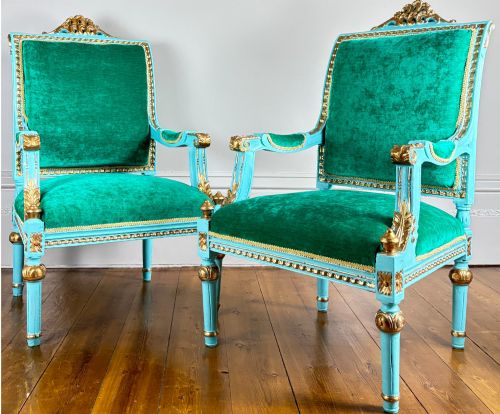
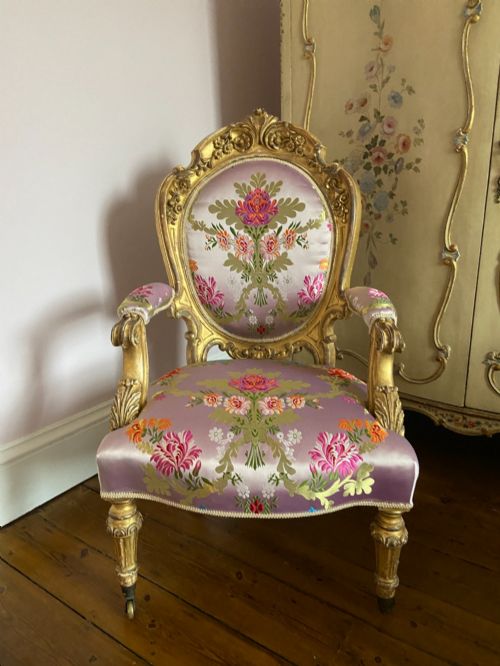
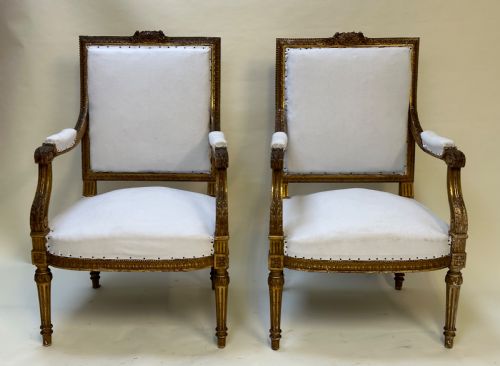
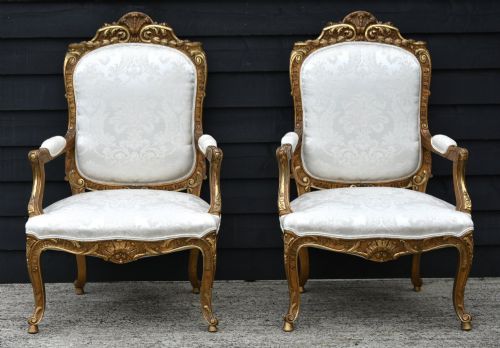
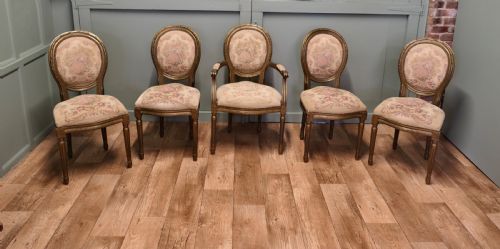
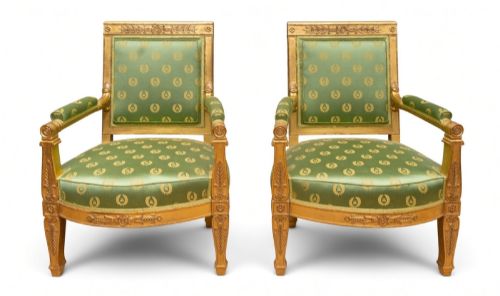
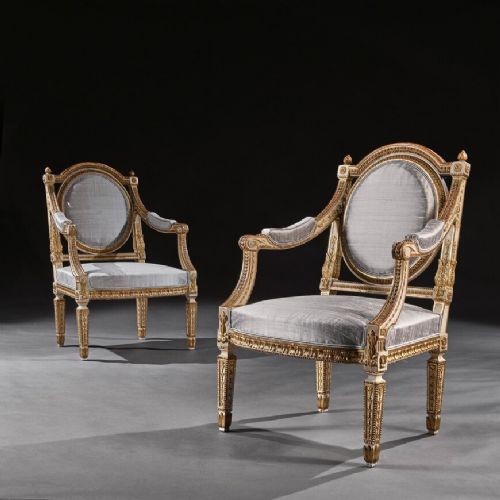
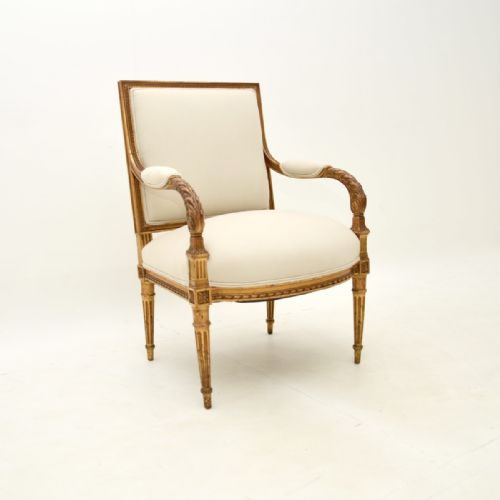
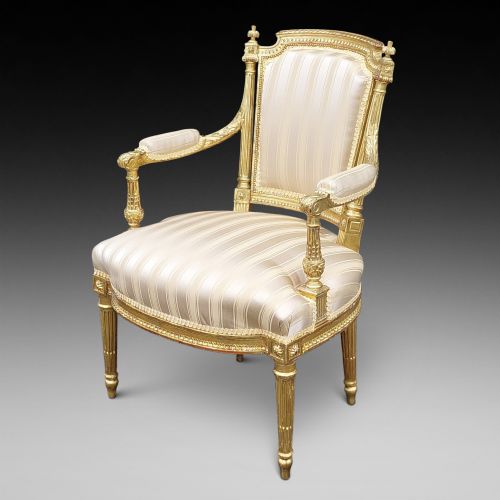
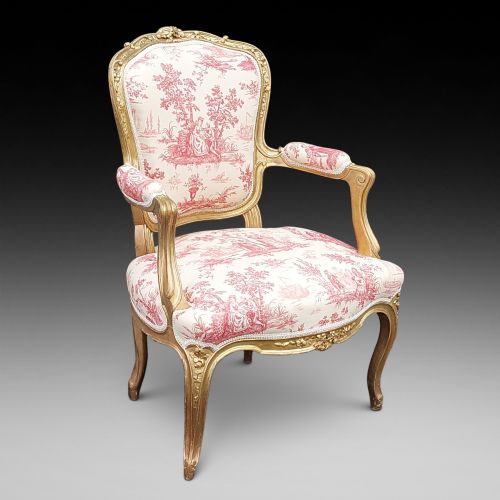
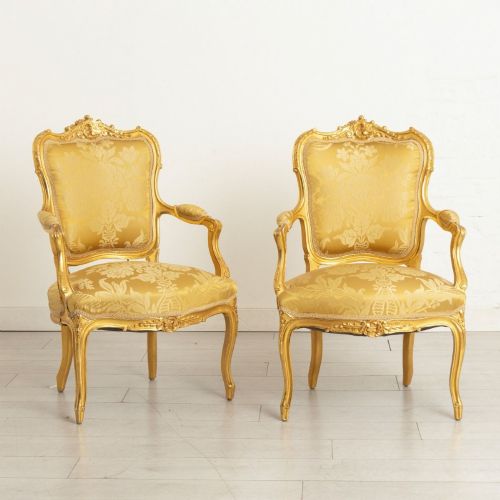
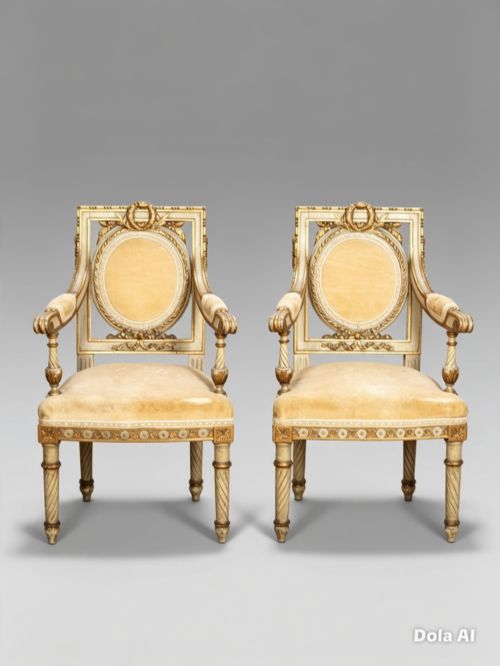
These gilded wood fauteuil armchairs bring French and Italian salon elegance into a room with carved giltwood frames and upholstered seats.
Gilded Wood Fauteuil
A gilded wood fauteuil is an open-armed seating piece designed for formal salons, appearing in forms from 18th century originals to 19th century revivals. Buyers seeking this phrase encounter French and Italian open armchairs shaped in styles such as Louis XVI, Rococo, and Barocchetto.
The selection ranges from single salon chairs and pairs to larger multi-piece salon suites accompanied by dining chairs and smaller bedroom seating. Beech, walnut, and general wood form the structural foundations beneath the applied surface gilding.
How they were made
Frames rely on carved timber such as beech and walnut, shaped to follow classical revival curves and rectilinear lines. Artisans applied thin layers of gold leaf or gilt treatment directly onto the prepared wooden surfaces.
Upholstery involves traditional textile coverings including silk, velvet, tapestry, and damask secured to the open arm structures. Many examples retain historical textiles while others receive contemporary fabric updates.
Gilded Wood Fauteuil Retail Price Guide 2026
Typical asking prices for gilded wood fauteuil among the pieces listed under this phrase on Sellingantiques today, from the lower quarter to the upper quarter. They describe what is for sale here now, not the wider market.
Several listings include miniature children's salon chairs scaled down for nineteenth-century nurseries.
What varies in quality
Depth and crispness of hand-carved ornamentation dictate the distinction between standard production and finer atelier pieces. Crisp floral swags, fluted legs, and scrolls separate superior framework from simpler turning.
Integrity of the original gilt surface and the quality of the textile upholstery determine the visual impact of the chair. Silk and tapestry coverings maintain historical character better than generic modern replacements.
Jacob-Desmalter
The Gilded Wood Fauteuil Glossary
- Giltwood
- Wood that has been decorated with gold leaf or a gold-coloured metallic finish applied to its surface. This finish creates the characteristic bright metallic sheen seen on formal salon seating.
- Louis XVI Style
- A neoclassical design movement characterised by straight tapered legs, geometric symmetry, and classical ornamentation. Pieces from this aesthetic often incorporate carved fluting and ribbon twists.
- Rococo Revival
- A nineteenth-century artistic movement that resurrected the flowing asymmetrical curves and naturalistic motifs of the eighteenth century. Frames display elaborate scrolling foliage and shell motifs.
- Salon Suite
- A matched set of seating furniture comprising a larger settee and several armchairs designed for entertaining guests. These suites share identical carved frames and upholstery schemes.
Gilded Wood Fauteuil: Frequently Asked Questions
What is a gilded wood fauteuil?
A gilded wood fauteuil is an open-armed French or Italian armchair featuring a carved wooden frame finished with gold leaf. These seats were built for formal reception rooms and drawing rooms.
They combine exposed decorative woodwork with upholstered armrests and seats. The form spans several centuries of European furniture design.
How do I identify the style?
Styles range from curved Rococo lines to straight fluted neoclassical supports associated with the Louis XVI aesthetic. Look at the legs and arm structures to determine the period influence.
Carving details such as acanthus leaves, ribbons, and scrolls point towards specific revival eras or eighteenth-century origins.
Are these chairs comfortable for daily use?
These chairs provide upright support suited for formal sitting rather than deep lounging. The open wooden arms and firm padding reflect their origins in historic reception spaces.
Many examples feature newly updated silk or velvet upholstery that offers a comfortable surface for occasional living room seating.
How should I care for giltwood frames?
Dust giltwood frames gently with a soft dry cloth to protect the delicate metallic surface. Avoid liquid cleaners and modern polishes that can lift the historical finish.
Keep the chairs away from direct sunlight and damp conditions to preserve both the timber structure and the textile upholstery.