
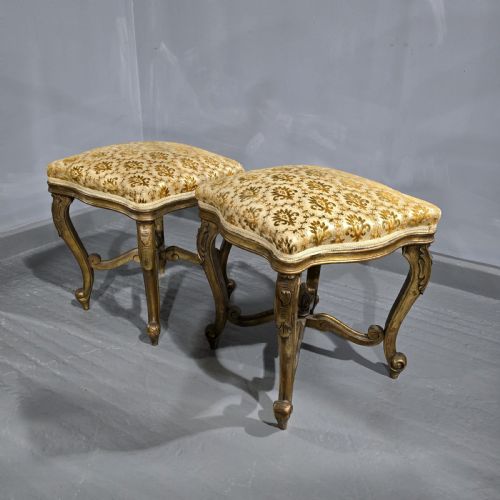
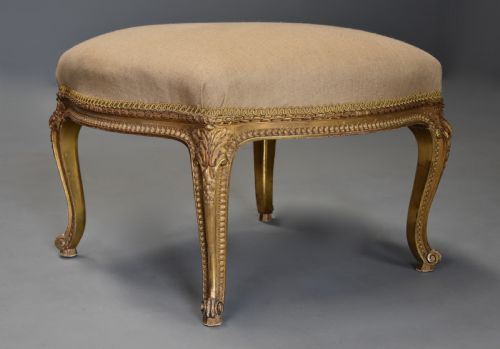


Gilded Vanity Stool
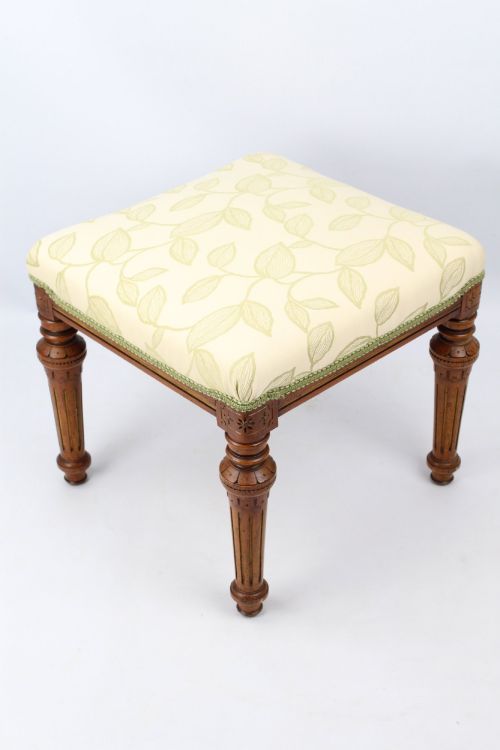
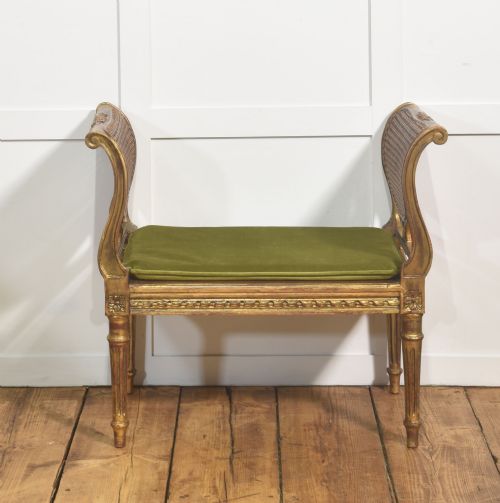
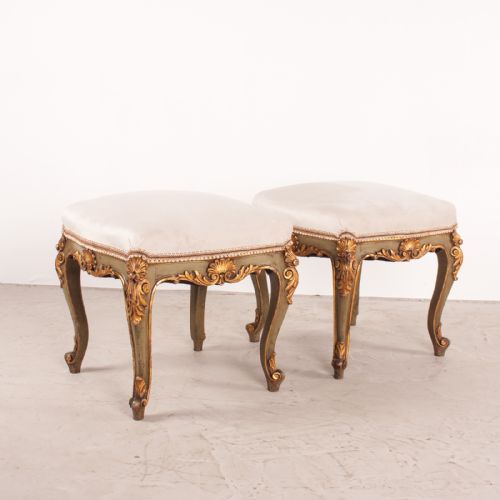
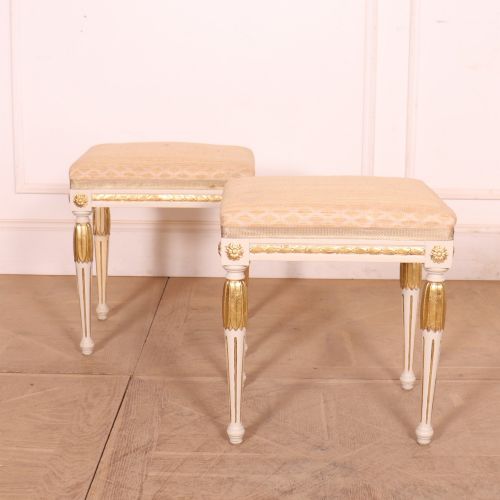
These gilded vanity stool examples bring French and Victorian elegance to dressing rooms and bedrooms through decorative frames and upholstered seats.
Gilded Vanity Stool
A gilded vanity stool serves as an ornate seat for a dressing table or bedroom, combining decorative woodframes with soft upholstered surfaces. These pieces appear in forms such as window seats, duet stools, and footstools.
Most examples date from the nineteenth century, reflecting Victorian and continental tastes. Makers drew heavily on Louis XVI, Neoclassical, and Rococo styles to shape these compact furnishings.
The selection ranges from simple gilded frames to carved wooden structures paired with silk, velvet, or linen. Buyers often find pairs alongside single stools designed for specific interior settings.
Materials and construction
Craftsmen shaped frames from oak, walnut, and other timbers, frequently applying a layer of gesso to smooth the wooden surface before adding gold leaf or paint. This foundational layer allowed carvers to execute intricate decorative motifs.
Surfaces received either gold leaf or gilt paint to achieve a brilliant metallic finish, while structural elements often featured hand-carved ornamentation. Upholstery materials such as velvet, silk, and linen were then fitted to the seats.
Listings feature nineteenth-century pieces spanning the Victorian era, 1860, 1870, 1880, 1890, 1900, and 1910.
Assessing quality and craftsmanship
Quality shows in the depth and crispness of the hand-carved wooden details on the frame rather than a smooth, machine-made finish. Superior pieces display fluid lines in styles like Louis XVI or Baroque revival.
The application of gold leaf over gesso creates a richer texture and deeper lustre than plain gilt paint. Original upholstery fabrics and sturdy joinery further distinguish finer pieces from simpler utilitarian seating.
Loidrault Freres Paris·A.M.E. Fournier
The Gilded Vanity Stool Glossary
- Giltwood
- Timber that has been coated with gold leaf or a gold-coloured substance. This finish defines the reflective appearance characteristic of these decorative seats.
- Gesso
- A plaster-like mixture applied to wood to create a smooth surface for gilding and carving. It provides the base that holds fine detail.
- Curule stool
- An ancient Roman chair shape featuring cross-legs that form an X-frame. This classical form appears in neoclassical nineteenth-century seating.
- Duet stool
- An elongated seat designed for two people, often used at pianos or large dressing tables. These wider proportions accommodate multiple sitters.
Gilded Vanity Stool: Frequently Asked Questions
How are gilded vanity stools used?
These stools function primarily as seating at dressing tables, bedrooms, or windows. Their compact size allows them to tuck neatly beneath furniture when not in use.
They also serve as decorative accents or footrests in living spaces and dressing rooms. Their ornate frames make them suitable for display as standalone decorative objects.
How do I date a nineteenth-century stool?
Dating relies on examining the timber species, joinery techniques, and stylistic influences present in the carved frame. Victorian and continental pieces often display specific revival motifs.
Changes in gesso application and the wear patterns on the gold leaf provide further clues to age. Comparing the stylistic details to known nineteenth-century design periods helps narrow the timeframe.
What styles are common for these stools?
Most examples draw on French and continental aesthetics, particularly Louis XVI, Rococo, and Neoclassical designs. These styles feature symmetrical floral carvings, fluted legs, and gilded surfaces.
Victorian interpretations also appear frequently, often blending baroque elements with robust wooden construction. Swedish gustavian influences bring lighter painted and gilded finishes to the selection.
How should I care for giltwood?
Giltwood requires gentle dusting with a soft, dry cloth to prevent accumulation without disturbing the delicate gold leaf surface. Moisture and harsh cleaning agents can damage the underlying gesso.
Keeping these pieces away from direct sunlight and humidity protects the gilded finish and upholstery fabrics from fading. Careful handling preserves the original carved details.