

Gilded Twin Candle Sconces
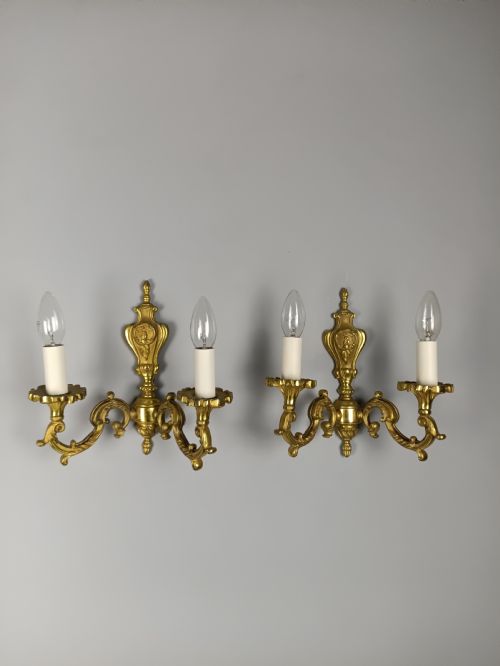
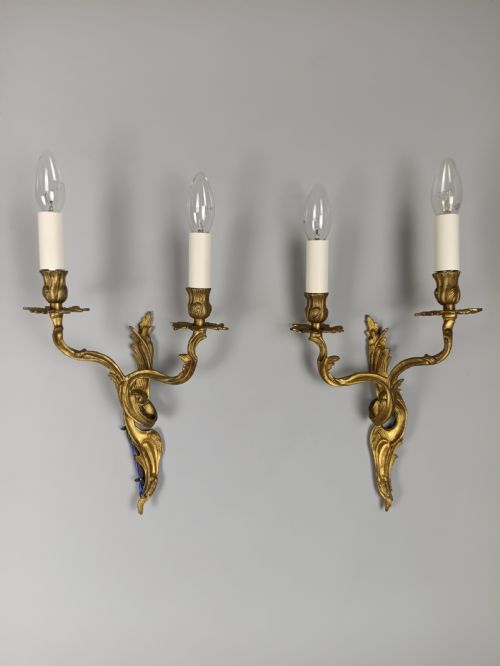
Gilded twin candle sconces bring sculptural warmth to walls, combining cast metal or carved wood with candlelight.
Gilded Twin Candle Sconces
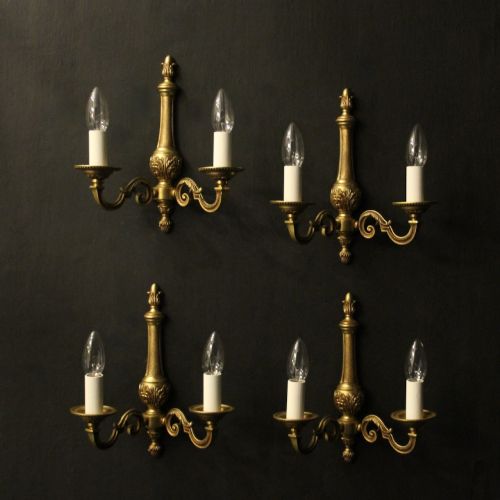
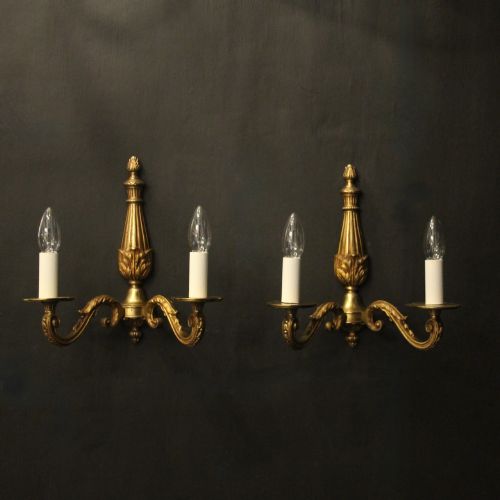
These fixtures are wall-mounted lights designed to hold two candles, frequently taking the form of wall lights, girandoles, or wall sconces. When searching for gilded twin candle sconces, buyers encounter items originating from France, Italy, and England, spanning the nineteenth century through to the mid-twentieth century.
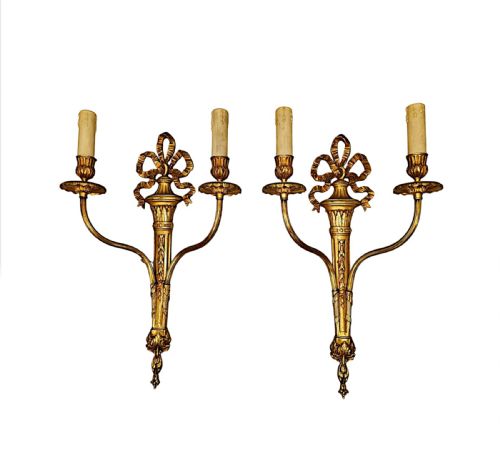
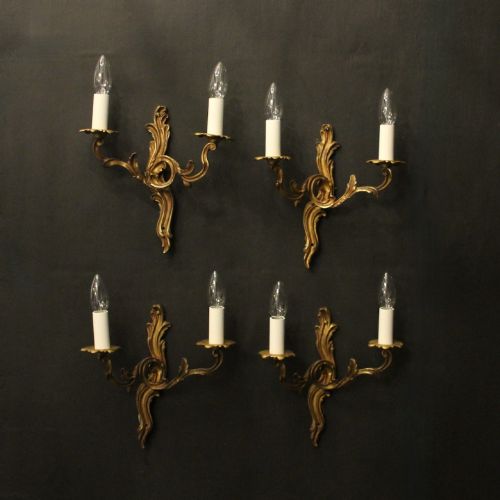
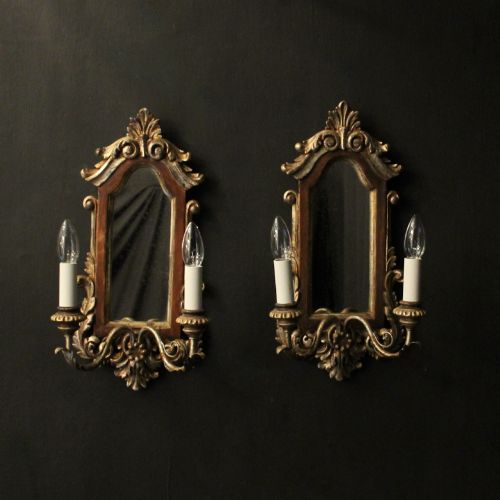
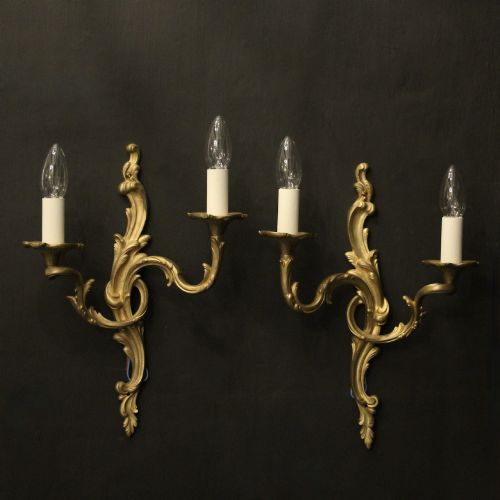
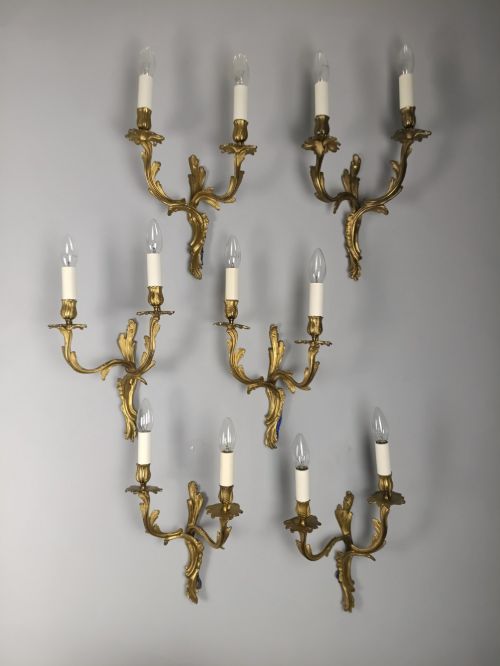
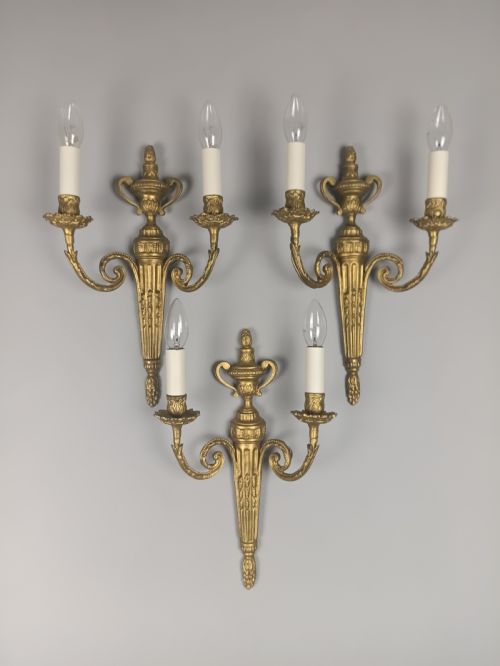
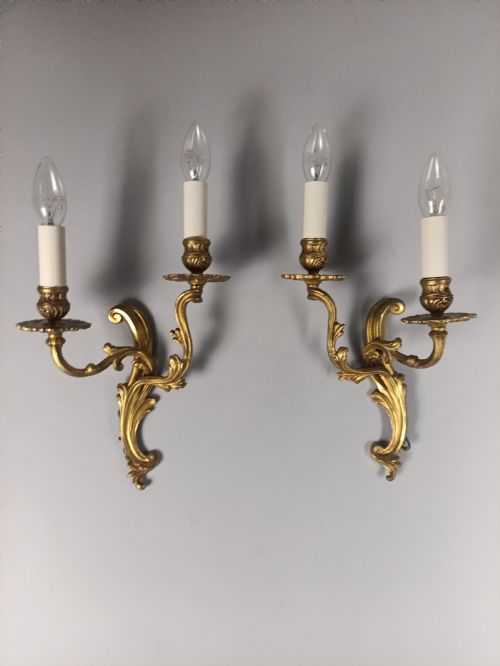
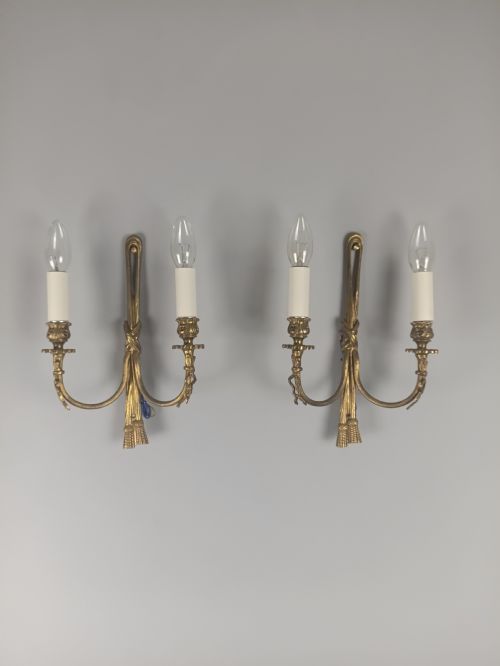
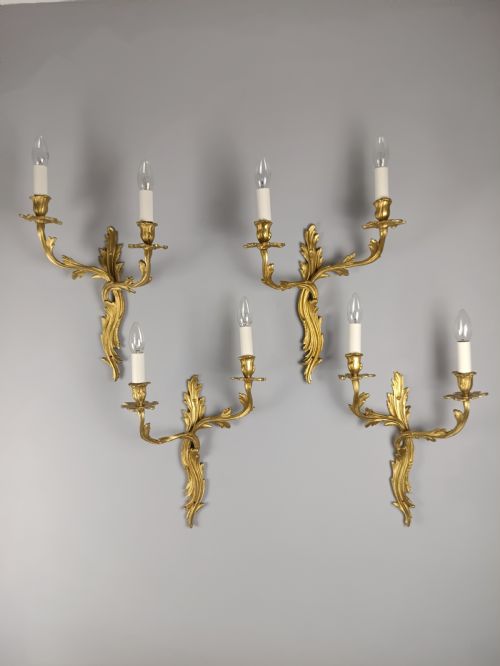
The dominant style on this page is French, often channeling Rococo, Neoclassical, or Louis XVI aesthetics alongside Florentine giltwood pieces. They appear singly or in matched pairs and sets, designed to mount directly onto domestic walls to cast reflected light across a room.
Materials and Construction
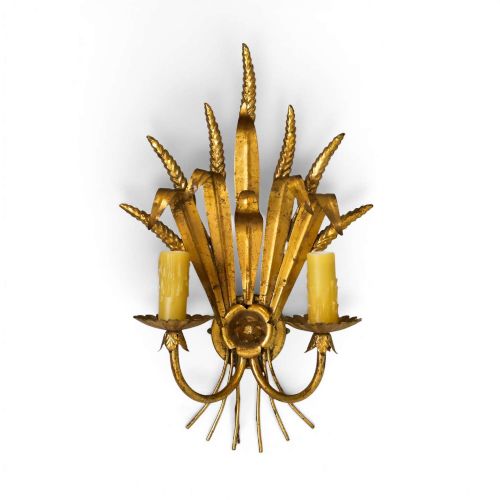
Maker workshops utilised metals such as brass, bronze, ormolu, and gilt metal, applying surface gilding to achieve a reflective metallic finish. Alternatively, Florentine pieces employ carved wood finished in giltwood or gilt polychrome.
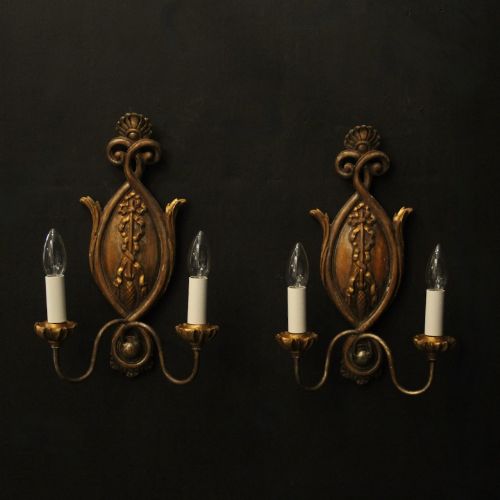
Casting and carving techniques allowed artisans to shape elaborate ribbons, cherubs, and scrolling foliage into twin branches. These structural elements were then assembled to hold candle sockets securely while presenting a unified decorative facade.
Several pieces feature carved wooden cherubs clinging steadfastly to their twin candle branches across the centuries.
Markers of Distinction
Quality rests in the crispness of the cast bronze or the depth of the wood carving, where finer examples display sharp detail in motifs like ribbon bows and acanthus leaves. The integrity and preservation of the original gilt surface also separate standard items from superior specimens.
Substantial weight in the metal elements and harmonious proportions between the backplate and the twin arms indicate careful manufacture. Simpler, lighter constructions or faded surfaces mark the other end of the range.
Maison Baguès
The Gilded Twin Candle Sconces Glossary
- Ormolu
- Gilded bronze, typically produced by applying a mercury and gold amalgam to cast bronze. This technique creates a durable, warm metallic finish common on French decorative hardware.
- Giltwood
- Wood that has been coated with a thin layer of gold leaf or powder. It appears frequently on Florentine wall lights and girandoles.
- Girandole
- A decorative branch candlestick or light fixture designed to be mounted on a wall. These pieces often incorporate reflective backplates to amplify candlelight.
- Rococo
- An artistic style characterised by asymmetrical scrolls, shell motifs, and natural curves. It heavily influences many French wall lights on this page.
- Neoclassical
- A style drawing inspiration from classical antiquity, featuring symmetrical lines, urns, and architectural motifs. It represents a significant design stream among the listed pieces.
Gilded Twin Candle Sconces: Frequently Asked Questions
How do I install these wall lights?
Most antique wall sconces require mounting securely to wall studs or via appropriate wall anchors to support their weight. Electrical versions need professional wiring into existing wall circuits.
Non-electric candle versions simply hang from a sturdy wall hook or screw fixed into the masonry or timber.
Are these sconces wired for electricity?
Many pieces on this page originated for candles, though some mid-century examples are electric wall sconces. Conversion depends on the specific wiring status noted in individual listings.
Buyers intending to use candles should check the socket dimensions to ensure standard taper candles fit correctly.
How do I clean gilded surfaces?
Gilded brass, bronze, and giltwood require gentle dusting with a soft, dry cloth to prevent damage to the delicate metallic finish. Avoid using chemical cleaners, polishes, or abrasive cloths.
Moisture can strip or discolour gold leaf and old gilding, so liquid cleaning agents should be kept away from the surfaces.
How can I tell French styles apart?
French Rococo pieces feature flowing, asymmetrical scrolls, cherubs, and organic plant forms. Louis XVI and Neoclassical designs adopt stricter symmetry, straight lines, ribbons, and classical urn motifs.
Florentine items often rely on carved giltwood rather than cast bronze, displaying distinct Italian regional decorative traits.