

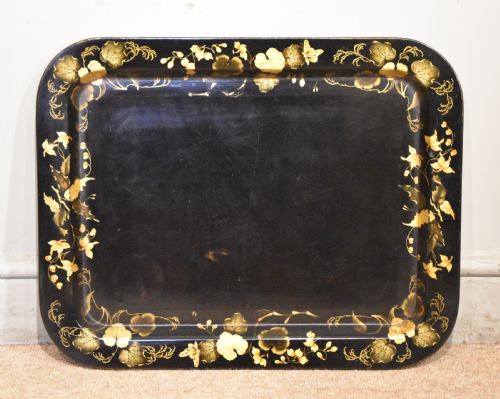
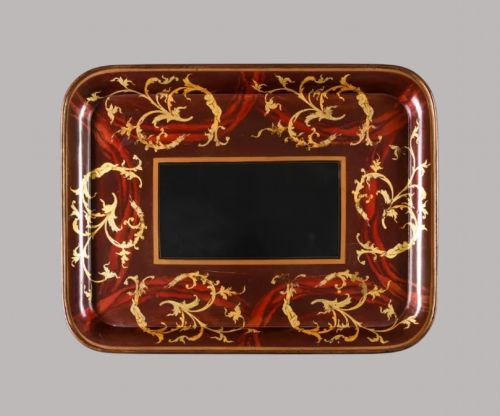
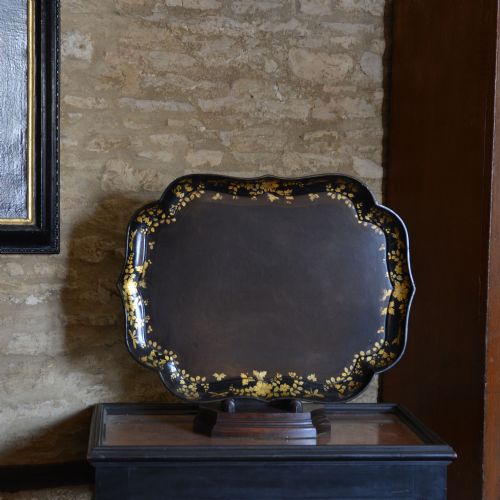
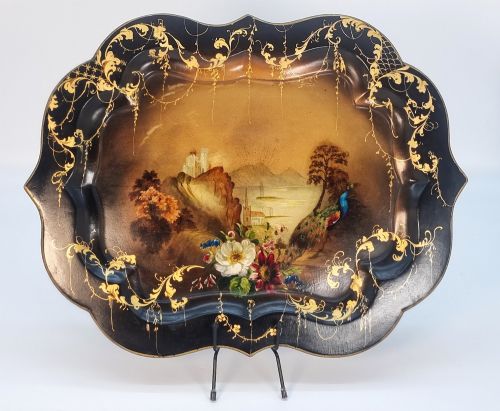

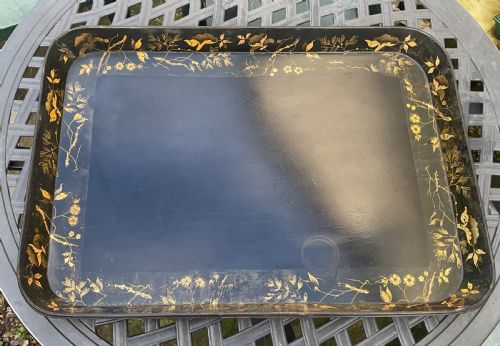
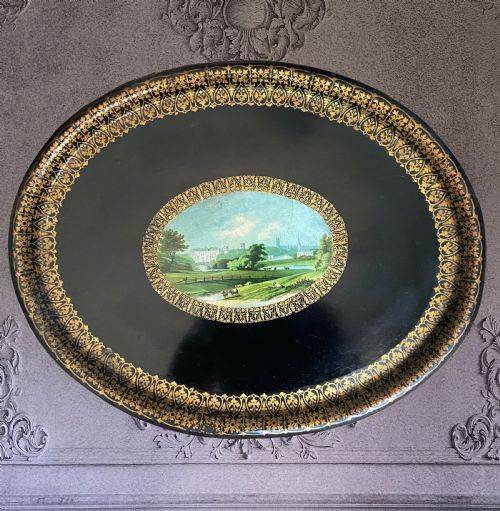

Gilded Tea Tray
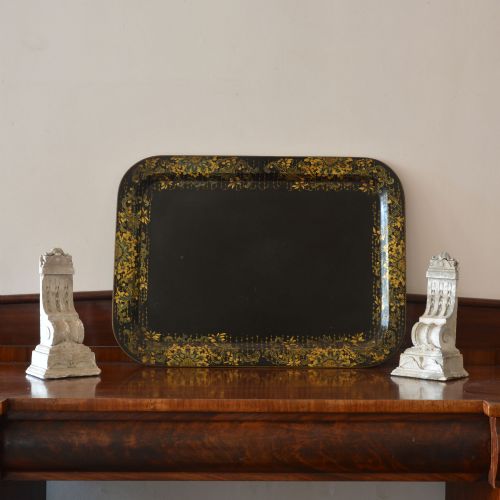
A gilded tea tray brings polished lustre and period decorative flair to a room, whether set upon a stand or displayed on a wall.
Gilded Tea Tray
When you search for a gilded tea tray, you encounter serving pieces and decorative trays created across the eighteenth, nineteenth, and early twentieth centuries. These objects frequently appear in Regency and Victorian styles, alongside Georgian and Edwardian examples.
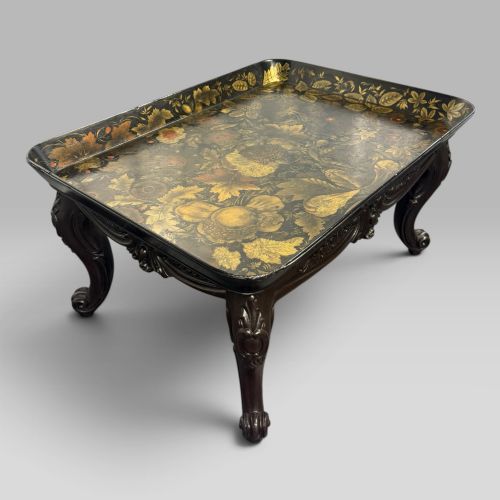
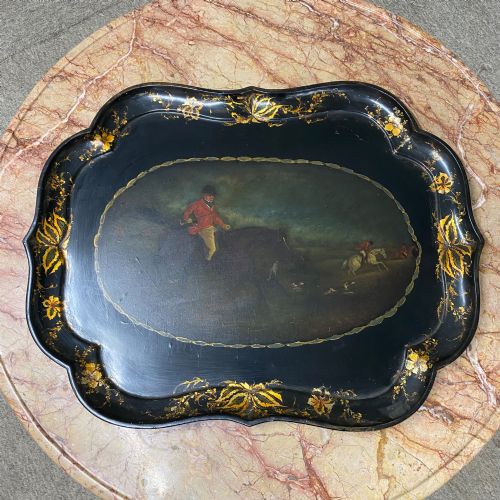
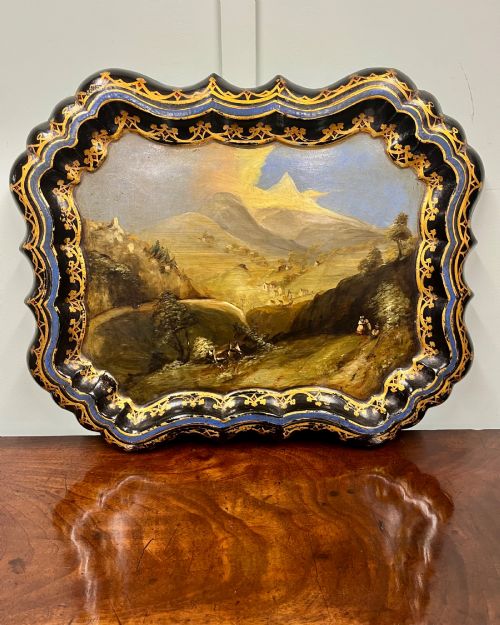
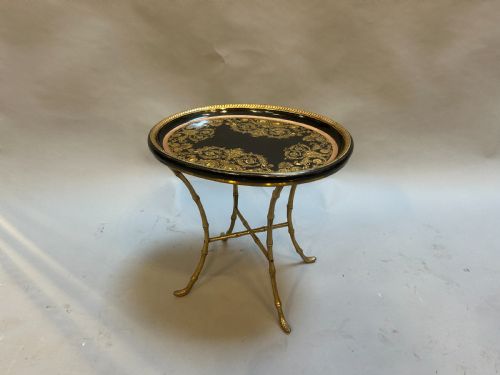
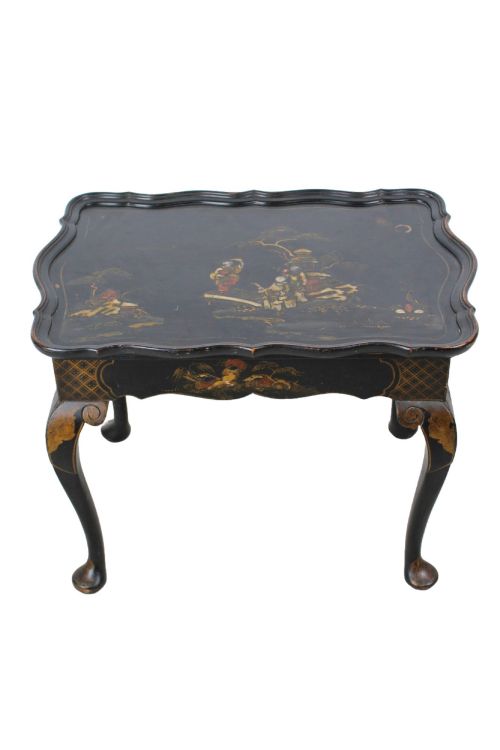
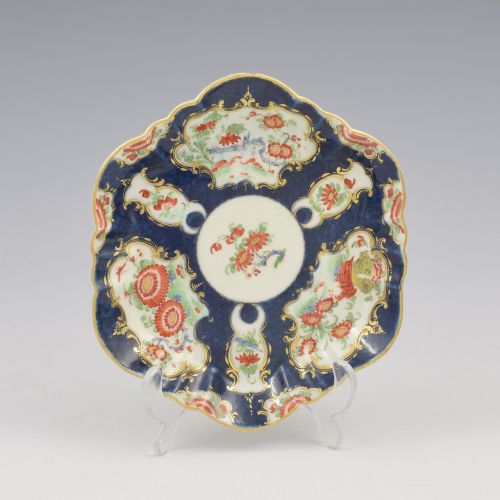
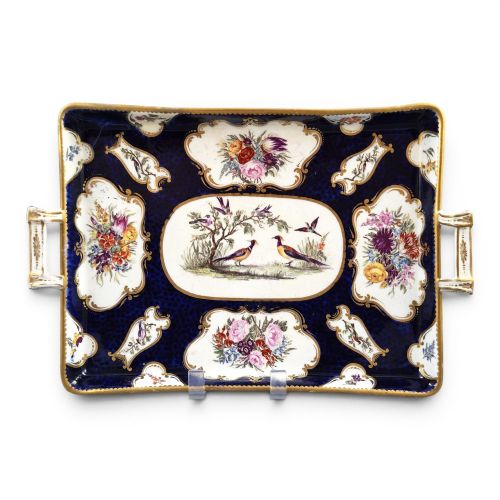
The selection on this page ranges from large oval papier-mâché trays to toleware and porcelain teapot stands, occasional tables, and tray tables. Many retain original painted decoration, ranging from landscapes and hunting scenes to Chinoiserie motifs.
How they were made
Papier-mâché serves as a primary foundation for the nineteenth-century trays, formed through layered paper pulp compressed and dried to create a durable, lightweight board. Artisans then applied layers of lacquer, paint, and gold leaf or gilt embellishments to finish the surface.
Toleware pieces utilise sheet metal coated with enamel and paint, while ceramic items employ porcelain with hand-painted patterns. Gilding and gold leaf accent borders, handles, and central figurative scenes across these diverse materials.
Gilded Tea Tray Retail Price Guide 2026
Typical asking prices for gilded tea tray among the pieces listed under this phrase on Sellingantiques today, from the lower quarter to the upper quarter. They describe what is for sale here now, not the wider market.
Listings feature items from the eighteenth, nineteenth, and early twentieth centuries, including Regency, Georgian, and Victorian periods.
What varies in quality
Quality rests upon the crispness of the hand-painted details and the preservation of the original gilded borders and lacquer surface. Pieces bearing maker signatures or attributed traditions show greater refinement in their composition and proportions.
The complexity of the form, such as kidney-shaped edges or large proportions, combined with intact historical decoration, distinguishes superior examples from standard production.
Henry Clay·Jennens & Bettridge·Zwiener·Dr Wall
The Gilded Tea Tray Glossary
- Papier-mâché
- A composite material made from paper pulp or layers of paper bound with glue, used to form lightweight trays and table tops. It accepts lacquer and paint exceptionally well.
- Toleware
- Painted or enamelled sheet metal items produced in various European centres during the eighteenth and nineteenth centuries. These objects often feature dark backgrounds set off by gilt highlights.
- Chinoiserie
- European artistic style reflecting Chinese motifs and decorative schemes, popular during the Georgian, Regency, and Edwardian periods. It appears frequently on lacquered trays and furniture.
- Gilding
- The application of gold leaf or gilt powder to a surface to impart a metallic lustre. This technique highlights borders, handles, and painted scenes on trays and stands.
Gilded Tea Tray: Frequently Asked Questions
How do I use a gilded tea tray today?
These trays function well as serving pieces for drinks or display items placed upon low tables, side tables, or hung directly on walls as art.
Many examples also sit atop custom or period stands, converting the tray into a functional coffee or occasional table.
What is the difference between papier-mâché and toleware trays?
Papier-mâché trays are constructed from compressed paper pulp finished with lacquer and paint, offering a smooth, dark surface ideal for detailed gilt and painted scenes.
Toleware trays consist of painted metal, providing a sturdy metallic base that also accommodates enamel finishes and gold embellishments.
How can I tell a Regency tray from a Victorian one?
Regency trays often display neoclassical lines, restrained gilt borders, and classical motifs produced during the early nineteenth century.
Victorian pieces frequently embrace bolder floral arrangements, Chinoiserie details, or landscape hunting scenes executed in richer, heavier colour palettes.
Are these trays suitable for everyday serving?
While structurally sound, antique trays featuring delicate gold leaf and aged lacquer require careful handling to preserve their historic surfaces.
Gentle cleaning with a soft cloth protects the original painted decoration and gilt borders from unnecessary wear.