






Gilded Tabletop Clock
These gilded tabletop clock examples bring Victorian and Edwardian craftsmanship into a room, offering both reliable timekeeping and ornate display.
Gilded Tabletop Clock
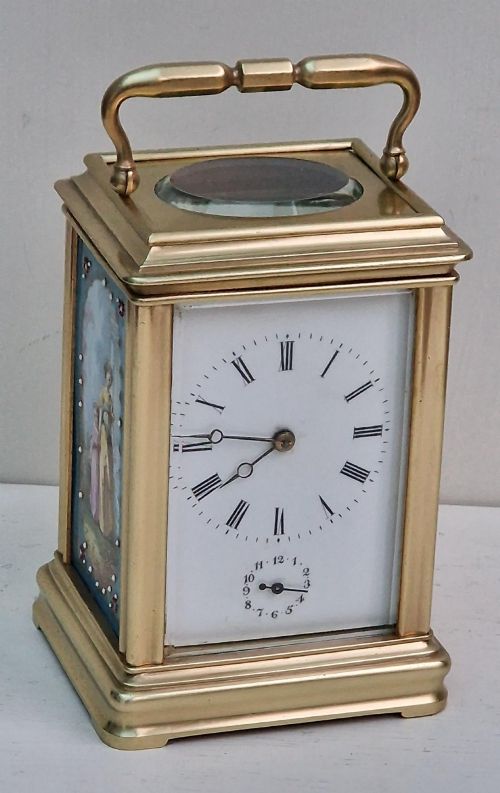
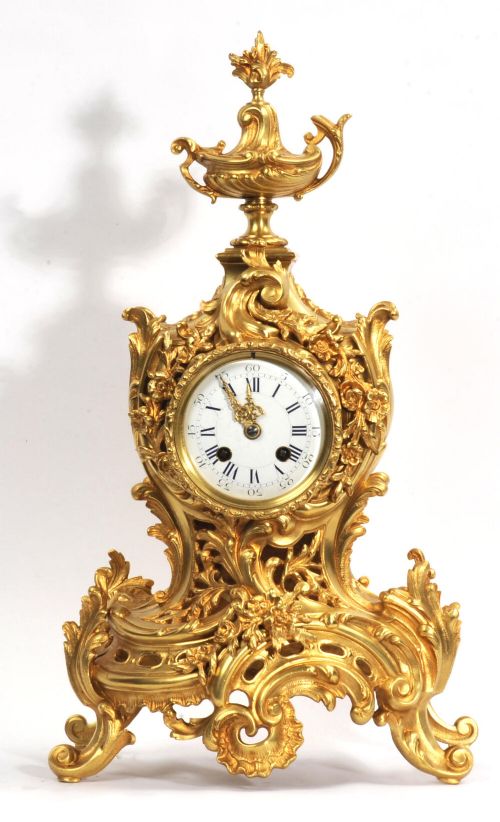
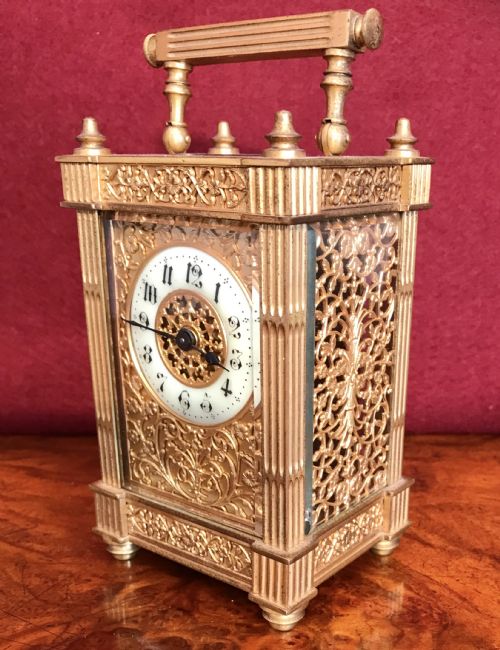
A gilded tabletop clock sits upon desks, mantels, and side tables, serving as both a functional timepiece and an ornate decorative object. When you search for a gilded tabletop clock, you meet forms ranging from miniature longcase clocks to heavy mantel pieces and travelling carriage clocks.
The pieces appearing here span the Victorian and Edwardian eras, alongside late nineteenth-century French designs. Makers and workshops from these periods produced varied formats, including strut clocks and bell-jar designs.
French workshops dominate the selection, bringing Rococo Revival styles, Chinoiserie decoration, and intricate enamel work to domestic interiors. These diverse origins mean a buyer can select everything from a simple brass desk clock to a grander porcelain-panelled carriage piece.
How they were made
Makers shaped these clocks using brass, gilt bronze, and ormolu as foundational metals, applying mercury gilding or electroplating to achieve a bright surface finish. This metallic framework frequently housed intricate mechanical movements designed to chime or simply track the hours.
Craftsmen incorporated glass panels, porcelain plaques, and Chinoiserie lacquer to enrich the visual depth of the cases. Enamel dials and champleve enamel details added contrasting colour and texture to the metallic bodies.
Some miniature longcase clocks stand just tall enough to make a grandfather clock look like it swallowed a measuring tape.
What varies in quality
The refinement of the casting and the depth of the gilding separate standard production pieces from finer examples. Crisp chasing in gilt bronze or ormolu indicates skilled workshop labour rather than mass-produced finishing.
The integration of materials such as painted porcelain panels, filigree masks, and undamaged enamel dials alters the overall visual balance. Clocks bearing known workshop signatures or retaining complex movements like grande sonnerie show higher levels of original ambition.
Howell James And Co·Alfred Hollinge·Jaeger Le Coultre
The Gilded Tabletop Clock Glossary
- Ormolu
- A golden-coloured brass alloy used to simulate gold on decorative metalwork. It provides a rich surface sheen that resists tarnishing over decades.
- Champleve enamel
- A technique where troughs are dug into a metal surface and filled with vitreous enamel before firing. This creates colourful decorative patterns flush with the surrounding metal.
- Carriage clock
- A small, spring-driven timekeeper originally designed for travelling by horse-drawn carriage. They typically feature a carrying handle and glass sides that display the moving escapement.
- Strut clock
- A portable timepiece supported by a hinged prop or leg on its reverse side. They sit upright on desks or dressing tables.
- Grande sonnerie
- A complex striking mechanism that chimes both the hours and the quarters automatically. It represents a high standard of horological engineering.
Gilded Tabletop Clock: Frequently Asked Questions
Where should I place a mantel clock?
Mantel clocks sit best on stable, level surfaces away from direct sunlight, draughts, and damp walls. A firm mantelpiece or a heavy wooden desk provides the necessary support for their weight.
Ensure the surface does not vibrate excessively from foot traffic, as vibrations can disrupt the beat of the pendulum or balance wheel.
How do I identify a Victorian clock?
Victorian clocks often display heavy cast brass, gilt bronze, or ornate Rococo Revival styling characteristic of the nineteenth century. Makers frequently marked the movements or dials with serial numbers and workshop names.
Examining the construction of the brass plates and screws helps confirm the mid to late nineteenth-century origin of the piece.
Can these clocks run daily?
Many of these mechanical pieces remain fully functional and keep accurate time when serviced by a professional horologist. Regular running keeps the oils distributed across the gear train.
clocks that have not run for decades benefit from a professional clean before being wound up fully.