

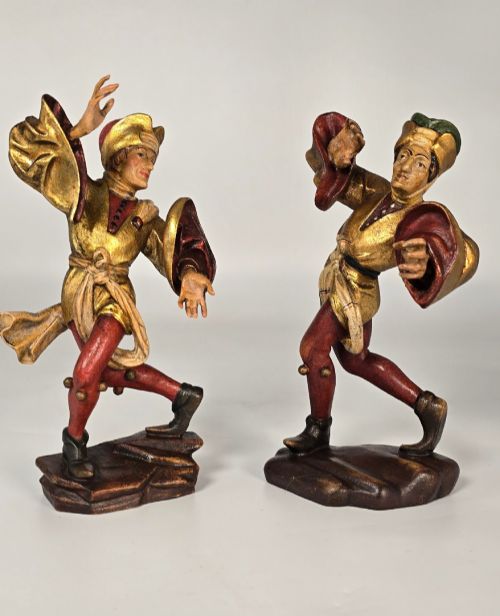


Gilded Table Sculpture
These gilded table sculpture pieces bring metallic surface and sculptural form to interiors, ranging from classical figures to decorative ornaments.
Gilded Table Sculpture
A gilded table sculpture brings metallic surface and sculptural form to interiors, spanning periods from the eighteenth century through the art deco era. Buyers searching for a gilded table sculpture encounter a variety of material combinations, including bronze, carved wood, porcelain, and marble bases.
The selection ranges across several historical styles, such as neoclassical, rococo revival, french empire, and art deco. Typical forms include figurative statuettes, mantel clocks, and decorative ornaments originating from workshops across europe and asia.
Nineteenth century examples appear frequently alongside pieces from the nineteen-thirties. These range from grand tour busts and bronze figures to carved giltwood animals and porcelain centerpieces.
How They Were Made
Craftsmen applied gold leaf, gesso, or ormolu to wooden carvings, bronze casts, and porcelain bodies to create reflective surfaces. Carved limewood and giltwood structures provide organic texture beneath metallic finishes.
Foundries utilised bronze casting techniques, sometimes combining patinated metals with gilt bronze highlights mounted on marble or onyx bases. Enamel and paint details complete specific figurative elements on select figures.
Listings feature items from the eighteenth century to the nineteen-thirties, spanning materials from carved wood and marble to bronze and porcelain.
What Varies in Quality
Execution of detail in the carving or casting distinguishes finer sculptures from simpler decorative objects. Crisp chisel work on giltwood and refined chasing on bronze indicate skilled workshop production.
The integration of materials, such as the fit between a bronze figure and its marble or onyx base, affects the overall harmony of the piece. Preservation of the original gold leaf, gesso, or ormolu surface remains central to the integrity of each ornament.
Barbedienne Bronze·Bruno Zach·Demetre Chiparus·Eugene Clauss·Japy Freres
The Gilded Table Sculpture Glossary
- Ormolu
- Gilded bronze, typically produced using a mercury amalgamation technique during the eighteenth and nineteenth centuries. This finish provides a bright metallic sheen to clock mounts and decorative ornaments.
- Giltwood
- Wood that has been coated with a thin layer of gold leaf or powder over a prepared gesso ground. It appears frequently on carved frames, figures, and decorative furnishings.
- Spelter
- A zinc alloy used as a less costly alternative to bronze, frequently patinated or gilded to imitate heavier metals. It appears commonly in figures from the art deco period.
- Gesso
- A plaster mixture applied to wood or other substrates as a smooth base for gilding and paint. It allows intricate carved details to hold gold leaf effectively.
- Grand Tour
- A traditional trip through Europe undertaken by upper-class young men in the eighteenth and nineteenth centuries to collect art and antiquities. Souvenirs from these journeys included small bronzes and classical busts.
Gilded Table Sculpture: Frequently Asked Questions
How do I clean a gilded table sculpture?
Dust surfaces gently with a soft dry brush to protect delicate gold leaf or ormolu finishes.
Avoid liquid cleaners or abrasive cloths that can strip the metallic layers from wood, bronze, or plaster.
Where should I place these sculptures?
Position pieces on stable mantelpieces, side tables, or desks where their metallic surfaces catch ambient light.
Keep items away from direct sunlight and excessive humidity to preserve wood, gesso, and marble bases.
How do I identify art deco pieces?
Art deco sculptures often feature stylized figurative designs made from patinated and gilded bronze mounted on marble or onyx bases.
These works typically date from the nineteen-twenties and nineteen-thirties, contrasting with earlier revival styles.
What is the difference between bronze and spelter?
Bronze is a heavy copper alloy capable of holding fine cast detail and enduring patination or gilding.
Spelter is a lighter zinc-based alternative often used in later decorative figures and mantle ornaments.