
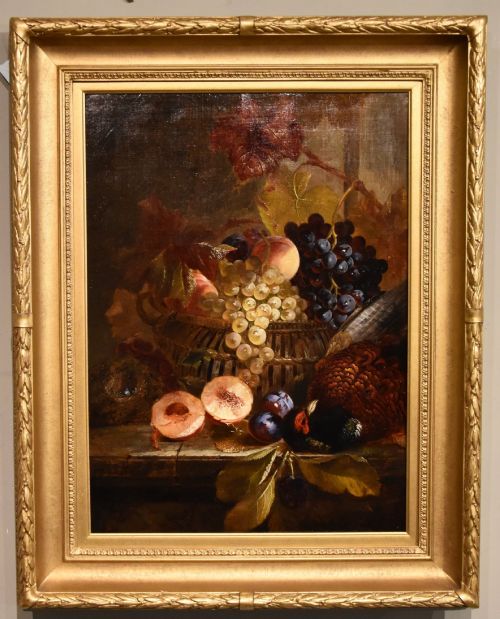
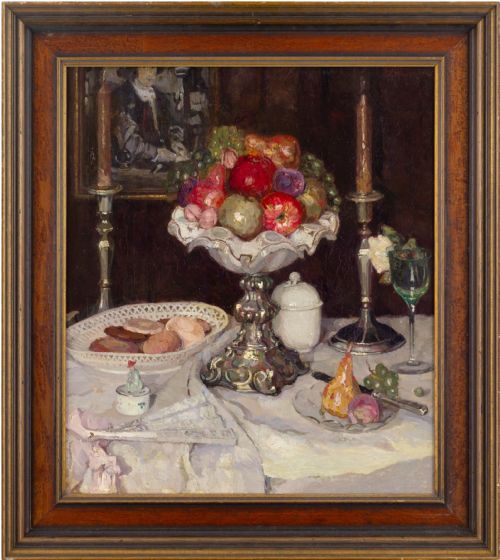
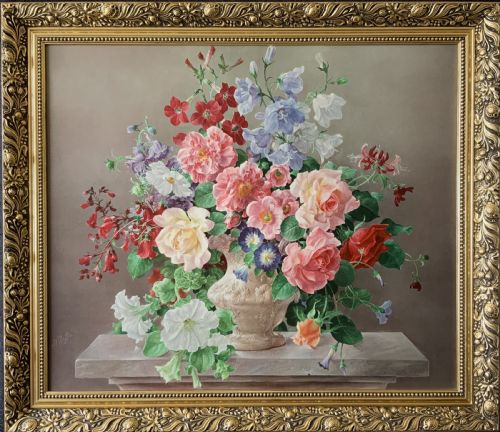
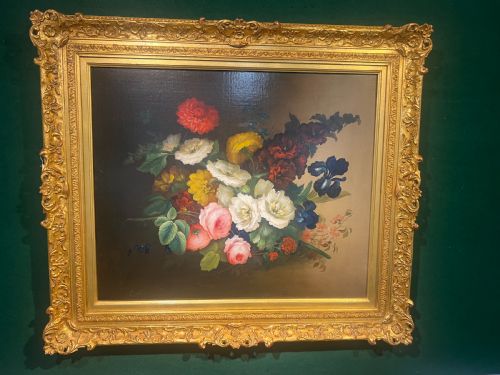
Gilded Still Life Painting
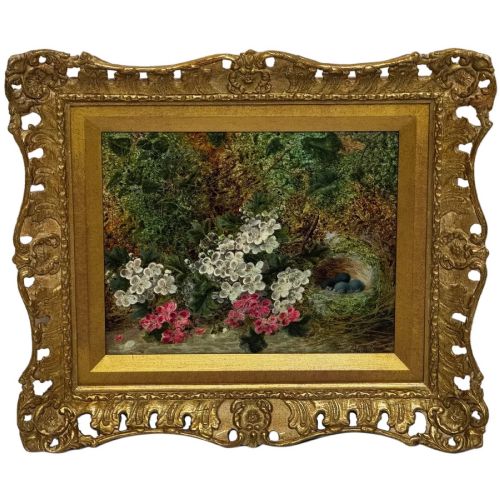
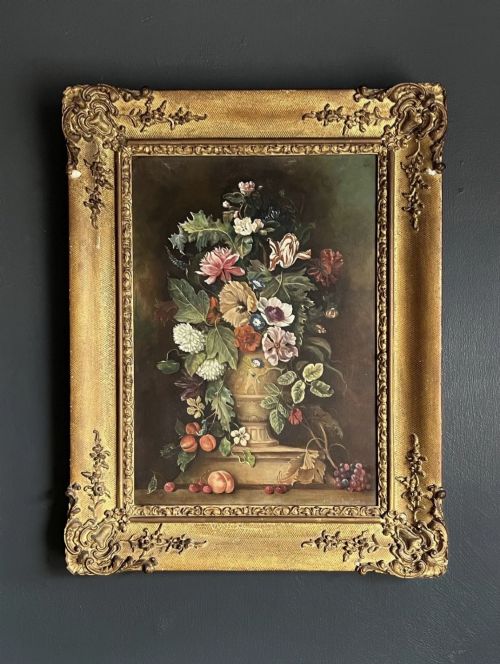
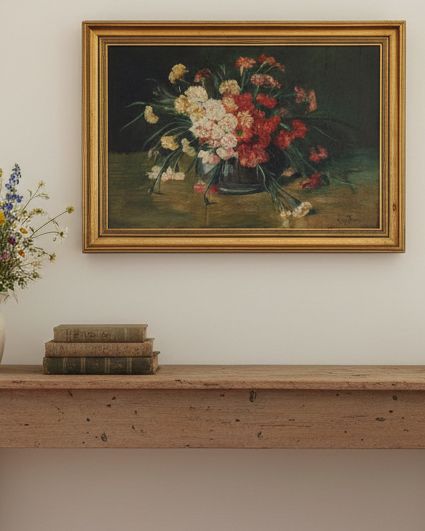
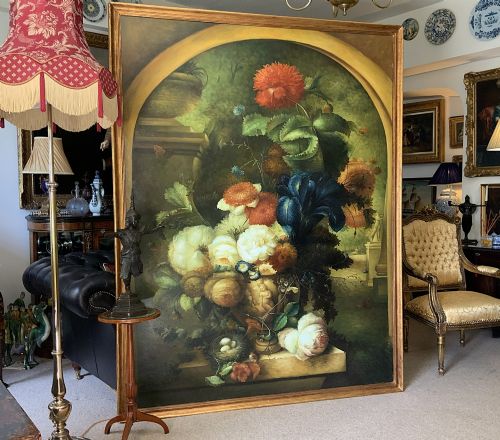
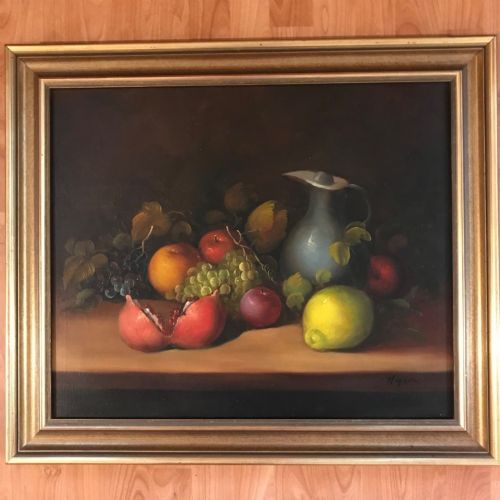
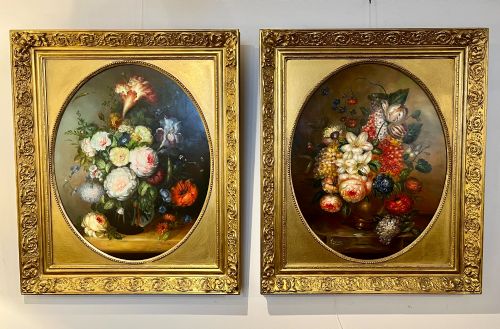
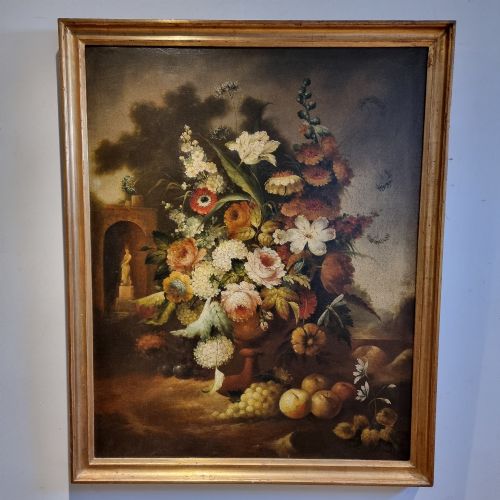
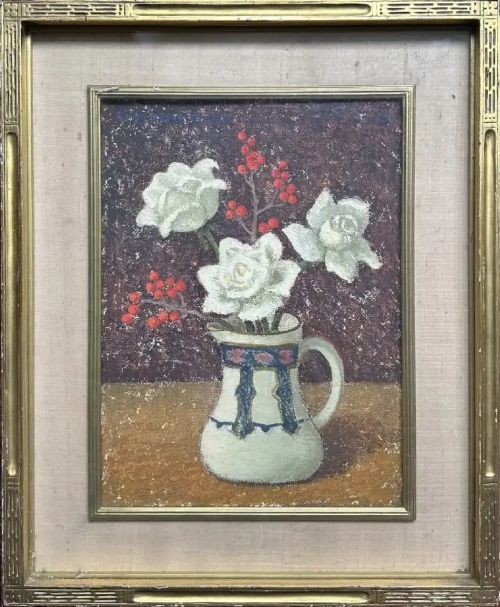
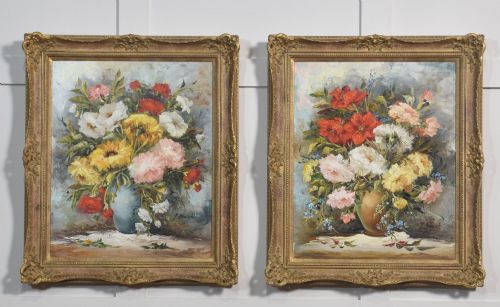
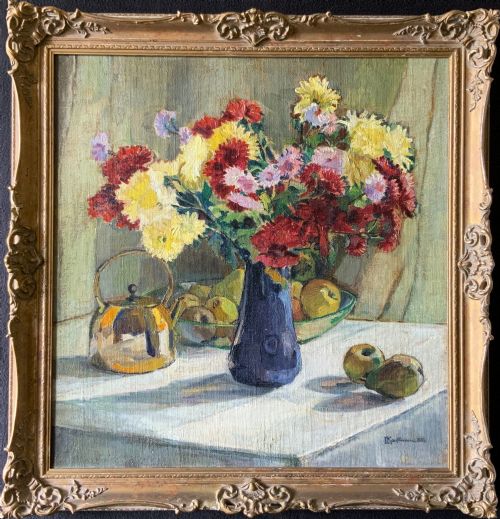
A gilded still life painting brings the rich traditions of floral and fruit composition into a room through oil on canvas housed within brilliant frames.
Gilded Still Life Painting
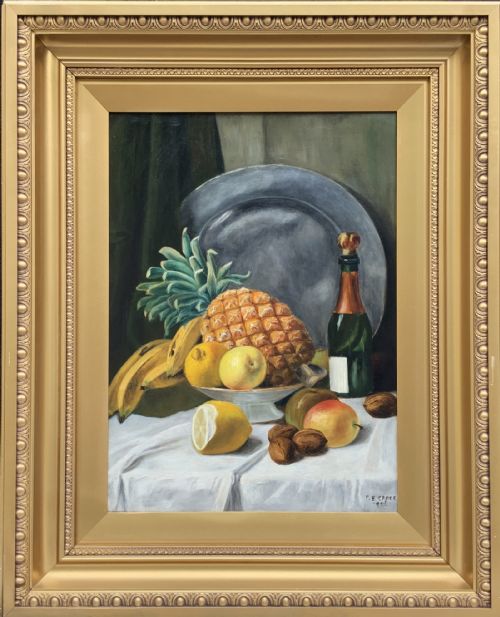
A gilded still life painting typically presents detailed arrangements of fruit, flowers, and domestic objects set against dark backgrounds or within interior scenes. These works draw heavily upon historical visual traditions, ranging from Dutch Golden Age floral displays to nineteenth-century British impressionism and twentieth-century modernist interpretations.
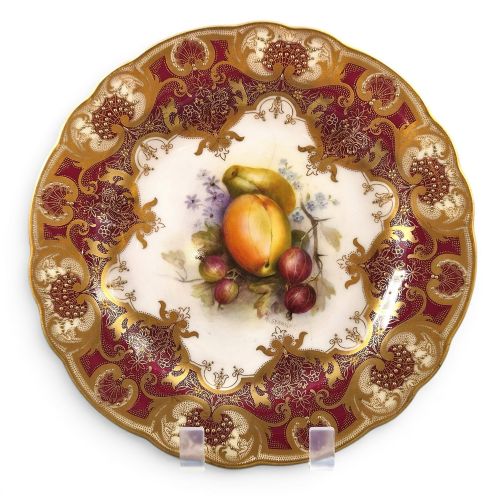
The selections available here span from the nineteenth century through the mid-twentieth century, encompassing both oils on canvas and oil on board. Alongside traditional canvases, buyers encounter decorative ceramic plates and cabinet pieces carrying painted fruit motifs.
Makers and artists represented across these periods include established nineteenth-century painters alongside twentieth-century continental and British hands. Stylistic approaches move from strict traditional realism to looser post-impressionist brushwork and decorative wall art.
How They Were Made
The creation of these works relies fundamentally upon oil paint applied to stretched canvas or wooden board, allowing artists to build deep layers of colour and shadow. Canvases receive priming layers before the application of pigments that capture the soft textures of petals, the glossy skin of fruit, and the play of light across vessels.
Frames play an integral structural and aesthetic role, frequently constructed from wood finished with gesso and gold leaf or gilt. Master craftsmen moulded gesso onto wooden bases to create ornate relief patterns before applying thin sheets of metal leaf to achieve a luminous metallic surface.
Among the formal arrangements of fruit and flora, an unexpected monkey makes a notable appearance in the nineteenth-century selection.
What Varies in Quality
Quality rests upon the artist's command of light, depth, and proportion within the composition, distinguishing academic precision from decorative production work. Finer canvases display subtle tonal gradations in fruit and floral arrangements, whereas simpler works rely on heavier outlines and flat colour fields.
The preservation of the original gilt frame significantly influences the integrity of the piece. Frames exhibiting intact gesso mouldings and uncompromised gold leaf retain their historical harmony with the canvas, while over-painted or heavily restored mouldings alter the visual weight of the object.
Oliver Clare·Emma Fordyce MacRae·William Henry Ward·Else Preußner·Edwin Steele·Richard Sebright·Manuela Bonati·Victor Simonin·George Lance·William Duffield·Vincent Clare·Eloise Harriet Stannard·Owen Bowen·Thomas Hooper·Maud Frances Eyston Sumner·Alice Macallan Swan·Emily Selinger·H Ayrton
The Gilded Still Life Painting Glossary
- Gesso
- A plaster-like mixture applied to wood frames as a base for gilding. It provides a smooth surface that craftsmen carve or mould into intricate relief decorations.
- Oil on Canvas
- Pigments bound in a drying oil applied to a woven fabric support. This combination permits rich blending of colours and long-term durability.
- Dutch Golden Age Style
- An artistic approach emulating seventeenth-century Netherlands painting. It emphasises dark backgrounds contrasting with brightly illuminated floral or fruit arrangements.
- Cabinet Plate
- A decorative ceramic dish intended for display rather than domestic use. These pieces often feature hand-painted fruit or floral motifs by specialist ceramic artists.
Gilded Still Life Painting: Frequently Asked Questions
What periods do these paintings cover?
The selection spans from the nineteenth century through the mid-twentieth century. Works originate from Victorian, Edwardian, and later modernist decades.
Examples include traditional nineteenth-century oils alongside twentieth-century pieces reflecting impressionist and post-impressionist movements.
How should I hang a heavy gilt frame?
Heavy wooden and gesso frames require secure wall fixings anchored directly into masonry or sturdy wall studs. Using appropriate picture wire and double hooks distributes the weight evenly.
Ensure the hanging height places the centre of the canvas at natural eye level for optimal viewing.
Are all the frames original to the paintings?
Frames vary between original period mountings and later complementary gilt housings. Many nineteenth and twentieth-century works retain their period gesso frames.
Examination of the rabbet and backboards often reveals whether the frame has housed the canvas for its entire history.
How do I care for oil on canvas?
Keep paintings away from direct sunlight, high humidity, and rapid temperature fluctuations to prevent canvas slackening and paint cracking. Dust the surface gently with a soft, dry artist's brush.
Avoid using water or chemical cleaners on the canvas or the gilt frame.