
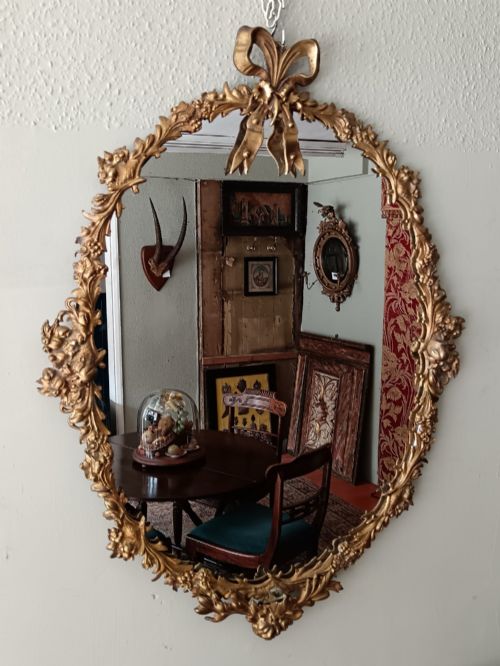


Gilded Ribbon Crest Frame
A gilded ribbon crest frame brings refined Louis XVI style and Neoclassical elegance to an interior.
Gilded Ribbon Crest Frame
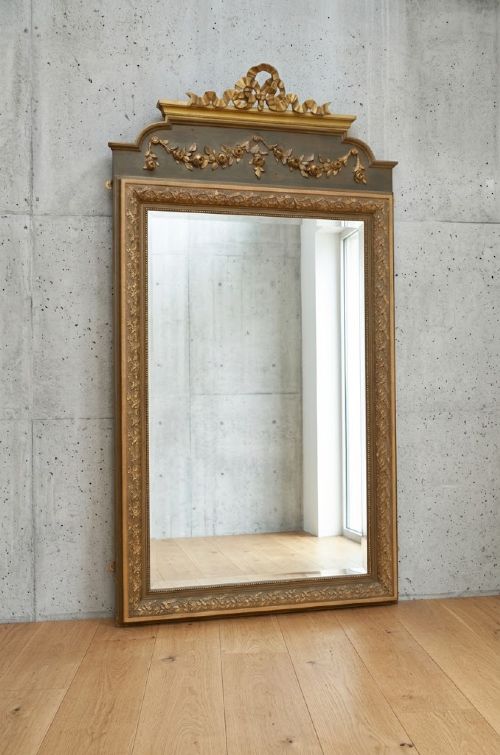
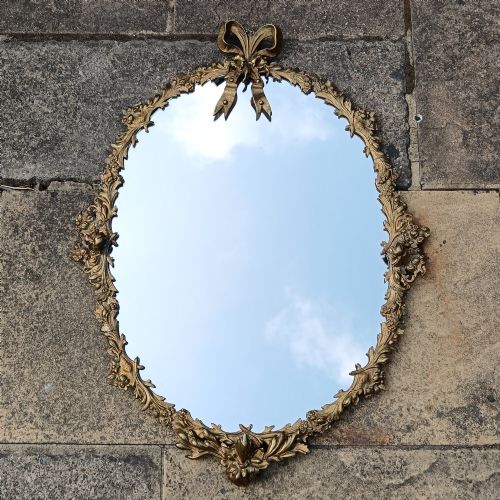
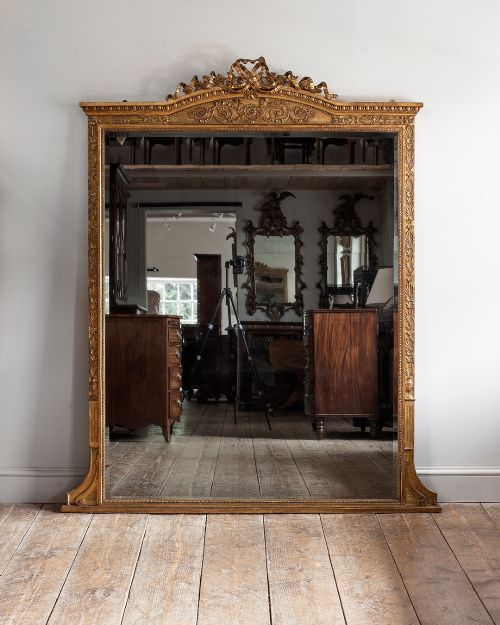
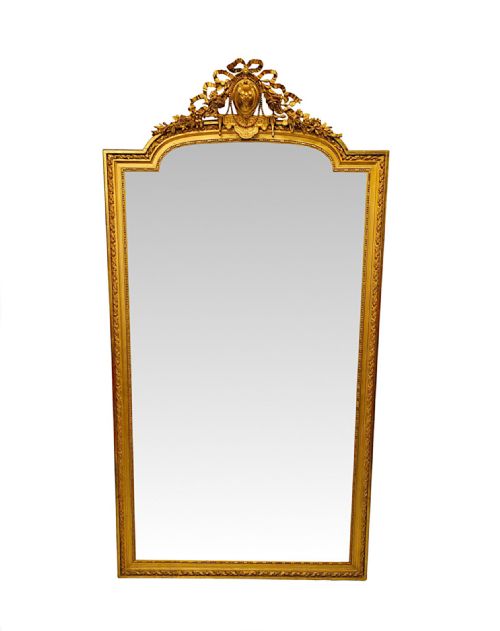
When searching for a gilded ribbon crest frame, buyers encounter decorative wall mirrors, photo frames, and picture frames originating primarily from the nineteenth century and the early twentieth century. These pieces frequently manifest French Louis XVI style or Louis XVI Revival influences, alongside Victorian interpretations and Belle Epoque designs.
The dominant forms on this page include oval wall mirrors, overmantel mirrors, and smaller hanging or dressing mirrors featuring prominent carved ribbon motifs at the top. Materials span giltwood, gesso, gilt bronze, and painted wood, often enclosing original bevelled glass.
Origins trace predominantly to French workshops and English makers working in classical revival idioms. The distinctive ribbon crest serves as the focal point, uniting classical symmetry with decorative lightness.
How they were made
The construction of these pieces relies on wood carcasses shaped to form oval or rectangular frames, upon which layers of gesso are applied to build up crisp decorative relief. Artisans then embellish the surface with gold leaf or gilding techniques to achieve a bright metallic finish.
Cast elements such as gilt bronze or ormolu appear on smaller frames and mirrors, offering sharper detail in the ribbon crests and floral swags. Painted wood variations introduce contrasting colours alongside traditional gilding to accentuate carved mouldings.
Several frames come accompanied by miniature paintings of musicians performing in woodlands, ensuring your wall art arrives with its own microscopic audience.
What varies in quality
Quality in these frames rests upon the crispness of the carving and the depth of the gesso relief around the ribbon crest. Finer examples display hand-modelled or deeply chased metalwork where gilt bronze is utilised, avoiding the soft edges typical of mass-produced castings.
The integrity of the gilding and the preservation of original glass, such as bevelled mirror plates, distinguish superior pieces. A balanced proportion between the frame moulding and the central aperture indicates careful design by the maker.
The Gilded Ribbon Crest Frame Glossary
- Giltwood
- Wood that has been coated with thin sheets of gold leaf over a prepared gesso ground. This technique creates a luminous surface that catches the light in domestic interiors.
- Gesso
- A plaster mixture applied to wood frames to create a smooth surface for carving and gilding. It allows artisans to shape intricate relief details like ribbons and floral swags.
- Louis XVI Style
- A neoclassical design movement characterised by straight lines, symmetry, and classical motifs such as ribbons, urns, and acanthus leaves. It heavily influences nineteenth-century French and English mirrors.
- Ormolu
- Finely chased and gilded bronze used for decorative mounts and frames. The term derives from the French for milled gold.
- Bevelled Glass
- Glass with edges ground and polished at an angle to create a framed border effect within the glass itself. It adds considerable depth to antique mirrors.
Gilded Ribbon Crest Frame: Frequently Asked Questions
How do I date a gilded ribbon crest frame?
Dating relies on examining the construction methods of the wood backing, the composition of the gesso, and the style of the hardware. Nineteenth-century pieces often display hand-cut screws and aged patination on the gold leaf.
Stylistic cues also help narrow the period, as Victorian interpretations differ subtly from French Louis XVI Revival pieces produced around nineteen hundred.
Where should I hang a ribbon crest mirror?
These mirrors work effectively above a mantlepiece, in a hallway, or as a focal point on a drawing room wall. Their vertical proportions suit narrow wall spaces where architectural interest is required.
Pacing them opposite a window maximises light reflection and enhances the visual impact of the gilt finish.
Are these frames entirely solid gold?
No, the pieces consist of wood, gesso, or base metals covered with an extremely thin layer of gold leaf. Gilt bronze frames utilise a bronze base finished with mercury gilding or modern electroplating techniques.
This construction provided the luxurious appearance of solid gold while keeping the objects structurally sound and manageable in weight.
What is the difference between Louis XVI style and Victorian pieces?
Louis XVI style pieces adhere strictly to classical symmetry and restrained neoclassical ornamentation, often originating directly from French workshops. Victorian interpretations tend to be bolder in scale and incorporate eclectic revival elements.
Both styles utilise the signature ribbon crest, though the execution reflects the specific aesthetic priorities of their respective decades.