



Gilded Religious Oil Painting
These gilded religious oil painting works bring centuries of devotional art into focus through rich canvases and ornate frames.
Gilded Religious Oil Painting
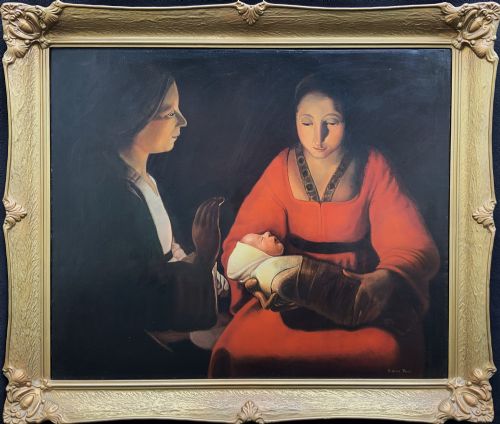
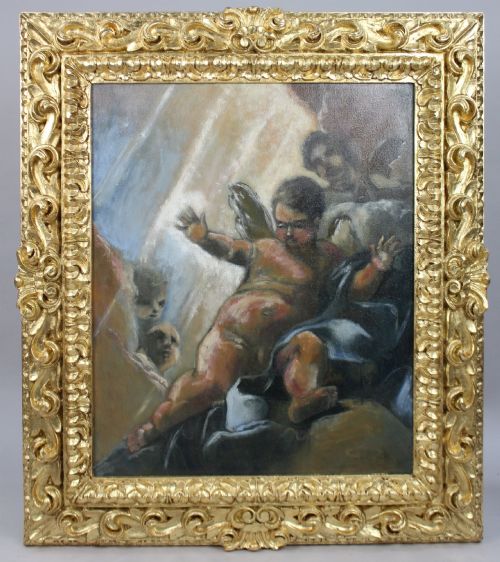
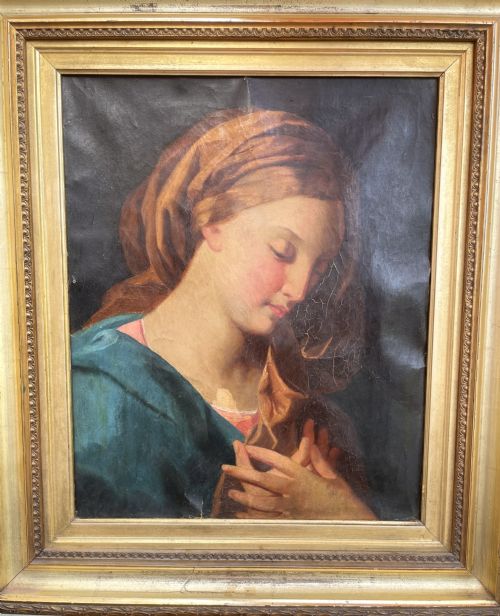
A gilded religious oil painting represents centuries of sacred iconography, spanning the seventeenth, eighteenth, and nineteenth centuries. You will encounter works depicting figures such as the Madonna and Child, saints, and biblical narratives, often created by regional European schools or followers of master painters.
Italian and Central European traditions dominate these offerings, alongside reinterpretations of Renaissance and Baroque compositions. The presence of carved giltwood or gesso frames gives these devotional pieces their defining architectural boundary.
Materials and construction
Painters applied oil paint to woven canvas or wood panels, building up rich layers of pigment to render devotional subjects with depth. Canvases stretch across wooden supports while panels utilise solid timber bases.
The frames rely on carved wood finished with gesso and gold leaf or gilt. Artisans shaped these surrounds using traditional moulding and carving techniques to complement the sacred imagery within.
The listings span the seventeenth century through to the mid-twentieth century, featuring oil on canvas and wood panel media.
Assessing quality and execution
Quality rests in the subtlety of the brushwork and the expressive handling of light and shadow across the figures. Studio copies and works by regional followers show varying degrees of draughtsmanship, separating routine workshop output from more compelling interpretations.
The integrity and hand-carved detail of the accompanying giltwood frame heavily influence the overall distinction of the piece. Period frames retain crisp gesso profiles and authentic gilding wear that harmonise with the age of the canvas.
Gian Lorenzo Bertolotto·Antonio Tempesta·Pietro Dasaro·Orsola Maddalena Caccia·Pompeo Batoni·Pieter Van Bleeck
The Gilded Religious Oil Painting Glossary
- Giltwood
- Wood that has been coated with gold leaf or a gold-coloured metallic finish. This technique highlights the carved ornamentation of antique frames.
- Gesso
- A plaster-like mixture applied to wood or canvas as a base for paint or gilding. It provides a smooth surface for subsequent layers of gold leaf.
- Icon
- A religious work of art, most commonly painted on a small wooden panel. These devotional images hold deep spiritual significance in Eastern Christian traditions.
- Baroque
- An artistic style prevalent from the seventeenth to mid-eighteenth century characterised by dynamic movement and dramatic lighting. Works from this period favour intense emotional resonance.
- Provenance
- The chronological record of ownership tracing a piece back to its creation. Documented lineage strengthens the historical context of devotional art.
Gilded Religious Oil Painting: Frequently Asked Questions
How do I date a religious oil painting?
Dating relies on examining the preparation of the canvas, the ageing of the oil paint, and the construction methods of the wooden stretcher or panel.
Style clues within the brushwork and the profile of the accompanying giltwood frame also point to specific centuries of production.
Where were most of these paintings made?
The majority originate from European workshops, with a strong concentration of Italian schools spanning the seventeenth and eighteenth centuries.
Central European and Russian examples also appear, reflecting distinct regional styles of devotion.
What does after an artist mean?
This attribution indicates that the painter created a deliberate study or copy of a known master composition, such as works by Raphael or Murillo.
These pieces were often produced by studio followers or later artists learning traditional techniques.