

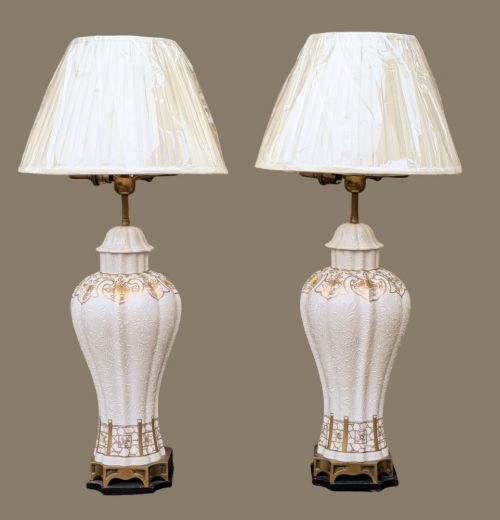
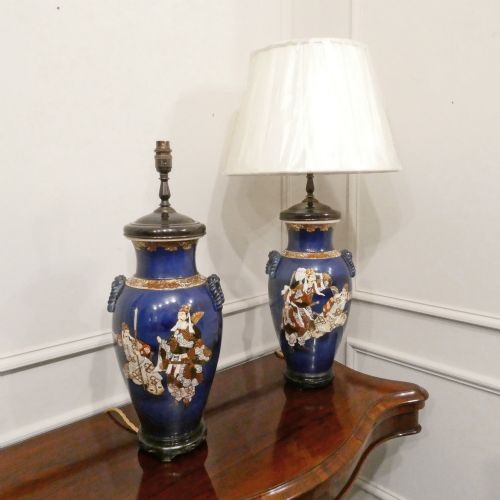



Gilded Porcelain Vase Lamps
These gilded porcelain vase lamps bring decorative presence and warm illumination to a room, drawing on centuries of ceramic artistry.
Gilded Porcelain Vase Lamps
Gilded porcelain vase lamps combine converted ceramic vessels with lighting fixtures, originating from various global traditions. Buyers seeking gilded porcelain vase lamps will regularly find Japanese Satsuma and Chinese export pieces adapted into table lamps.
Originating across the nineteenth century and into the early twentieth century, these pieces demonstrate diverse aesthetic movements. French Chinoiserie, Victorian taste, and Japonisme all appear within the available selection.
Materials and construction
Potters shaped these bodies from porcelain and earthenware, applying intricate enamel decoration alongside metallic leaf. Gilt highlights accentuate painted scenes on Chinese export and Japanese Satsuma vessels.
Makers incorporated brass and wood components during the conversion of vases into functional lamps. Fabric and silk elements provide the final shade structure atop the porcelain body.
Gilded Porcelain Vase Lamps Retail Price Guide 2026
Typical asking prices for gilded porcelain vase lamps among the pieces listed under this phrase on Sellingantiques today, from the lower quarter to the upper quarter. They describe what is for sale here now, not the wider market.
The listings feature porcelain, earthenware, brass, wood, enamel, silk, and gilt across nineteenth-century and early twentieth-century periods.
Qualities of distinction
The finesse of the hand-painted enamels and the richness of the gilt detailing separate standard examples from finer works. Satsuma and Cantonese pieces display varying degrees of artistic control in their figurative and floral motifs.
The integrity of the original ceramic body and the skill applied during conversion shape the overall execution. Pairs demonstrate greater decorative impact when both porcelain vessels match in scale and pigment saturation.
The Gilded Porcelain Vase Lamps Glossary
- Satsuma
- Japanese pottery featuring a crackle-glaze earthenware body decorated with polychrome enamels and raised gilt. These wares were widely exported to Europe during the nineteenth century.
- Famille Rose
- A Chinese ceramic palette characterised by opaque pink enamels introduced during the Qing dynasty. This style heavily influenced nineteenth-century export production.
- Kutani
- Japanese porcelain or stoneware identified by bold enamel colours, frequently utilising extensive iron-red and gold pigments. Kutani vases often depict nature scenes and figures.
- Ormolu
- Gilded bronze mounts applied to furniture and ceramics to enhance decorative appeal. Nineteenth-century European makers frequently added these mounts to imported Asian porcelain.
- Chinoiserie
- European artistic style reflecting Chinese motifs and design principles. This aesthetic appears across various decorative objects from the Victorian era.
Gilded Porcelain Vase Lamps: Frequently Asked Questions
What are gilded porcelain vase lamps?
These pieces consist of historic ceramic vessels, such as Chinese ginger jars or Japanese Satsuma vases, converted into functional table lamps. They retain their original hand-painted enamel and gilt decoration while serving modern lighting needs.
The selection spans the nineteenth and early twentieth centuries, encompassing diverse traditions including Cantonese export and French Chinoiserie styles.
How do I identify Satsuma lamps?
Satsuma pieces typically feature a distinctive cream-coloured earthenware body covered in a fine network of crackle glaze. Artisans decorated these surfaces using dense polychrome enamels and raised gold paint.
Items from this tradition often portray historical figures, landscapes, or crowded court scenes across the ceramic body.
Where should I place these lamps?
Their decorative presence suits reception rooms, sideboards, or large tables where the painted and gilded details can be appreciated. Pairing them with complementary fabric or silk shades balances the visual weight of the ceramic base.
Positioning them away from high-traffic edges protects the historic porcelain and wiring from accidental impacts.
How do I distinguish Chinese and Japanese styles?
Chinese export pieces, such as Famille Rose or powder blue vases, often employ symmetrical floral arrangements and distinct underglaze blues or opaque pink enamels. Japanese works like Kutani and Satsuma tend towards intricate narrative scenes and heavy gilt ornamentation.
Examining the underlying paste and the style of the brushwork reveals the specific regional origin of the vessel.