

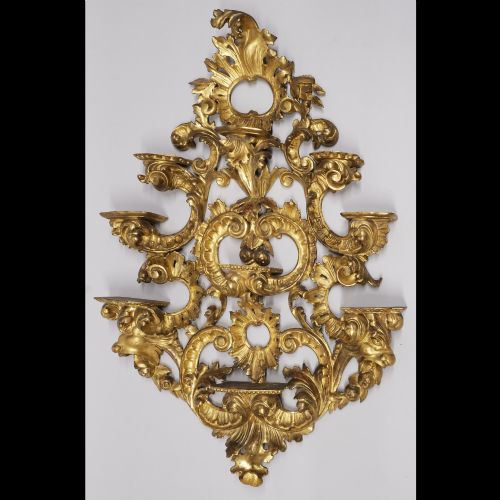


Gilded Porcelain Sconce
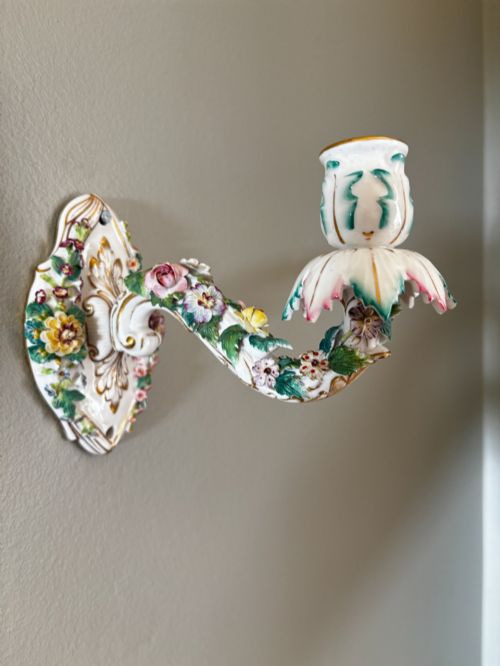
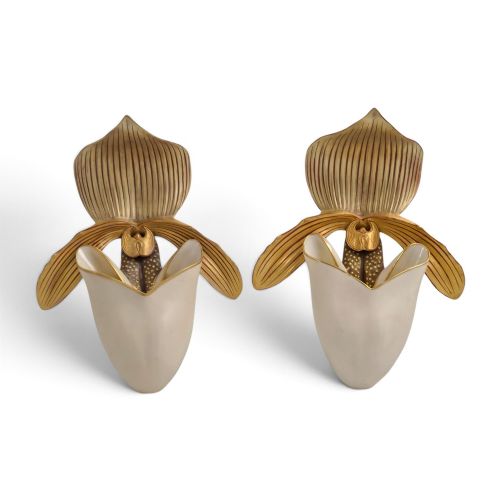
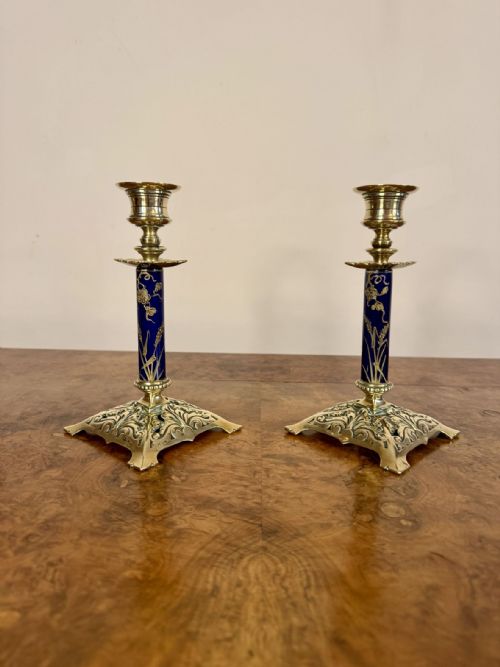
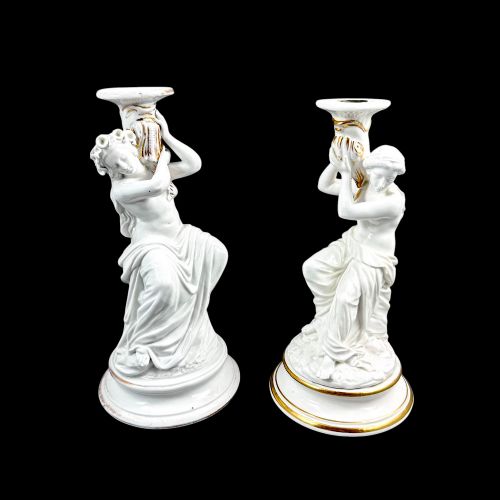
These gilded porcelain sconce examples bring together porcelain, enamel, and gilt mounts to light a room with eighteenth to twentieth-century character.
Gilded Porcelain Sconce
When you search for a gilded porcelain sconce, you are looking at wall-mounted lighting and brackets that combine ceramic bodies with gilt bronze, giltwood, or gold leaf finishes. These fixtures range from single candle sconces to pairs of figural wall lights and decorative wall brackets.
You are most likely to meet Victorian and early twentieth-century interpretations on this page, including pieces produced in the Rococo Revival, Neoclassical, and French Chateau styles. Many examples incorporate porcelain figures, cherubs, musicians, and bocage details alongside traditional metal or wooden wall mounts.
The forms extend across wall lights, candlesticks adapted for walls, and ceramic and ormolu wall brackets created to display smaller objects. Their origins span English factories like Derby and Minton, German porcelain works such as Meissen and Von Schierholz, and French workshops.
How they were made
Makers shaped hard-paste porcelain and ceramic bodies by hand or in moulds, often adding detailed figures, floral bocage, and enamel decoration before firing. Artisans then combined these fired ceramic elements with cast gilt bronze, known as ormolu, or carved giltwood mounts.
Surface finishes relied on the application of gold leaf and direct gilding to highlight the metallic frames and brackets. Skilled workers secured the porcelain components into metal or wooden armatures using traditional pinning and fastening techniques appropriate to each period.
Gilded Porcelain Sconce Retail Price Guide 2026
Typical asking prices for gilded porcelain sconce among the pieces listed under this phrase on Sellingantiques today, from the lower quarter to the upper quarter. They describe what is for sale here now, not the wider market.
Porcelain cherubs occasionally peer out from leafy bocage, keeping a watchful eye on the room below.
What varies in quality
The standard of modelling in the porcelain figures and the crispness of the surrounding ormolu or giltwood carving define the upper tier of these pieces. Softer, less detailed ceramic shaping and flat, unrefined gilding mark the lower end of the range.
Proportion and the harmonious integration of the porcelain body with its metal mounts separate finer workshops from mass production. Well-balanced compositions maintain structural integrity where the wall bracket meets the candle arm.
Meissen·Derby·Minton·Von Schierholz·Sutherland and Sons
The Gilded Porcelain Sconce Glossary
- Bocage
- An open framework of leaves and flowers modelled in porcelain, often surrounding ceramic figures in eighteenth and nineteenth-century pieces. This decorative background requires delicate hand-assembly before firing.
- Ormolu
- Finely chased and gilt bronze mounts used to frame or support ceramic components. The technique involves applying a gold amalgam to bronze before heating.
- Hard-Paste Porcelain
- A dense, durable ceramic material fired at high temperatures, composed of kaolin and petuntse. It forms the solid white body seen in many European figures and sconces.
- Rococo Revival
- A nineteenth-century design movement that revived the asymmetrical scrolls, shell motifs, and naturalistic curves of the eighteenth-century Rococo period. It appears frequently on Victorian wall sconces and brackets.
- Giltwood
- Timber, typically carved wood, coated with gold leaf or metal leaf over a prepared gesso ground. It provides a rich framing element for wall brackets.
Gilded Porcelain Sconce: Frequently Asked Questions
Are these sconces wired for electricity?
Many wall sconces and candlesticks from the eighteenth and nineteenth centuries were originally designed for candles rather than electric lighting. Adapting them for modern wiring depends on the hollow channels within the arms and backplates.
Buyers should examine how any conversion was carried out to ensure the original porcelain and gilt mounts remain undamaged.
How do I date a porcelain wall light?
Dating relies on stylistic clues such as Rococo Revival scrolls or Neoclassical symmetry, alongside the marks stamped or painted on the porcelain base. Material combinations, such as ormolu paired with hard-paste porcelain, also point to specific manufacturing decades.
Comparing the modelling style to known factory output from periods like the Victorian era helps narrow down the origin.
What is the difference between a sconce and a wall bracket?
A wall sconce specifically incorporates arms or sockets designed to hold candles or light sources. A wall bracket functions primarily as a shelf or support to display decorative items, though some historic forms overlap.
Both types utilise gilded mounts and ceramic bodies, but their functional surfaces differ.
How should I clean gilded porcelain?
Gilded surfaces and enamelled porcelain require gentle dusting with a soft, dry brush to avoid wearing away the thin gold leaf or ormolu finish. Moisture can damage exposed gesso on giltwood or delicate enamel painted details.
Harsh cleaning products should be avoided entirely to preserve the original patina of the metal and ceramic.