





Gilded Paw Foot Table
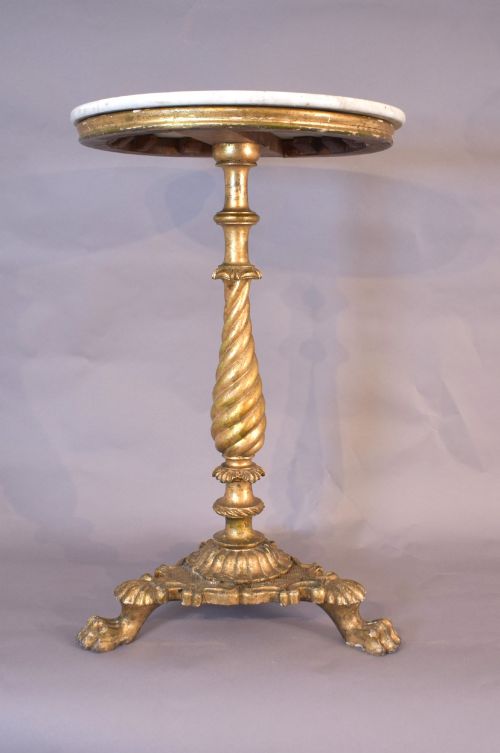
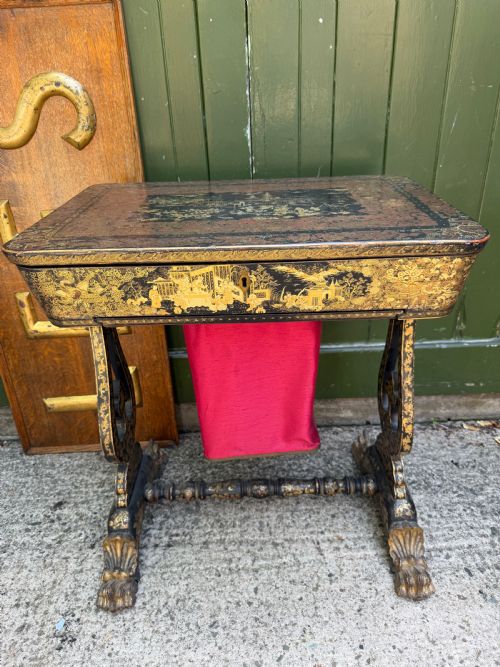
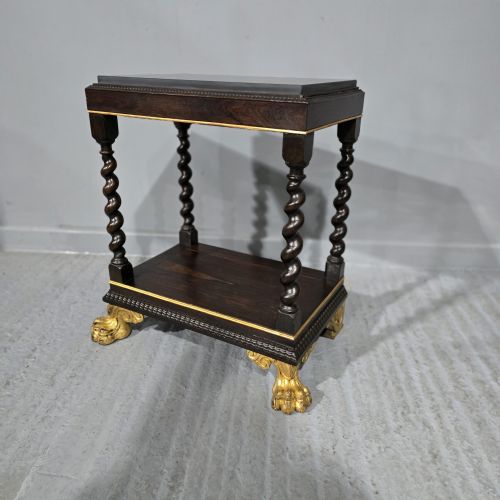
These gilded paw foot table examples combine carved timber with metallic decoration, offering a focal point for traditional interiors.
Gilded Paw Foot Table
When you search for a gilded paw foot table, you enter a field of antique side tables, card tables, and centre tables spanning the nineteenth and early twentieth centuries. These pieces typically display classical forms inspired by Regency, French Empire, and neoclassical designs.
You are most likely to meet mahogany, rosewood, or painted timber structures finished with giltwood, brass mounts, or gesso details. The defining paw foot often anchors a tripod base or supports columnar legs beneath marble or timber tops.
How they were made
Cabinetmakers constructed the foundational frames from dense timbers like mahogany and rosewood, frequently employing figured veneers for visual depth. Structural supports often incorporated cast brass mounts or hand-carved wooden feet.
The characteristic surface lustre relied on applied gesso overlaid with gold leaf, or polished ormolu and gilt bronze accents. Marble tops were cut and fitted precisely to circular or console wooden frames.
Gilded Paw Foot Table Retail Price Guide 2026
Typical asking prices for gilded paw foot table among the pieces listed under this phrase on Sellingantiques today, from the lower quarter to the upper quarter. They describe what is for sale here now, not the wider market.
Listings feature pieces from the nineteenth century alongside early twentieth-century revivals, utilising materials including marble, gilt bronze, and rosewood.
What varies in quality
Quality rests upon the crispness of the carving on the paw feet and the purity of the gilding applied to the gesso or wood. Earlier nineteenth-century examples often demonstrate superior hand-finishing compared to later revival pieces.
Whytock and Reid
The Gilded Paw Foot Table Glossary
- Giltwood
- Timber that has been coated with gold leaf over a prepared gesso ground. This technique provides a luminous metallic finish characteristic of formal nineteenth-century furniture.
- Ormolu
- Finely chased and gilded bronze applied as a decorative mount to furniture and lamps. The term derives from the French for milled gold.
- Gesso
- A plaster mixture spread over wood as a base for carving and gilding. It allows intricate relief decoration before the application of gold leaf.
- Centre table
- A freestanding table designed to be viewed from all sides rather than pushed against a wall. These often occupy the middle of a principal room.
- Card table
- A folding table engineered for playing games, featuring a hinged top that opens to reveal a baize-lined surface.
Gilded Paw Foot Table: Frequently Asked Questions
Where should I place a centre table?
These tables work best in the middle of a spacious room where their decorative bases and finished tops remain visible from all angles.
They also function effectively as display surfaces for lamps or decorative objects in large entrance halls.
What is the difference between Regency and revival pieces?
Regency items date from the early nineteenth century and embody the original neoclassical design principles of that era. Revival pieces were produced later, often in the twentieth century, copying those earlier forms.
Examination of the timber construction and wear patterns helps determine the exact period.
Can card tables still fold open?
Most antique card tables retain their functional hinges and rotating mechanisms for opening the top surface. However, checking the pivot joints carefully prevents undue strain on the timber.
Original baize linings inside may show historical wear appropriate to their age and use.