
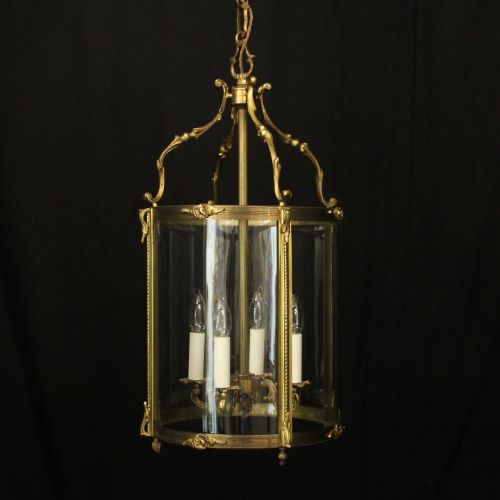
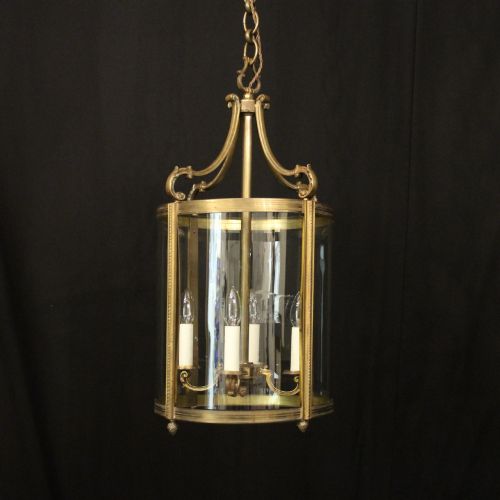
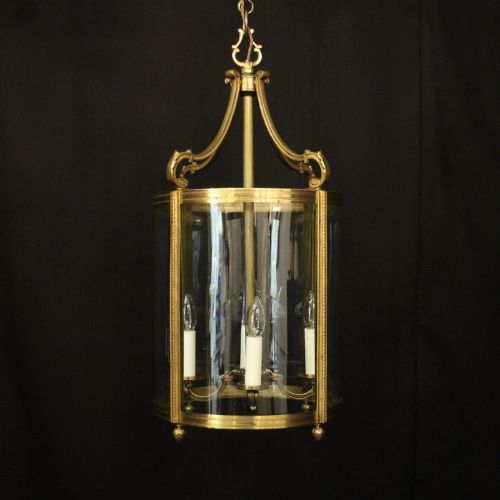


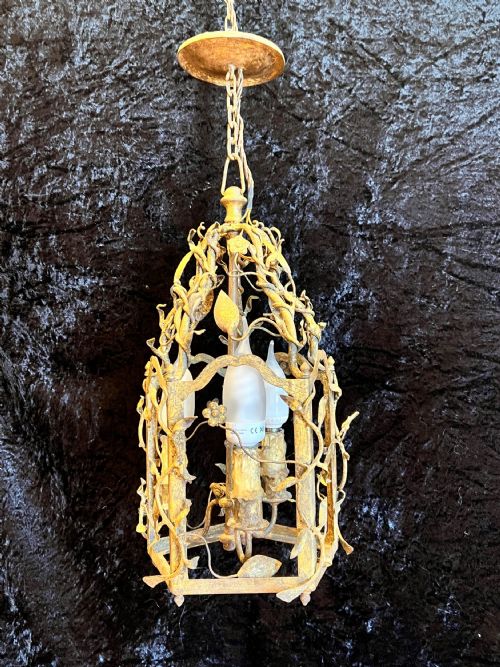
Gilded Metal Lantern
These gilded metal lanterns bring warmth and architectural presence to a hallway or entrance, offering decorative hanging illumination.
Gilded Metal Lantern
A gilded metal lantern provides hanging illumination primarily intended for hallways, vestibules and entrance spaces, functioning as both a light source and a decorative anchor. When searching for a gilded metal lantern, buyers encounter numerous French pieces dating from the nineteenth and early twentieth centuries alongside English and Italian examples.
The dominant forms on this page include hall lanterns, pendant lights and multi-light chandeliers executed in styles ranging from French Neoclassical and Louis XVI to Gothic Revival and Victorian. These pieces frequently incorporate glass panels - often convex or bevelled - housed within frames of gilded bronze, gilt bronze or brass.
Many survivors demonstrate direct lineage from historic interiors, such as designs after the lanterns in the Palace of Versailles or pieces executed in the manner of Pugin. Whether configured for a single light or four lights, each piece relies on suspended metalwork to catch and reflect light within domestic spaces.
Materials and construction
The construction of these lanterns relies on cast and wrought metals, principally bronze, brass and iron, which provide the structural framework for glass panels. Gilding is applied to the metal surfaces to create a luminous finish that enhances the reflection of internal candlelight or electric illumination.
Glazing techniques involve fitted sheets of glass, which are frequently bevelled or curved into convex profiles to diffuse light and add visual depth. Supporting elements include chains, ceiling rings and detailed metal mounts shaped into styles such as French Rococo Revival or Gothic Revival.
Object types recorded across the inventory include pendant lights, ceiling lanterns and multi light chandeliers alongside traditional hall lanterns.
Distinctions in quality
Quality in these lanterns is determined by the crispness of the metal casting and the richness of the gilding applied to the bronze or brass framework. Finer examples display meticulous detailing in decorative mounts, such as acanthus leaves or geometric tracery derived from classical and gothic sources.
The integration of specialised glass components, including heavy bevelled panes or convex blown glass, separates superior pieces from simpler utilitarian designs. The weight of the metalwork and the integrity of the structural joints further distinguish standard production from exceptional workshop creations.
The Gilded Metal Lantern Glossary
- Gilded Bronze
- Bronze metal treated with a gold leaf or gold-wash finish to impart a rich, metallic lustre. This material forms the primary structure of many high-status French hall lanterns.
- Convex Glass
- Glass panes curved outward to create a rounded profile that softens and refracts internal light. It is commonly found on French hall lanterns from the early twentieth century.
- Hall Lantern
- A hanging light fixture designed specifically for narrow entrance spaces, corridors and stairwells. These fixtures typically suspend from a chain or rod.
- Ormolu
- Finely ground high-carat gold mercury-gilded onto a bronze base, historically used on decorative French metalwork. The technique produces a deep, enduring golden surface.
- Toleware
- Painted and lacquered sheet metal, occasionally combined with gilding as seen in decorative polychrome lanterns. It offers a softer, more colourful alternative to bare bronze or brass.
Gilded Metal Lantern: Frequently Asked Questions
Where should a hall lantern be hung?
A hall lantern is traditionally suspended in entranceways, vestibules or long corridors where it provides both ambient illumination and a decorative focal point upon entering the home.
Sufficient ceiling height is required to allow the fixture to hang freely without obstructing movement, making them particularly suited to period properties with elevated ceilings.
How do French and English lanterns differ?
French lanterns often lean towards Neoclassical, Louis XVI, or Rococo Revival aesthetics, featuring ornate gilded bronze frames, convex glass, and refined decorative mounts.
English examples in the evidence tend to reflect styles such as Gothic Revival, demonstrating architectural influences associated with designers like Pugin.
Are these lanterns wired for electricity?
Many surviving lanterns have been adapted over time to accommodate modern electrical wiring while retaining their original nineteenth or early twentieth-century metal frames and glass.
Buyers should inspect the internal fittings to determine whether rewiring is necessary to meet current safety standards for domestic installation.