
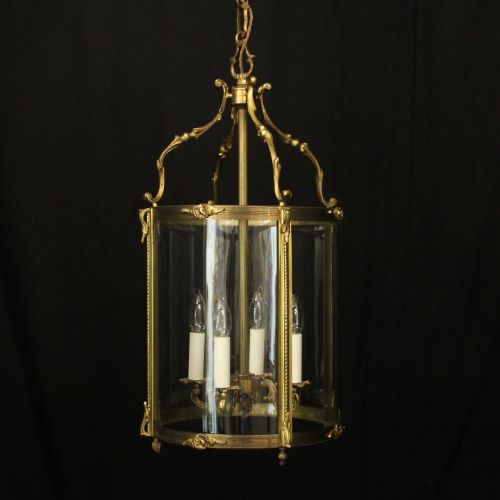
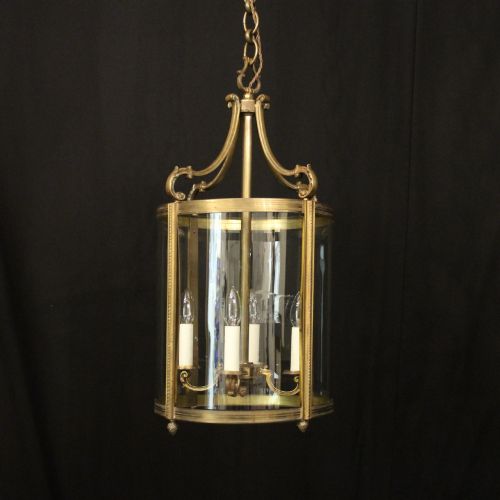
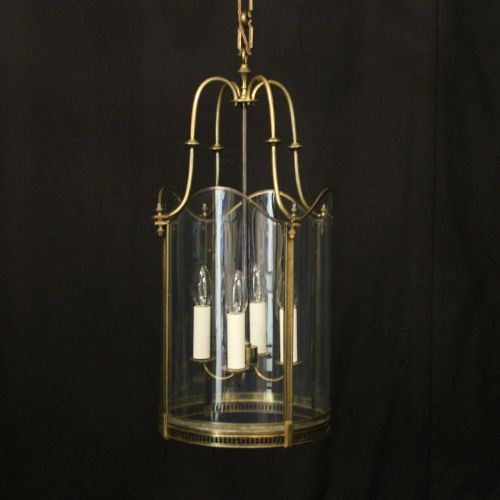
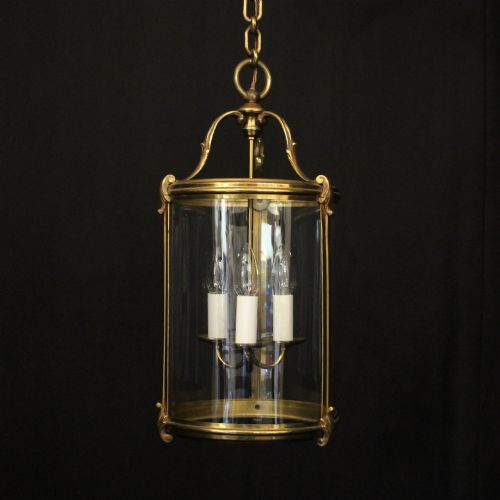
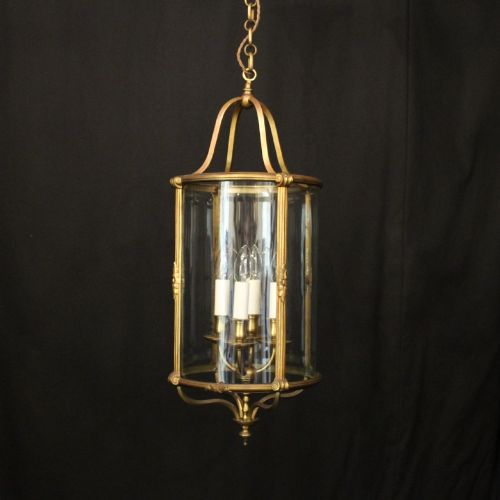
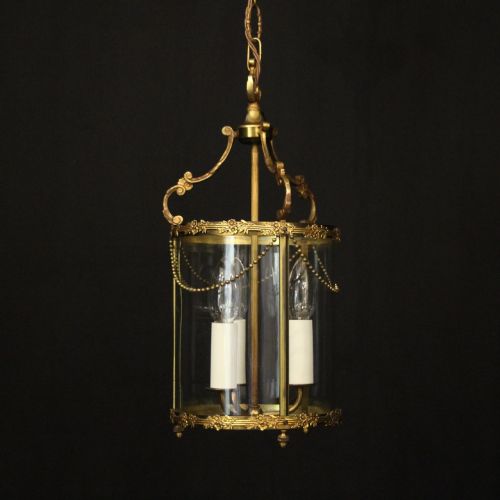
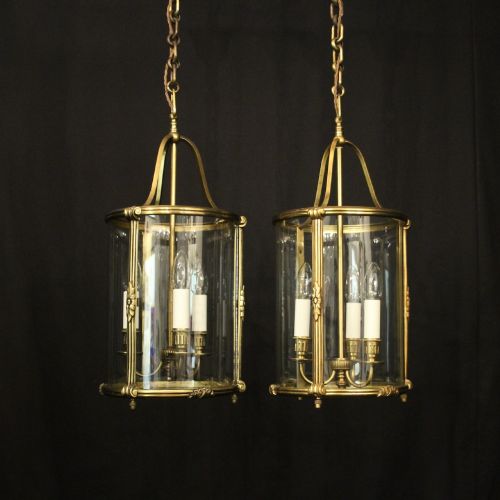
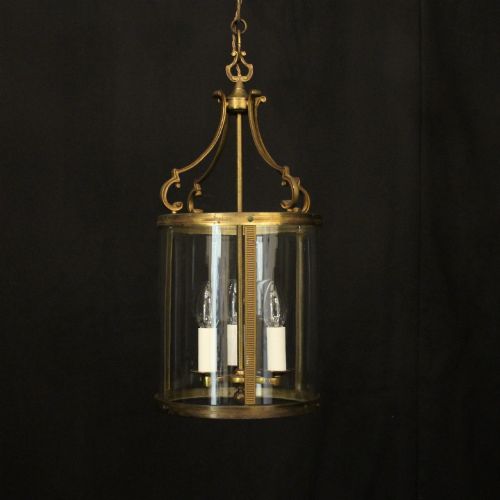
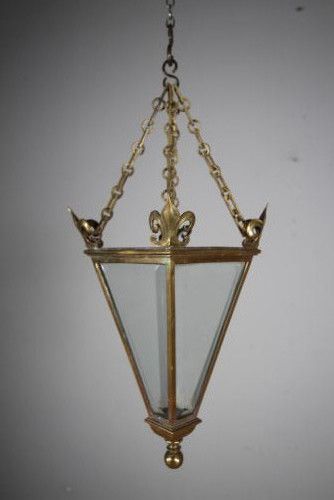
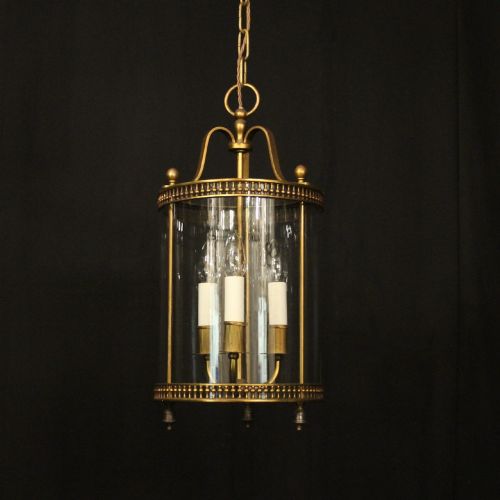
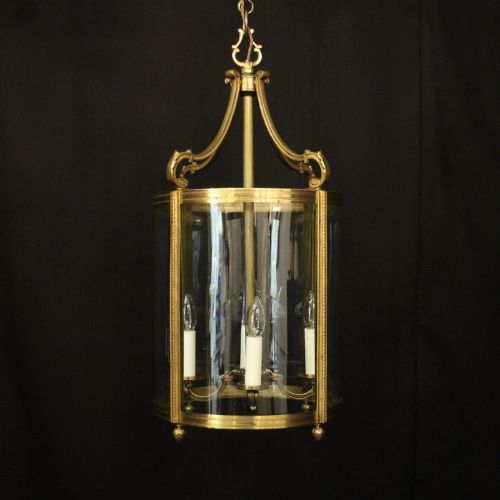


Gilded Hall Lantern
A gilded hall lantern brings immediate warmth and historical weight to an entrance, casting patterned light through glass panels.
Gilded Hall Lantern
A gilded hall lantern is a hanging ceiling light designed for corridors, vestibules, and entrance spaces. These fixtures illuminate entryways while establishing an immediate sense of period style.
The pieces seen here range from nineteenth-century examples to early twentieth-century designs. French models dominate the selection, often taking convex forms with multiple internal lights.
Makers drew on diverse design languages, producing items in French Neoclassical, Gothic, and Rococo styles alongside English interpretations. Brass, bronze, and carved giltwood form the structural framework for clear or bevelled glass panels.
Materials and Construction
Makers utilised cast bronze, brass, and carved wood as the primary skeletons for these fixtures. Molten metals were cast into ornate frames, while artisans carved intricate details into wood before applying gold leaf.
Glass panels, frequently curved or bevelled, were fitted into the metal or wooden cages to diffuse illumination. Surfaces received applications of gilt leaf or gilded bronze finishes to create reflective metallic warmth.
Listings feature items spanning the nineteenth century through the nineteen-thirties, dominated by French bronze and brass examples.
Assessing Quality
Quality rests in the crispness of the cast or carved ornament and the weight of the metal frame. Finer examples display deeply chased bronze or precisely carved giltwood rather than flat, simplified mouldings.
The integration of glass panels also marks the difference between standard and superior pieces. Thick, bevelled, or convex glass secured neatly within substantial frames separates the finer productions from simpler utilitarian lights.
The Gilded Hall Lantern Glossary
- Convex glass
- Curved glass panels that project outward to diffuse light across a wider angle. This curved form adds considerable visual depth to the lantern.
- Gilt bronze
- Metal cast in bronze and treated with a gold finish or gold leaf. It offers durability combined with a lustrous surface.
- Bevelled glass
- Glass panes featuring angled edges ground down around the perimeter. This treatment catches and refracts light as it passes through.
- Toleware
- Painted or lacquered sheet metal items. In lighting, it provides a contrasting coloured surface alongside gilded elements.
- Ormolu
- Finely chased and gilded bronze used extensively in decorative arts. The term derives from French phrasing for ground gold.
Gilded Hall Lantern: Frequently Asked Questions
How do I hang a hall lantern?
These hanging fixtures suspend from ceilings using chains or rigid rods attached to the upper crown. Proper installation requires anchoring securely to ceiling joists to support the weight of bronze and glass.
Ceiling height dictates the drop length, allowing the fixture to sit comfortably within an entrance space without obstructing movement.
What periods do these lanterns represent?
The pieces span from the nineteenth century through the Edwardian era and into the nineteen-twenties and thirties. Styles reflect historical revivals, including French Rococo, Neoclassical, and Gothic influences.
Earlier nineteenth-century pieces often feature heavier cast bronze, while later twentieth-century examples frequently adopt streamlined convex profiles.
Are these lanterns wired for modern electricity?
Many surviving fixtures have been adapted with internal lamp holders to accept standard electrical bulbs. Rewiring ensures the internal wiring meets contemporary safety standards while preserving the antique exterior.
Buyers should inspect the bulb capacity and wiring configuration to ensure compatibility with domestic lighting circuits.
Where should I place a hanging lantern?
Entrances, hallways, and stairwells serve as traditional locations for these prominent ceiling lights. Their enclosed glass designs protect internal components from drafts while projecting warm illumination.
Scale is key when positioning the fixture, ensuring the diameter suits the proportions of the hallway.