





Gilded Lid Jar
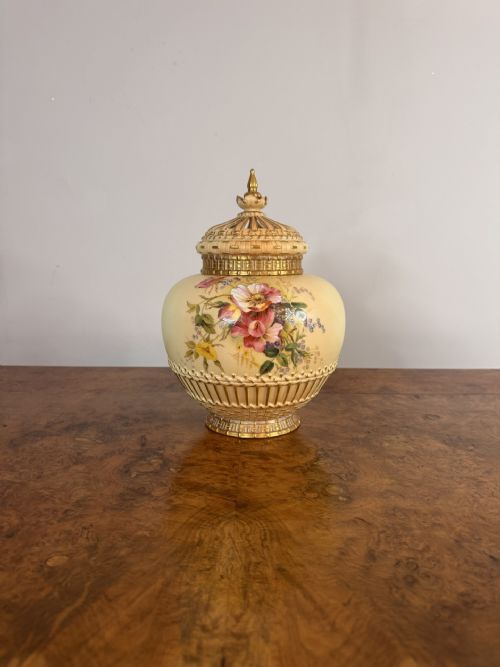
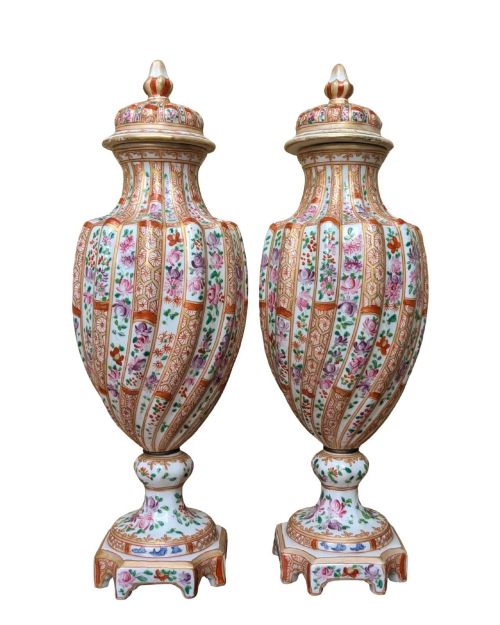
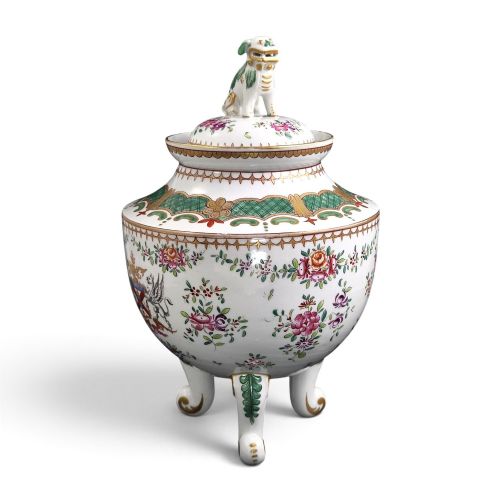
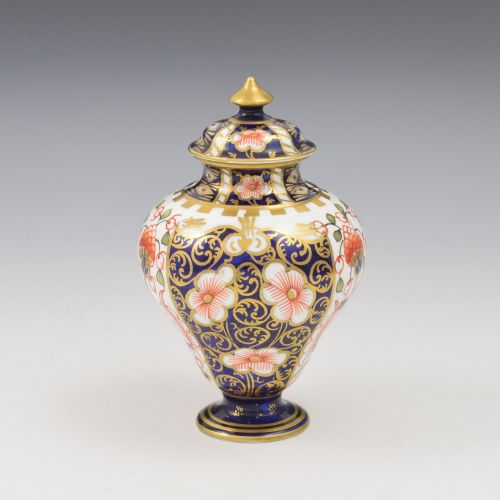
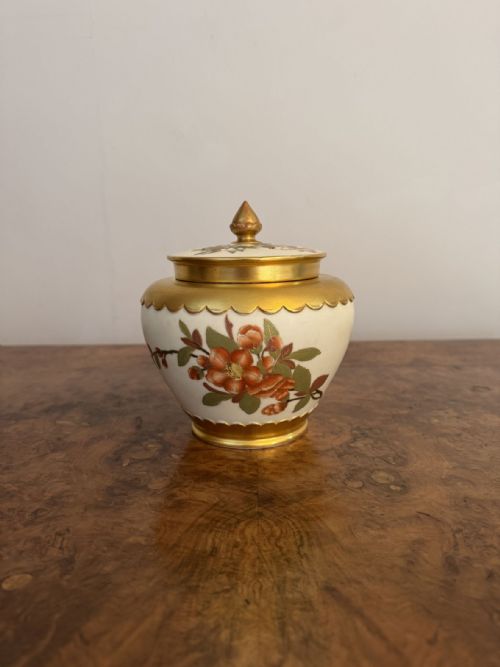
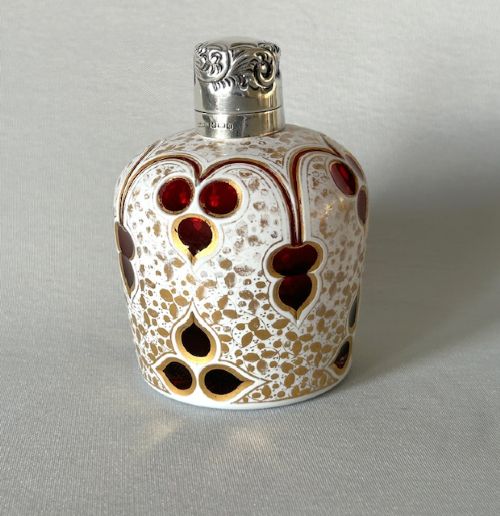
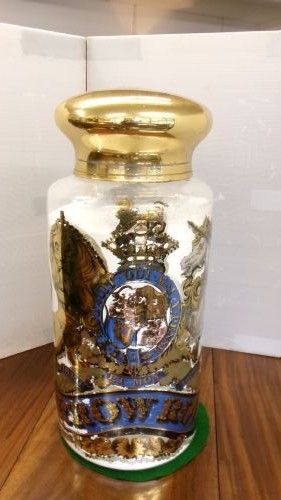
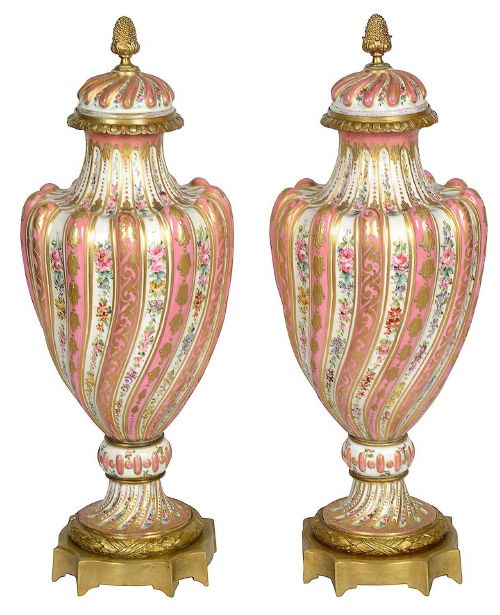
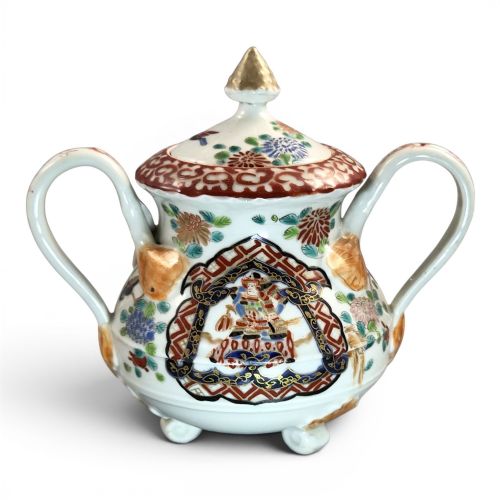
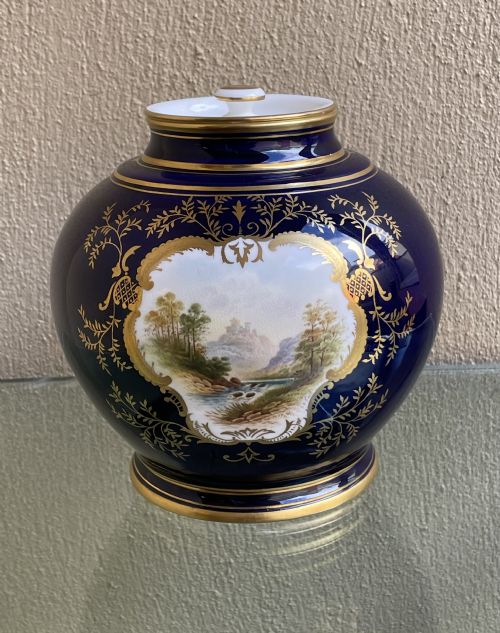
These gilded lid jar examples span porcelain, earthenware and glass from the nineteenth century to the mid twentieth century, offering decorative presence and covered storage.
Gilded Lid Jar
When you search for a gilded lid jar, you encounter lidded vessels designed for display, potpourri or storage across periods including the nineteenth century and the Edwardian era. The selection draws together diverse forms from English factories and continental workshops, alongside pieces influenced by Japanese Imari and Satsuma styles.
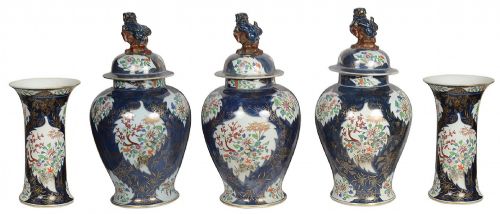
The most common formats on this page are lidded vases, ginger jars and potpourri pots. These range from miniature porcelain pieces to large decorative urns, frequently detailed with gold leaf, gilt highlights or silver mounts.
European factories such as Royal Worcester, Royal Crown Derby and Dresden produced many of these covered vessels, often painting them with floral subjects, figures or armorial designs. Alongside them stand Japanese pottery and porcelain imports created for export during the Meiji period.
Materials and construction
The body of a gilded lid jar is formed from hard-paste porcelain, earthenware, pottery or glass. Potters shaped these materials on wheels or cast them in moulds before applying glazes and initial underglaze or enamel colours.
Surface decoration relies on hand-painted enamel colours, transfer printing and applied gold leaf or gilding. Artisans fired the pieces multiple times to fix the enamel pigments and the gold highlights onto the ceramic or glass surface.
Gilded Lid Jar Retail Price Guide 2026
Typical asking prices for gilded lid jar among the pieces listed under this phrase on Sellingantiques today, from the lower quarter to the upper quarter. They describe what is for sale here now, not the wider market.
Some nineteenth-century apothecary jars still carry faint traces of arrowroot inside their gilded covers, having outlived their original pantry duties by generations.
Assessing quality
Quality rests upon the precision of the hand-painting and the crispness of the moulding on both the vessel and its cover. Pieces painted by named artists or produced by leading porcelain manufactories display finer brushwork and more detailed gilding.
The condition of the gilding and enamel work dictates the integrity of the piece. Superior examples retain their original gold leaf and hand-painted details intact, without rubbing or later restoration to the ceramic body or the lid.
Edme Samson·Royal Crown Derby·Royal Worcester·Coalport·Helena Wolfsohn
The Gilded Lid Jar Glossary
- Gilding
- The application of gold leaf or gold powder to a surface. This technique highlights rims, handles and decorative borders on ceramics and glass.
- Imari
- A style of Japanese porcelain featuring a palette of iron red, cobalt blue and gold. European factories frequently copied these patterns.
- Potpourri
- A mixture of dried plant materials scented with spices, held in a pierced vessel. Lidded jars designed for this purpose often feature perforated covers.
- Hard-paste porcelain
- A durable ceramic material fired at high temperatures, composed of kaolin and petuntse. It forms the base for many nineteenth-century continental and English decorative vessels.
- Famille rose
- A Chinese porcelain palette dominated by opaque pink enamel introduced in the eighteenth century. Later European makers adopted these pink and floral motifs.
Gilded Lid Jar: Frequently Asked Questions
What were gilded lid jars used for?
These vessels served various functions in historical interiors, ranging from storing dry goods and sugar to holding scented potpourri. Many pieces were made primarily as decorative garnitures for mantelpieces and console tables.
The inclusion of a fitted lid protected the contents while adding height and architectural balance to the silhouette of the vase or jar.
How do I care for a gilded lid jar?
Display these vessels away from direct sunlight to protect enamel colours and prevent the gilding from fading over time. Dust them gently with a dry, soft cloth.
Avoid using liquid cleaners or abrasive materials, as harsh chemicals can damage the delicate hand-painted surfaces and gold leaf highlights.
How can I tell the period of a lidded jar?
Dating relies on factory backstamps, signature styles and the character of the paste and glaze. Examining the brushwork and the formulation of the gilding also helps determine the era.
Reference marks associated with specific potteries provide a reliable guide to the decade of manufacture, distinguishing nineteenth-century production from later twentieth-century pieces.
Are lids original to the jars?
Checking the fit and the interior glaze helps confirm that a lid belongs to its vessel. Original covers share the same paste, decorative palette and wear patterns as the base.
Minor variations in the gilding or a mismatch in the ceramic body often indicate a matched replacement rather than a factory pairing.