


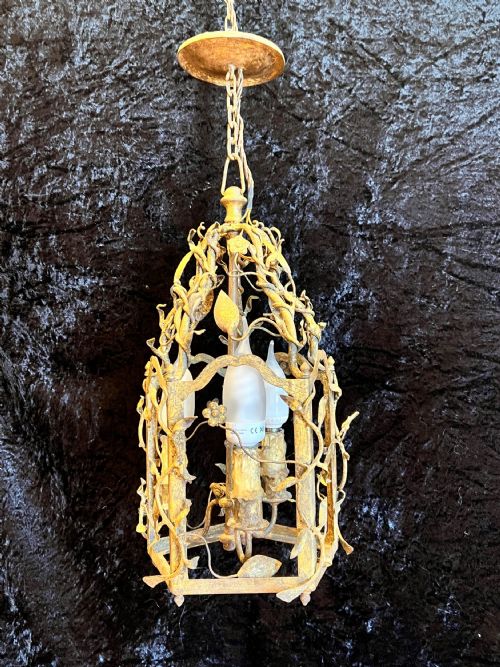


Gilded Iron Light
These gilded iron light fixtures combine the strength of forged metal with the warmth of gold leaf, offering both presence and illumination.
Gilded Iron Light
When you search for gilded iron light, you encounter a distinct group of metal fixtures that merge dark forged or wrought elements with bright surface gilding. The selection spans the nineteenth century through the 1930s, drawing upon Italian Florentine, French Baroque, and Continental traditions.
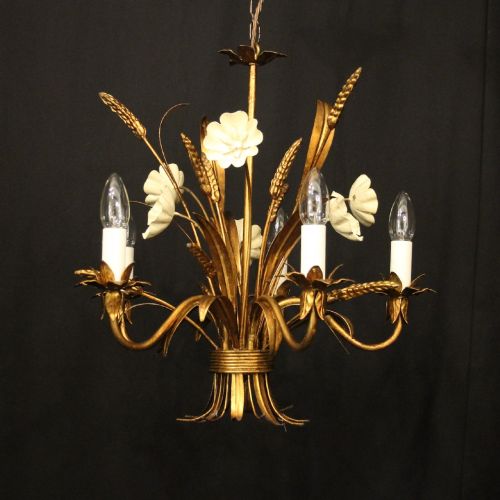
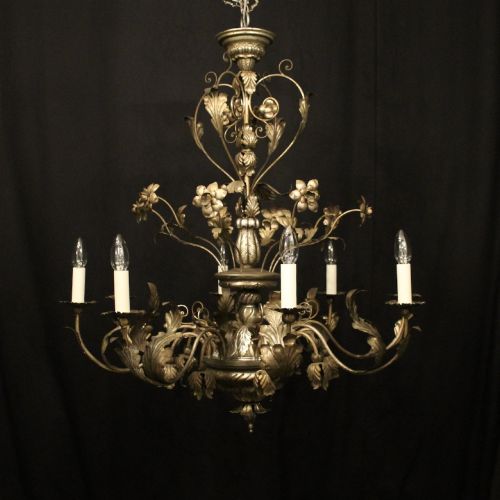
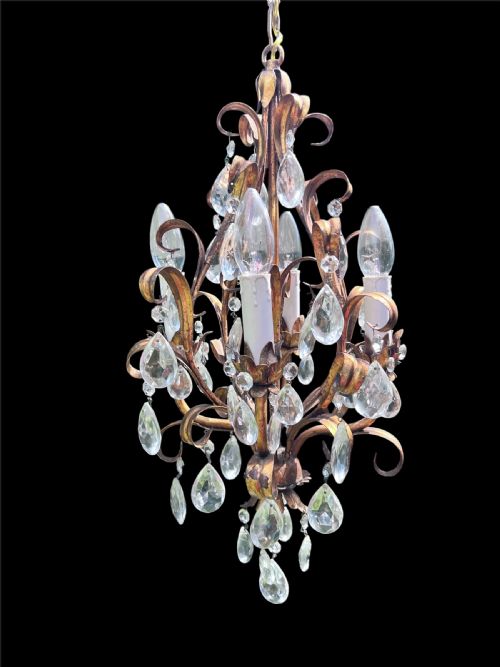
The most common forms on this page are multi-light chandeliers and paired wall lights, often incorporating glass drops, crystal, or polychrome paint alongside the metallic finish. Pieces range from grand floral chandeliers to rustic lanterns and tall floor candlesticks adapted for modern interiors.
Origins heavily reflect continental European workshops, particularly Italian and French makers producing ornate lighting for domestic spaces. These items rely on the visual tension between industrial iron and precious gold leaf or gesso to define their character.
How They Were Made
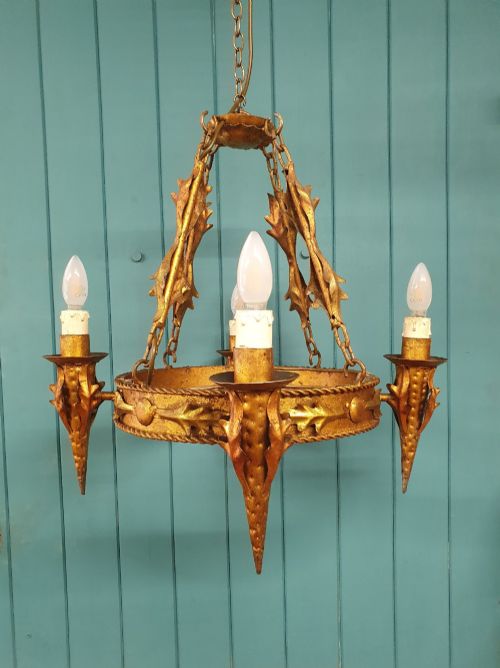
Makers constructed these fixtures using wrought iron and base metals as the structural core, beaten and shaped by hand into scrolls, leaves, and frames. This sturdy armature provided the necessary weight and support for hanging chandeliers and heavy wall brackets.
Surfaces were prepared with gesso before the application of gold leaf or metallic paint, creating a textured base that catches the light differently than smooth metal. Polychrome details and painted highlights were frequently added by hand over the gilding, especially in Italian Florentine and rustic French pieces.
Materials documented across these fixtures include wrought iron, gold leaf, gesso, glass drops, and occasional porcelain elements.
What Varies in Quality
The refinement of the ironwork sets finer examples apart, showing deliberate hand-forging in the scrolls, leaves, and structural joints rather than mass-produced casting. Superior pieces display intricate detailing in the floral and botanical elements that adorn the arms and central stems.
The application and preservation of the gold leaf and gesso determine the visual depth of the surface. Higher-quality items retain subtle variations in the gilding and polychrome layers, whereas lesser examples present flat, uniform finishes lacking texture.
The Gilded Iron Light Glossary
- Gilt Metal
- Metal that has been treated with a thin layer of gold or gold-coloured leaf. This technique provides the rich appearance of solid precious metal while utilising a robust iron or brass core.
- Wrought Iron
- Iron that has been heated and hammered into shape by hand. It forms the strong, fibrous structural skeleton behind many antique chandeliers and wall lights.
- Gesso
- A plaster mixture applied to a surface as a base for paint or gold leaf. It allows artisans to carve fine details and relief decoration before gilding.
- Pricket Stick
- A candlestick featuring a central spike upon which a candle is impaled. These architectural pieces often originate from ecclesiastical settings before finding domestic use.
- Polychrome
- Decorated in multiple colours. This surface treatment adds naturalistic floral and tonal depth to gilded iron frames.
Gilded Iron Light: Frequently Asked Questions
How do I clean a gilded iron light?
Dust the fixture gently with a soft, dry brush to protect the delicate gold leaf and gesso surfaces.
Avoid using liquid cleaners or abrasive cloths, as moisture can lift the gilding and damage the underlying iron.
Are these lights wired for modern use?
Many antique fixtures require rewiring or professional adaptation to meet current electrical standards safely.
A qualified electrician can easily integrate modern internal wiring without altering the exterior metalwork.
How do I date a gilded iron light?
Examine the construction methods, tool marks on the iron, and the style of any glass drops or crystals.
Pieces from the nineteenth century often show heavier hand-forging, while 1920s and 1930s examples frequently incorporate specific regional decorative motifs like Florentine leaves.