

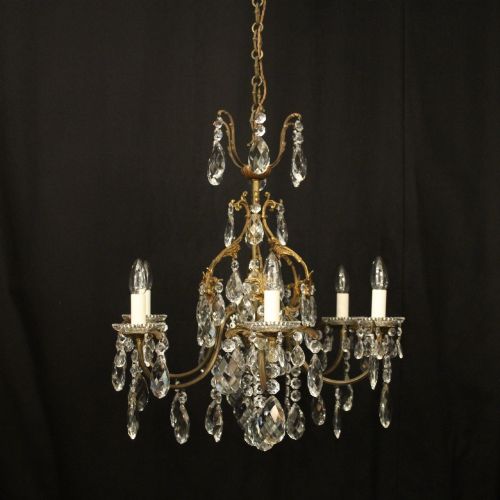
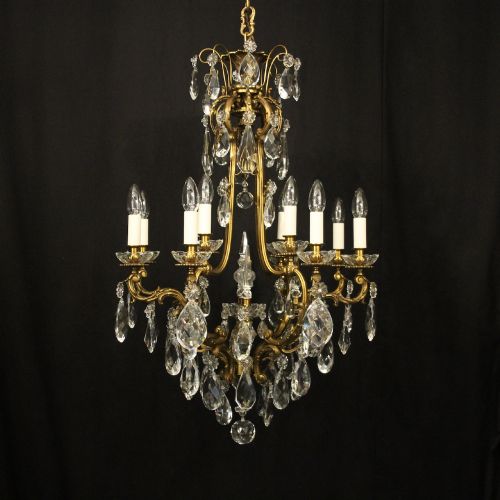
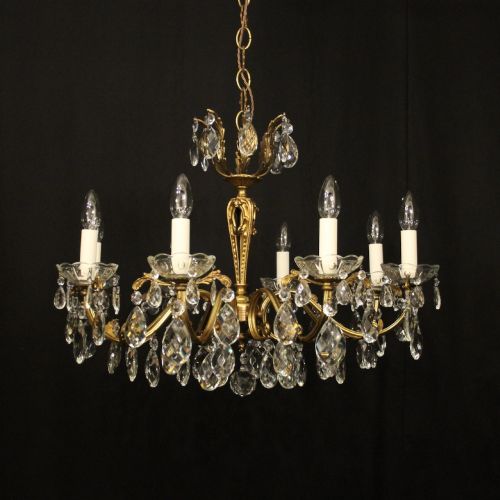
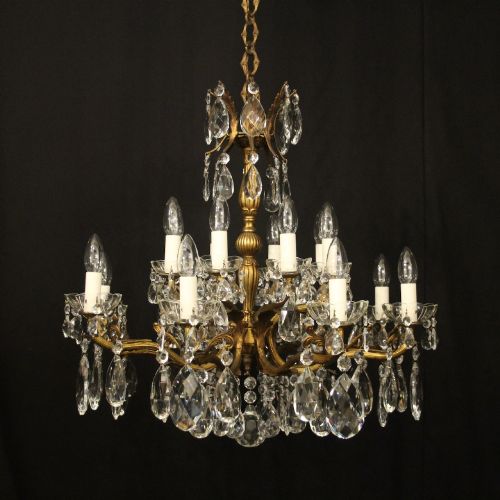
Gilded Glass Ceiling Fixture
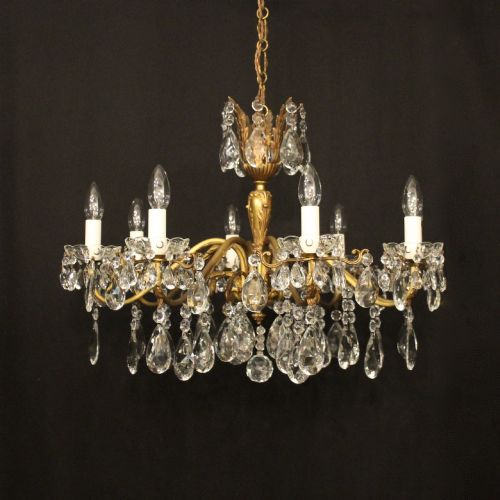
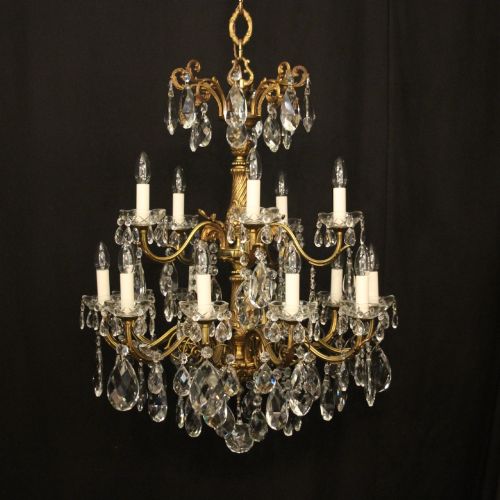
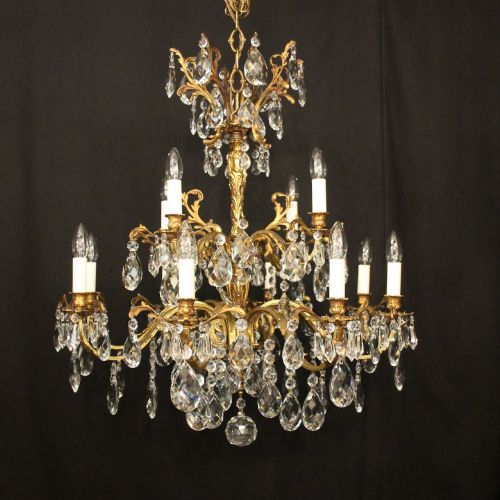
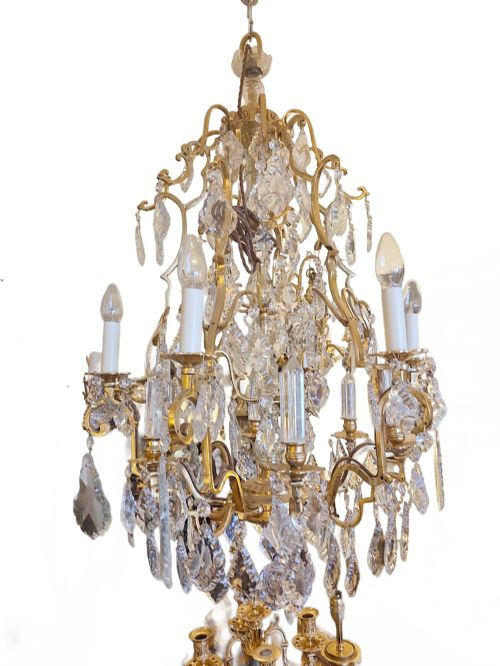
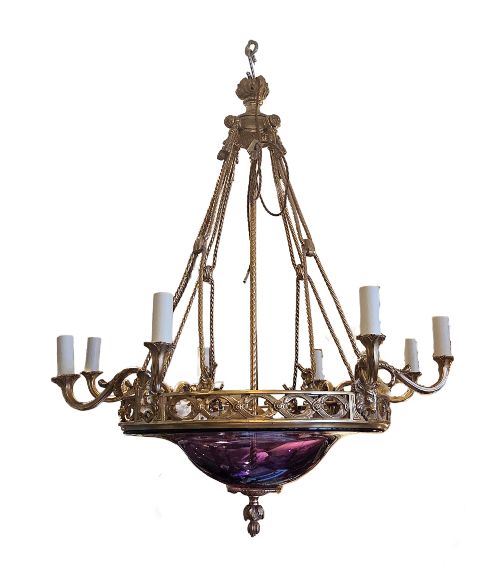
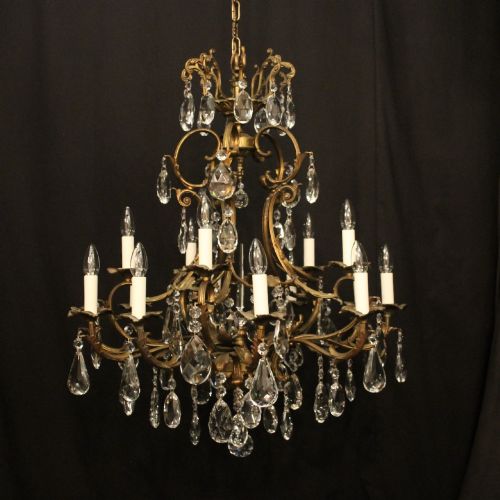
A gilded glass ceiling fixture brings warmth and formal weight to a room through cast metal and hanging crystal.
Gilded Glass Ceiling Fixture
A gilded glass ceiling fixture serves as the primary overhead illumination for a high-ceilinged room, drawing the eye upward with polished metal and reflective glass. These pieces span the nineteenth century through the 1930s, reflecting classical revival styles and later modernist glasswork.
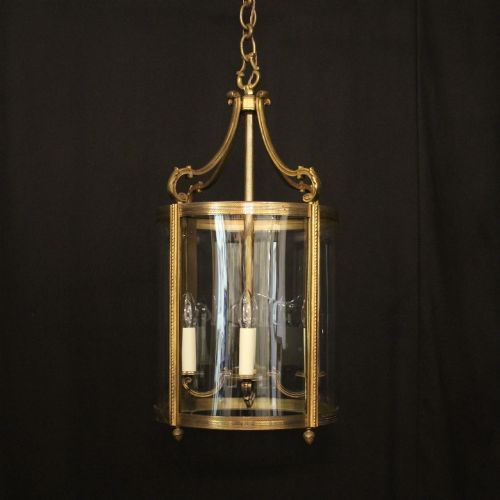
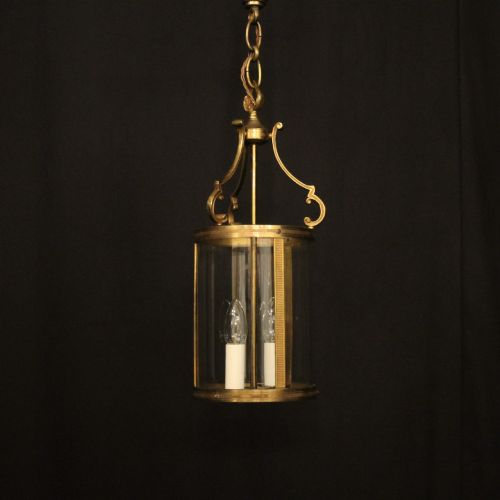
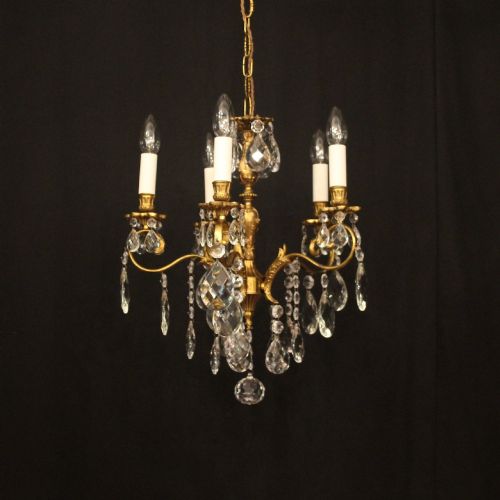
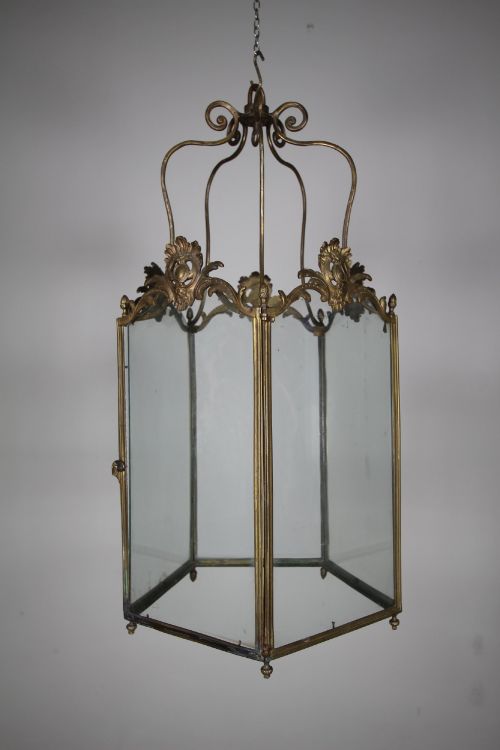
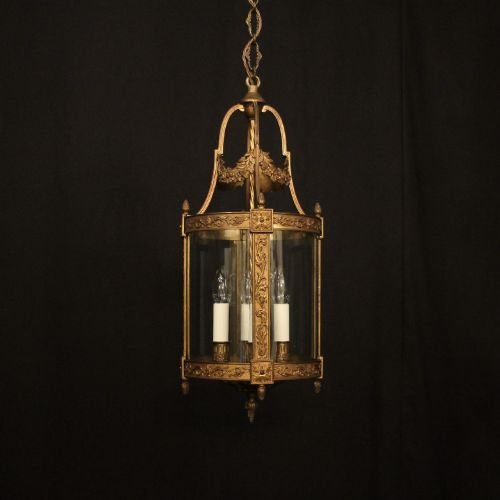
The most frequent examples on this page are French multi-light chandeliers and hall lanterns produced around 1920 to 1930. These encompass basket, birdcage, and tent-and-waterfall configurations alongside flush-mounted glass plafonniers.
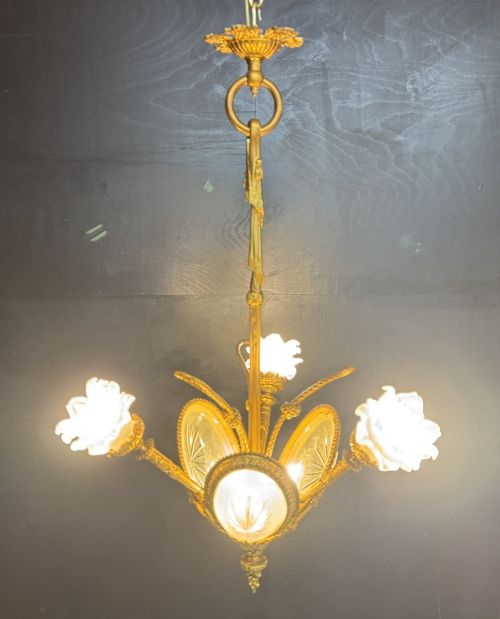
Origin points cluster tightly around French workshops influenced by Rococo, Empire, and Louis XVI aesthetics, alongside occasional Italian Florentine pieces incorporating porcelain details. Buyers find everything from intimate three-light hall lanterns to grand fifteen-light structures.
Materials and construction
Makers built these frames using cast gilt bronze, ormolu, brass, and gilt metal, providing a rigid skeletal structure to support hanging elements. This metalwork received heavy gilding to catch and amplify the light from multiple bulbs or candles.
Glass components include moulded crystal drops, cut lead crystal prisms, convex panes for lanterns, and coloured art glass bowls. These glass elements were wired or pinned directly into the metal armature by hand.
Gilded Glass Ceiling Fixture Retail Price Guide 2026
Typical asking prices for gilded glass ceiling fixture among the pieces listed under this phrase on Sellingantiques today, from the lower quarter to the upper quarter. They describe what is for sale here now, not the wider market.
Some nineteenth-century chandeliers hide tiny amethyst glass elements among clear crystal drops, catching the eye with unexpected flashes of purple.
Assessing quality
Quality rests primarily in the crispness of the bronze or brass casting and the depth of the mercury or gold leaf application. Fine examples display sharp chisel work on the metal mounts rather than soft, mass-produced surfaces.
The grade of the glass components sets superior pieces apart, visible in the hand-cut facets of crystal prisms and the thickness of convex lantern panes. The density and purity of the glass dictate how brilliantly the fixture refracts light.
Charles Schneider
The Gilded Glass Ceiling Fixture Glossary
- Chandelier
- A large branching ceiling fixture designed to hold multiple lights. These fixtures depend on complex metal frames decorated with crystal drops.
- Hall lantern
- An enclosed ceiling fixture designed for corridors and entryways. They utilise convex or flat glass panels held within a metal framework.
- Ormolu
- Finely chopped high-karat gold applied to a bronze base through a mercury amalgamation process. This technique gives nineteenth-century French mounts their characteristic warm glow.
- Plafonnier
- A ceiling-mounted bowl light or flush fixture close to the plaster. These often feature moulded art glass popular in the early twentieth century.
- Waterfall
- A cascading arrangement of glass beads or crystal drops flowing outward from a central ring. This configuration maximises light refraction across a multi-tiered frame.
Gilded Glass Ceiling Fixture: Frequently Asked Questions
How do I choose the right size?
Match the diameter of the fixture to the proportions of the room and the height of the ceiling. Large multi-light chandeliers require substantial vertical clearance to hang correctly above floor level.
Smaller hall lanterns suit narrower corridors or low landings where a branching chandelier would obstruct movement or overwhelm the space.
Are these fixtures wired for modern electricity?
Most antique lighting has been rewired at some point in its history to meet contemporary safety standards. Buyers should inspect the internal channels and lampholders to confirm the installation suits their home.
Professional rewiring preserves the original metal arms and candle tubes while ensuring the fixture connects safely to modern ceiling circuits.
How do I clean crystal and gilt bronze?
Dust the metal and glass components regularly with a soft, dry brush to prevent grime accumulation. Avoid harsh chemical cleaners that strip the delicate gold leaf from the bronze frame.
Wash crystal drops individually in lukewarm water with mild soap before reattaching them to the metal armature by hand.
How do I date a piece?
Examine the style of the metal casting, the cut of the crystal prisms, and the assembly techniques used on the frame. Nineteenth-century examples often feature heavy ormolu and hand-chased bronze mounts.
Pieces from the 1920s and 1930s frequently adopt streamlined geometric glass shades or lighter brass frameworks associated with art deco design.