



Gilded Framed Dog Artwork
Gilded framed dog artwork brings together canine portraiture and heavy wooden frames finished in gold leaf, spanning the nineteenth and early twentieth centuries.
Gilded Framed Dog Artwork
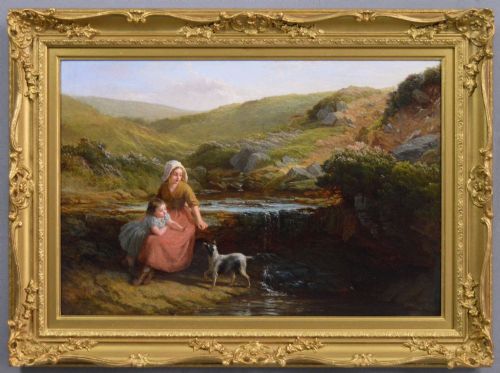
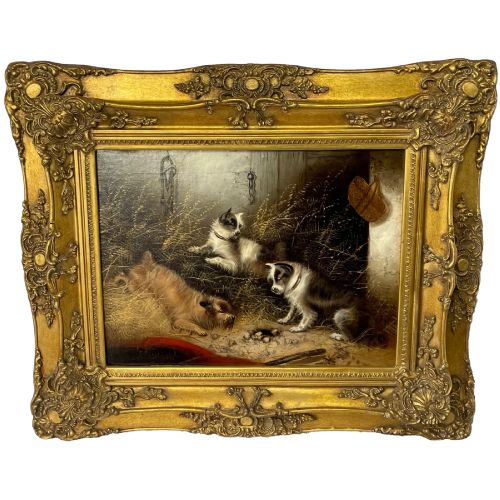
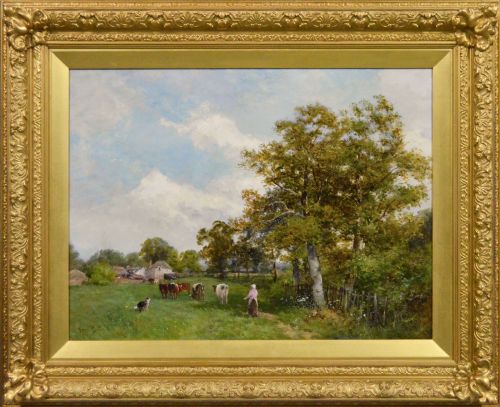
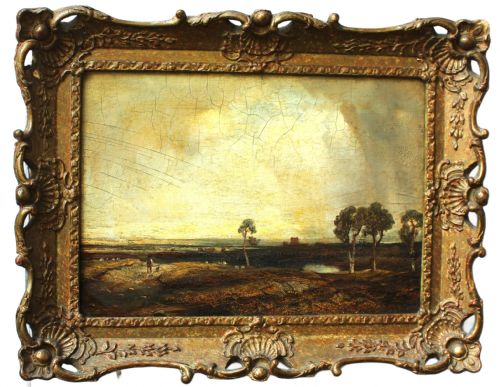
Gilded framed dog artwork comprises oil paintings, watercolours, etchings and boards depicting hounds, terriers, spaniels and working dogs housed within decorative gold-finished wooden surrounds. These pieces range from intimate individual portraits of specific pets to broader pastoral and sporting scenes featuring canine companions alongside horses, figures and livestock.
The selections encountered most frequently on this page date from the nineteenth century and the Victorian era, executed in oil on canvas or board. Works vary from provincial British school depictions to signed compositions by established animaliers and genre painters.
How they were made
Canine subjects are rendered primarily in oil paint upon stretched canvas or prepared wood panels, alongside occasional watercolours and original etchings on paper. Artists layered pigments to capture the texture of fur, the alertness of expression and the play of light across landscape or interior backdrops.
Frames are constructed from wood and finished with applications of gold leaf or giltwood, often moulded with decorative borders to complement the prestige of the central artwork.
Materials recorded across the listings include oil on canvas, wood, giltwood, gold leaf and watercolours.
What varies in quality
Quality rests in the anatomical precision of the animal, the expressiveness of the brushwork and the preservation of the painted surface. Superior examples demonstrate a careful command of light, texture in the animal's coat and natural integration of the dog within its wider landscape or interior setting.
The standard of the framing also influences the piece, with heavier carved giltwood surrounds offering greater substance than simpler gilded mouldings. The presence of clear signatures, historical attribution or noted provenance elevates the standing of individual works.
Valentine T Garland·David Bates·C R Breytle·Herbert Dicksee·Sir Edwin Landseer·George E Sharpe·Edwin Frederic Holt·Robert Cleminson·John Constable·Richard Waitt·Charles Bilger Spalding·Frank Dadd·Thomas Blinks·Samuel Fulton·Charles Hunt Jnr
The Gilded Framed Dog Artwork Glossary
- Giltwood
- Wood that has been coated with a thin layer of gold leaf or gold paint. This finish creates a bright, reflective border designed to catch natural light in domestic interiors.
- Oil on Canvas
- Pigment mixed with drying oils applied to a woven fabric support stretched over a wooden frame. This method allows for subtle blending of colours and durable longevity.
- Etching
- A printmaking process where lines are incised into a metal plate using acid before ink is applied and transferred to paper. This technique captures fine linear detail in illustrative works.
- Pastoral
- A style of art depicting rural life, agricultural scenes and domestic animals in countryside settings. These compositions often include figures, livestock and working dogs.
Gilded Framed Dog Artwork: Frequently Asked Questions
What periods do these pieces date from?
The works originate largely from the nineteenth century and the early twentieth century, spanning Georgian, Victorian and Edwardian periods. Many pieces reflect the nineteenth-century British school of animal and sporting painting.
Dates are determined through stylistic analysis, artist signatures, framing methods and occasional inscriptions recorded on the reverse or within the composition.
How should I display gilded framed dog artwork?
These pieces suit traditional reception rooms, studies or hallways where the warm tones of giltwood frames complement wooden furniture and period interiors. Position works away from direct sunlight to protect oil pigments and paper works from fading.
Ensure wall fixings can support the substantial weight of heavy wooden frames, particularly for larger oil paintings on canvas.
How do I identify different dog breeds in these artworks?
Artists often portrayed specific working and companion breeds popular during the nineteenth century, including cocker spaniels, terriers, bulldogs, greyhounds, lurchers and Newfoundlands. Physical characteristics such as ear shape, coat texture and body proportion define the specific type.
Comparing the depicted animal against historical breed standards of the Victorian era helps confirm the specific canine subject.
What is the difference between oil paintings and watercolours here?
Oil paintings utilise thick pigments on canvas or wood boards, offering rich colour depth, textured brushwork and robust durability over centuries. Watercolours use translucent pigments on paper, resulting in lighter, more delicate compositions that typically require protective glass framing.
Oils are generally found in heavy giltwood frames, whereas watercolours often appear in more modest frames with archival mounts.