


Gilded Frame Religious Artwork
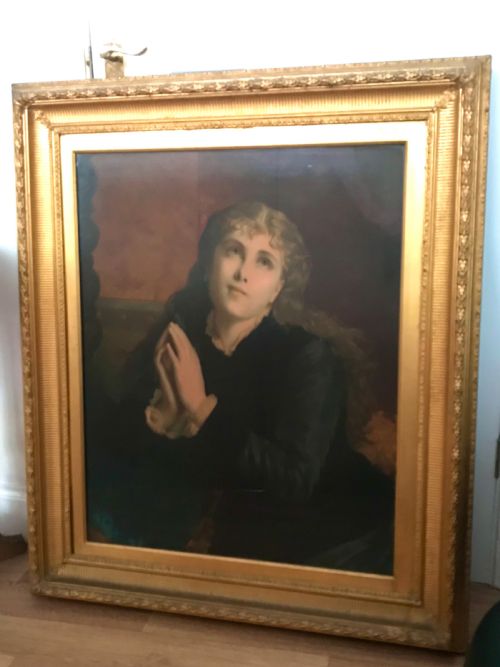
These gilded frame religious artwork pieces bring centuries of devotional imagery into domestic spaces through oil paintings, panels, icons, and engravings.
Gilded Frame Religious Artwork
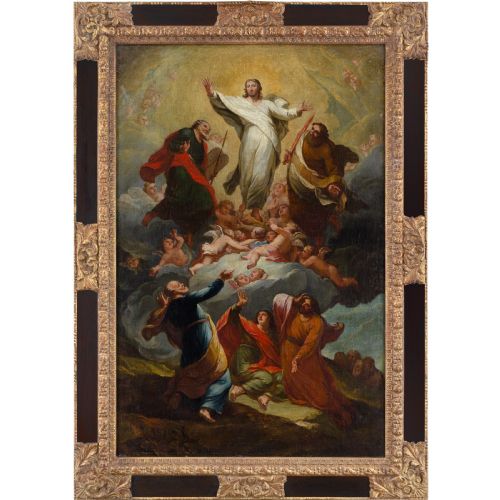
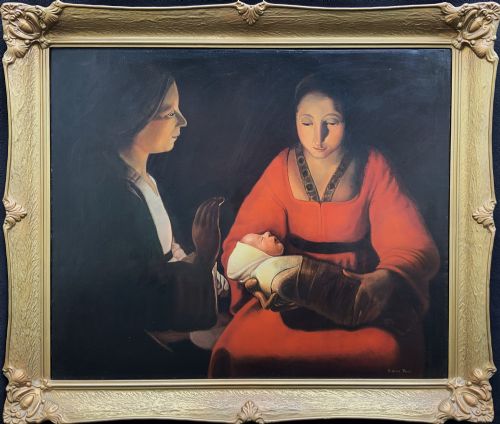
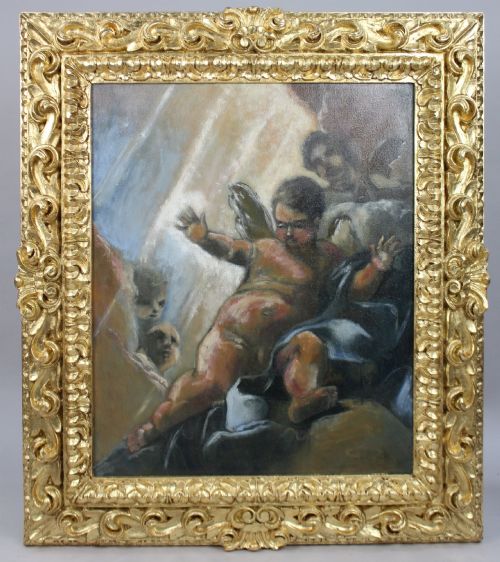
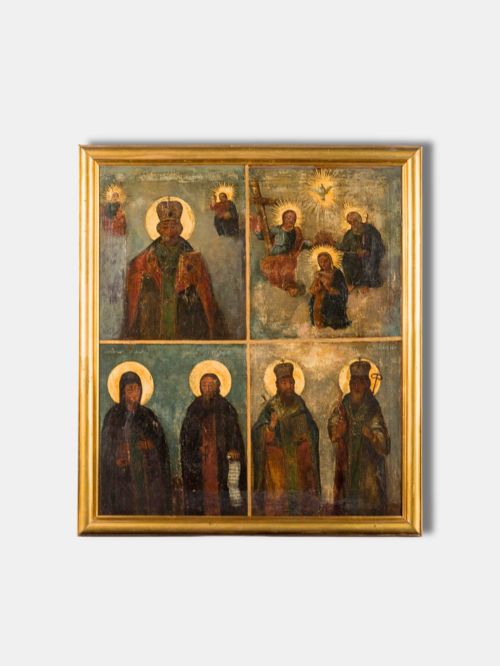
Gilded frame religious artwork encompasses sacred imagery housed within gold-leaf or gilt wooden surrounds, spanning centuries of European and Russian devotional tradition. Buyers seeking these pieces will encounter everything from miniature portraits of saints to large-scale oil paintings depicting biblical narratives.
The selections on this page draw heavily from seventeenth-century, eighteenth-century, and nineteenth-century periods, alongside revival styles and Russian Orthodox traditions. Oil on canvas works dominate the selection, frequently paired with carved giltwood or gesso frames that echo Baroque or Renaissance aesthetics.
Subjects range from traditional depictions of the Madonna and Child to representations of specific saints, such as Saint Sebastian or Saint Peter. Works after masters like Raphael, Murillo, and Guido Reni sit alongside pieces from regional European schools and anonymous monastic workshops.
How They Were Made
Makers utilised traditional oil paint on stretched canvas or wooden panels, sometimes employing tempera and gold leaf for Russian icons and early panels. Canvases were built up with multiple glaze layers to achieve deep luminosity, particularly in depictions of holy figures and dramatic narrative scenes.
Frames were constructed from wood, utilising carved gesso or applied gold leaf to create ornate gilded surrounds that matched the grandeur of the subject matter. Reverse glass painting and oleograph techniques also appear among the methods used to produce these sacred works.
Several saints keep strict company here, with Saint Sebastian managing to look remarkably serene despite his sudden architectural rearrangement of arrows.
What Varies in Quality
Material longevity plays a role, with stable canvas grounds and well-preserved gilt surfaces commanding attention. The depth of the gilding and the crispness of carved gesso details on the frame separate standard decorative pieces from finer historical examples.
Fellman·Juan Ruiz Soriano·F R Roffe·Gian Lorenzo Bertolotto·Rosso Fiorentino·Antonio Tempesta·Pietro D’asaro·Orsola Maddalena Caccia·Pompeo Batoni·Murillo·Ambrious Benson·Guido Reni·Bartolomé Murillo·Eugene Hindle
The Gilded Frame Religious Artwork Glossary
- Giltwood
- Wood that has been coated with a thin layer of gold leaf or gold dust. This material is standard for the ornate frames enclosing these sacred paintings.
- Gesso
- A plaster-like mixture applied to wood surfaces to create a smooth base for gilding or painting. It allows craftsmen to carve intricate relief patterns onto frames.
- Icon
- A devotional panel painting from the Orthodox Christian tradition, typically depicting Jesus, Mary, or various saints. They often incorporate tempera and gold leaf on wood.
- Oleograph
- A mechanical colour lithograph produced on canvas to imitate an oil painting. These became common reproduction methods for religious portraits in the nineteenth century.
- Tempera
- A permanent, fast-drying painting medium consisting of coloured pigments mixed with a water-soluble binder such as egg yolk. It provides the flat, luminous surfaces seen on early icons.
Gilded Frame Religious Artwork: Frequently Asked Questions
How do I hang a heavy framed religious painting?
Heavy oil paintings in giltwood frames require secure wall fixings, preferably anchored directly into wall studs or masonry using appropriate picture hooks.
Ensure the hanging wire and D-rings on the back of the frame are robust enough to support the total weight of the wood and canvas before mounting.
Are these artworks original period pieces?
The inventory includes seventeenth-century, eighteenth-century, and nineteenth-century works, alongside period revival pieces and later studies after old masters.
Each listing specifies the creation period, helping buyers distinguish between seventeenth-century originals, later devotional copies, and twentieth-century interpretations.
How should I clean a gilded wood frame?
Gilded frames demand gentle maintenance using a soft, dry ostrich feather duster to remove surface dust without disturbing delicate gold leaf or gesso relief.
Avoid water, chemical solvents, and commercial cleaning sprays entirely, as moisture quickly strips nineteenth-century and earlier gilding from the wooden substrate.
What is the difference between an icon and an oil painting?
Icons are traditional wooden panel paintings rooted in Orthodox Christian theology, typically utilising tempera and gold leaf to portray sacred figures with stylised reverence.
Oil paintings on canvas rely on Western European academic traditions, employing blended pigments and perspective to create naturalistic narrative scenes.