
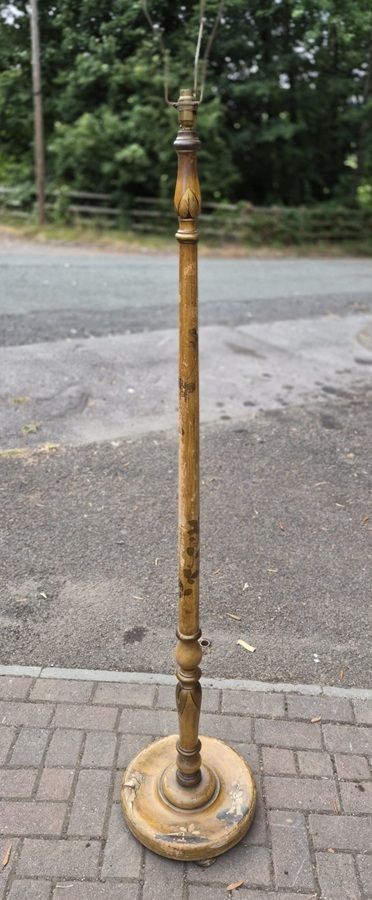
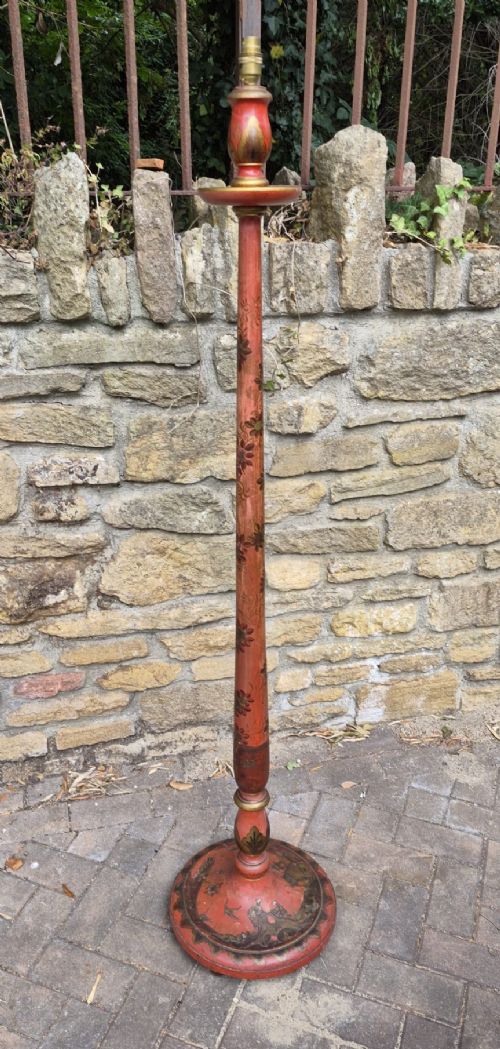
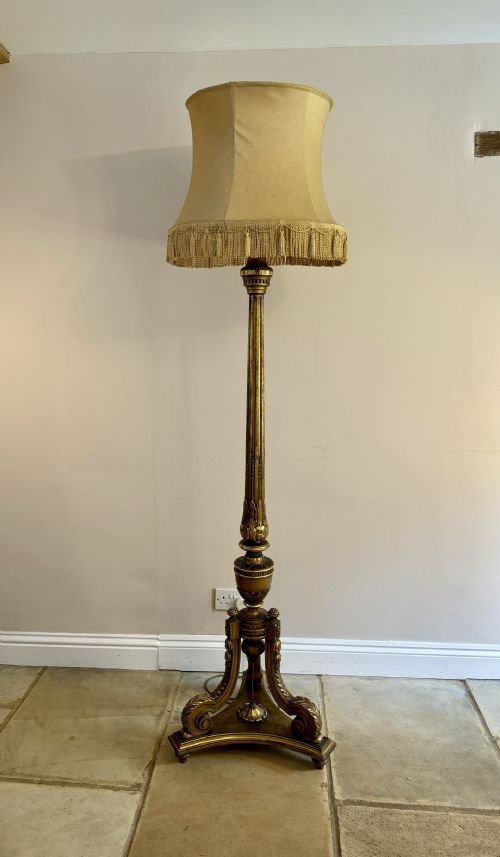
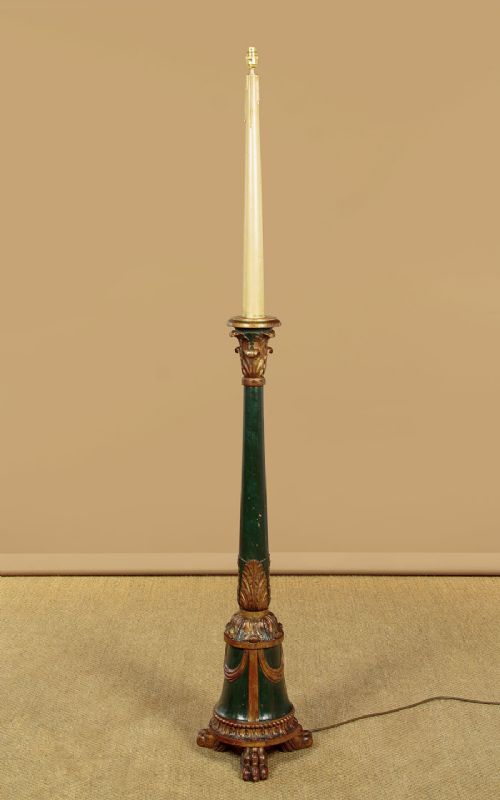
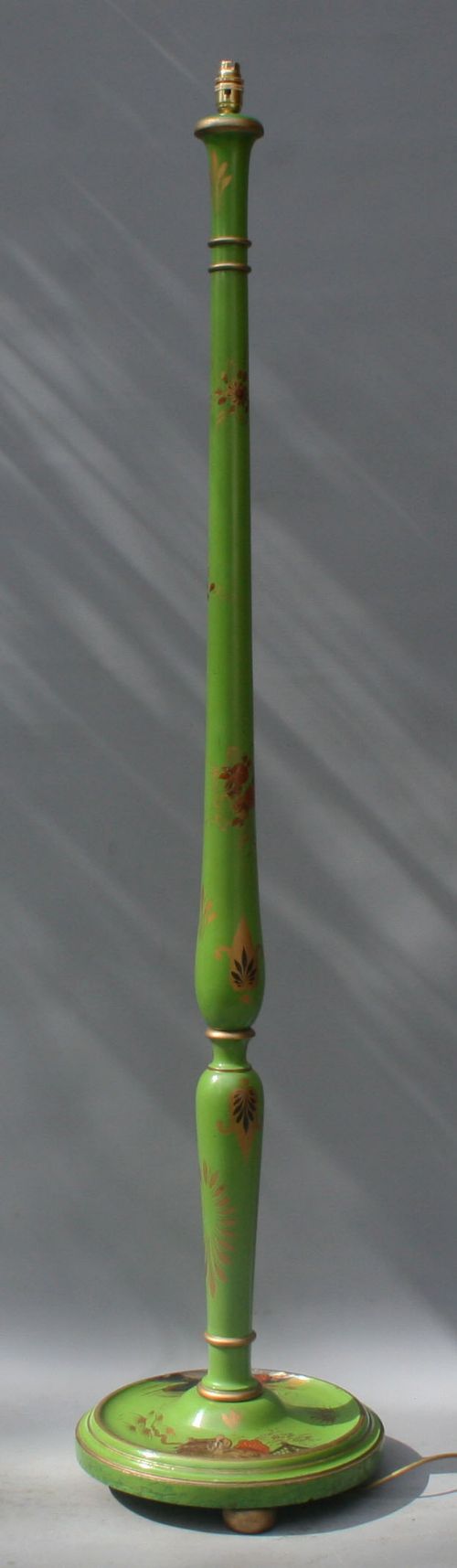


Gilded Floor Lamp
These gilded floor lamp pieces bring height and warm illumination to a room through centuries of decorative tradition.
Gilded Floor Lamp
A gilded floor lamp serves as both a primary light source and a sculptural presence in a interior space. Buyers searching for a gilded floor lamp encounter tall standard lighting forms spanning the nineteenth and twentieth centuries.
Makers utilised traditional regional styles such as Neoclassical Revival, French Chateau, and Florentine Baroque to create ornate vertical profiles. Pieces range from carved wood standards to painted and lacquered finishes applied over gilded surfaces.
Materials and Techniques
Craftsmen built the structural shafts primarily from carved wood, giltwood, and brass, applying gold leaf and parcel gilt to create reflective metallic surfaces. Structural supports often incorporate heavy metals like bronze or iron to ensure stability for the tall upright standard.
Decorative finishes include hand-painted lacquer and polychrome detailing, particularly visible on Chinoiserie and Venetian figures on stands. Surface gilding techniques combine burnished gold leaf with painted ground layers to achieve varied sheens.
Several Venetian figures happily double as decorative torch-bearers, standing ready with permanent wooden poise to brighten the evening.
Distinctions in Quality
Quality rests upon the depth of hand-carving in the wooden elements and the refinement of the original gilding or polychrome finish. Superior examples display crisp detail in sculptural figures, acanthus leaves, or Chinoiserie motifs.
The integrity of the underlying structure, whether carved giltwood or heavy bronze, dictates the balance and durability of the standard. Original surfaces with genuine patina and intact gold leaf command greater appreciation than later repainted or heavily restored alternatives.
Coutan·Maison Ramsay Paris
The Gilded Floor Lamp Glossary
- Giltwood
- Wood that has been coated with gold leaf or gold paint. This technique provides a luminous metallic finish popular in baroque and revival interior schemes.
- Torchere
- A tall ornamental stand or candlestick designed to hold a light source. In nineteenth-century examples, these take the form of carved figures holding illumination.
- Ormolu
- Gilded bronze mounting or ornament applied to furniture and decorative objects. The technique involves mercury gilding over a bronze base.
- Polychrome
- Decoration executed in multiple colours. This technique is often found on Venetian figures and decorative stands from the mid nineteenth century.
Gilded Floor Lamp: Frequently Asked Questions
Where should I place a floor lamp?
These tall lighting pieces suit drawing rooms, studies, and corners where ambient vertical light is required. Their decorated shafts make them effective focal points even when unlit.
Position the standard near seating areas to provide reading illumination while displaying the carved wood or gilded finish against a wall.
How do I care for giltwood?
Maintain the gilded surface by dusting gently with a soft, dry cloth. Avoid chemical polishes and moisture, which can damage delicate gold leaf and paint layers.
Keep the lamp away from direct sunlight and excessive temperature changes to preserve the integrity of the wood and the metallic finish.
How do I date a standard lamp?
Examine the materials, wiring methods, and stylistic cues such as Victorian carving or Edwardian Chinoiserie lacquer work. Stylistic revivals often emulate earlier baroque periods.
Compare the construction techniques and base weights against known production methods from the nineteenth and early twentieth centuries.
What is the difference between giltwood and ormolu?
Giltwood refers specifically to carved wood that has been treated with gold leaf or paint. Ormolu describes gilded bronze used for mounts and decorative fixtures.
Both materials provide metallic brilliance, but giltwood appears on the main shafts and bases while ormolu typically forms smaller decorative elements.