


Gilded Crystal Sconces
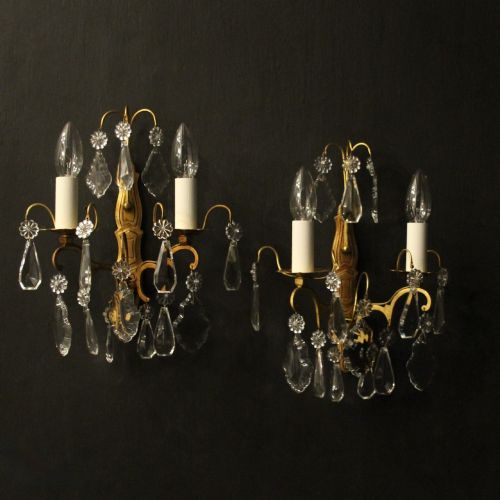
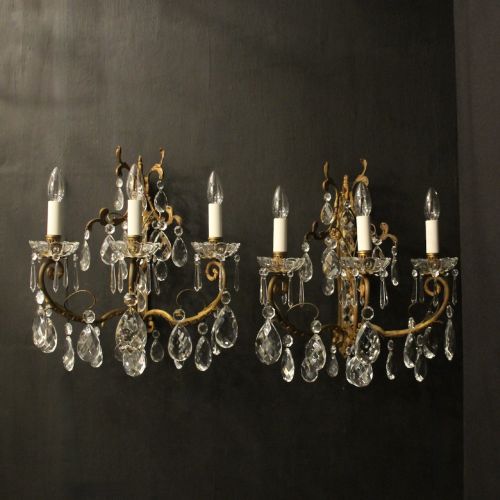
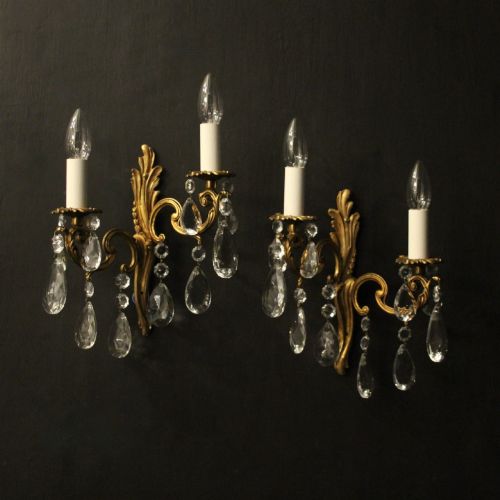
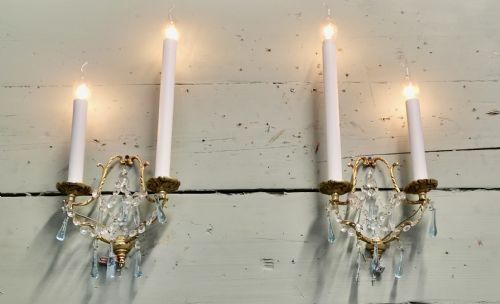
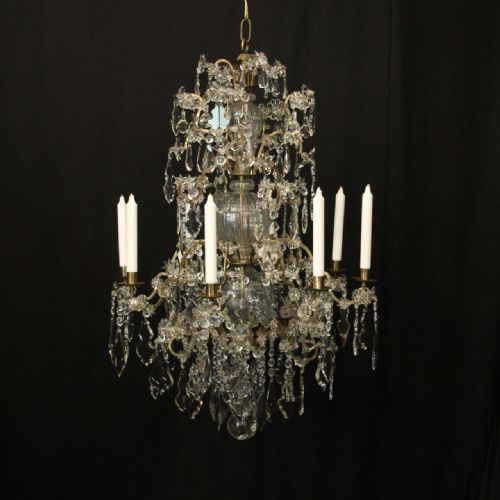
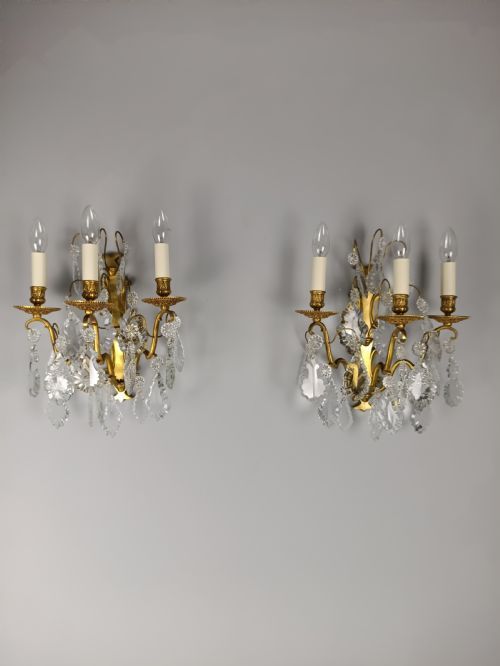
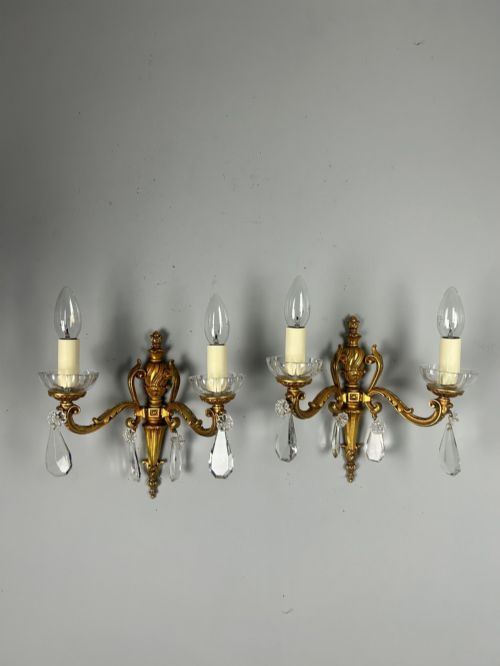
These gilded crystal sconces bring brilliant illumination and ornate metalwork to an interior wall.
Gilded Crystal Sconces
When you search for gilded crystal sconces, you encounter decorative wall lighting designed to reflect candlelight or electric illumination through cut glass and crystal. These fixtures illuminate hallways and reception rooms while adding architectural presence to plain surfaces.
The pieces on this page lean heavily towards French origins, spanning the nineteenth century and the early decades of the twentieth century. You will frequently find pairs featuring twin or triple arms arranged symmetrically for mounting on either side of a mirror or mantelpiece.
Materials and construction
Metalwork forms the structural backbone of these fixtures, utilising brass, bronze, giltwood, or toleware finished with gilding. Craftsmen cast or carve these metals into scrollwork, leaves, and baroque motifs before applying gold leaf or gilt paint.
Crystal and glass elements are suspended from the metal frames using wire or pins, catching and dispersing the light. Cut crystal pendants and drops hang alongside moulded glass components to create complex visual layers.
Materials recorded across the listings include brass, bronze, giltwood, toleware, glass, and cut crystal.
Assessing quality and craftsmanship
The distinction between ordinary and exceptional examples rests upon the depth of the metal chasing and the clarity of the crystal drops. Finer pieces display crisp botanical casting and hand-cut facets that refract light sharply.
Substantial weight in the bronze or brass framework and integrated construction rather than superficial assembly separate the better workshops from mass production. Original gilding intact beneath gentle patina indicates superior preservation over time.
The Gilded Crystal Sconces Glossary
- Girandole
- A branched wall light or sconce, often incorporating a mirror to multiply the effect of the candles. These fixtures serve as both lighting and decorative wall furniture.
- Ormolu
- Gilded bronze produced by applying a mercury and gold amalgam to a bronze base, creating a durable golden finish. This technique was widely utilised in French decorative arts.
- Toleware
- Painted or lacquered sheet metal formed into decorative objects and lighting components. It provides a colourful matte or semi-gloss contrast to polished crystal.
- Giltwood
- Timber carved and coated with a thin layer of gold leaf. This material appears frequently on Florentine wall lights.
- Lustre
- A glass pendant or drop hung from a light fitting to refract the illumination. Lustres catch ambient daylight as well as artificial light from candles or bulbs.
Gilded Crystal Sconces: Frequently Asked Questions
How do I wire antique wall lights?
Many older wall lights are sold unwired or with historical wiring that requires updating to meet current safety standards. A qualified electrician can thread modern flex through the internal channels without damaging the metal framework.
Careful positioning of internal lamp holders allows the electric bulbs to sit discreetly behind the crystal drops, preserving the intended visual balance of the fixture.
Were these lights originally for candles?
A significant proportion of these pieces began life holding candles before being adapted for electricity in the twentieth century. Drip pans and candle tubes often survive as part of the original design vocabulary.
When evaluating older wall lights, evidence of conversion work on the nozzle components is entirely normal and expected for pieces dating from the nineteenth century.
How are wall sconces securely mounted?
Weight varies considerably depending on the quantity of bronze, brass, and crystal employed in the construction. Heavy fixtures require direct anchorage into wall studs or solid masonry using appropriate fixings.
Lightweight girandoles mounted on wooden or toleware backs may utilise standard wall plugs, provided the backing plate distributes the load evenly.
Can missing crystal drops be replaced?
Finding period-correct replacement drops requires matching the cut pattern, glass tint, and fixing method of the originals. Dealers and specialist restorers maintain stocks of loose crystal components for this purpose.
Even slight variations in glass clarity or facet style can be noticeable up close, so matching the age and optical properties of the crystal matters greatly.