
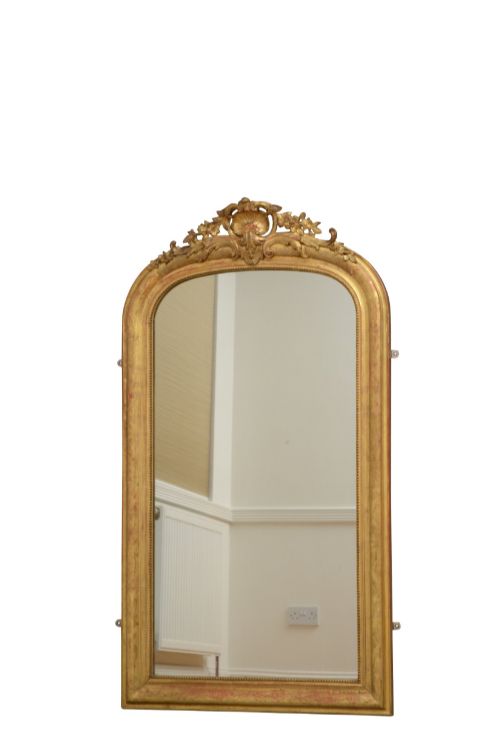
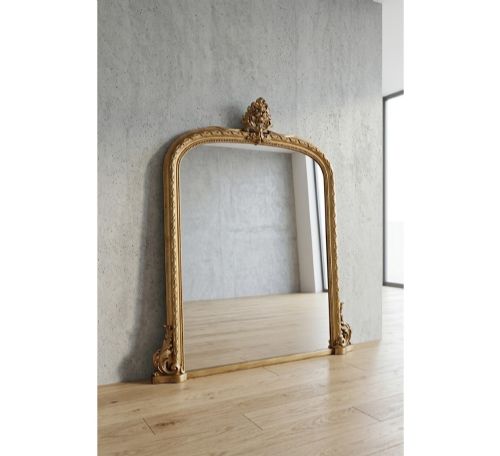

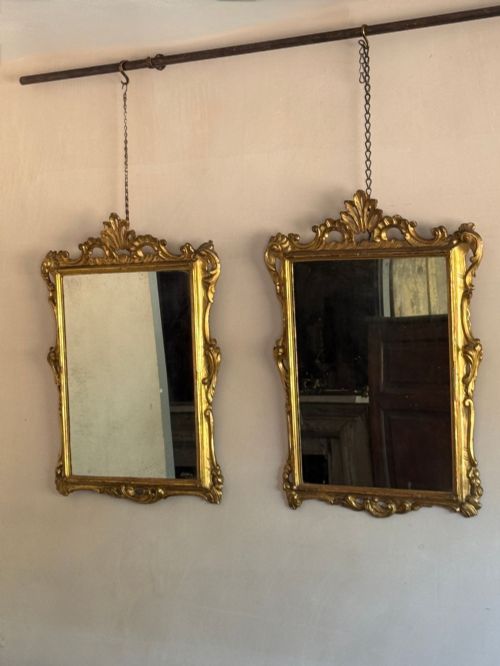
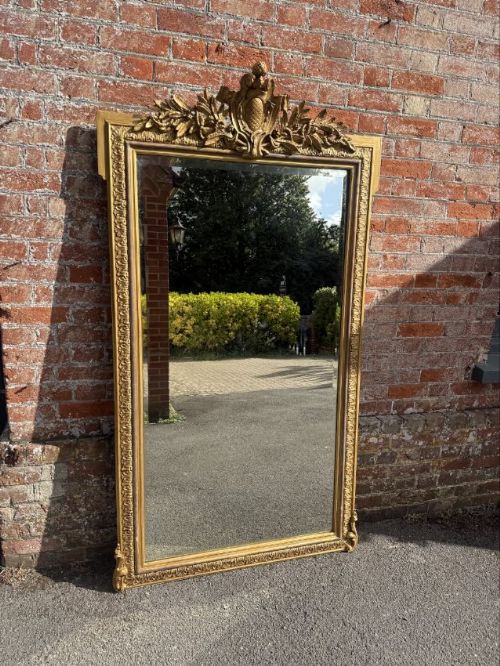
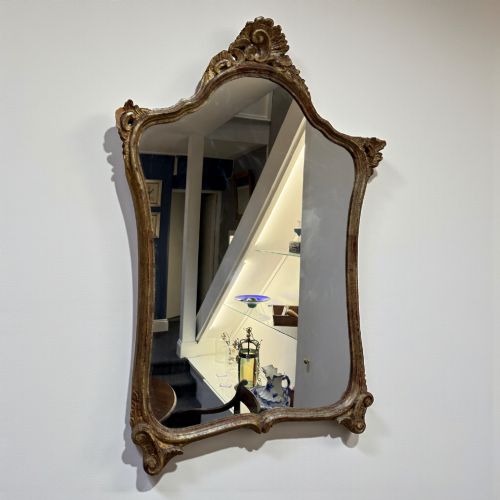
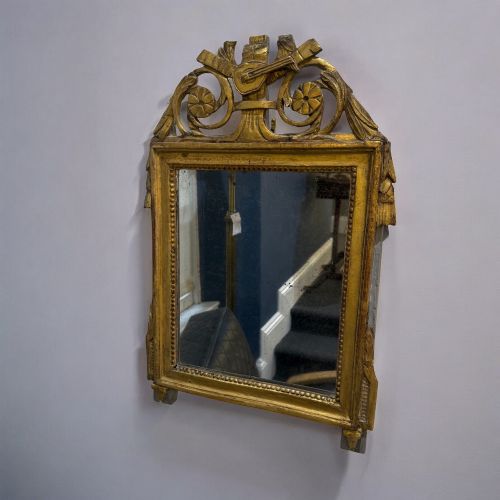
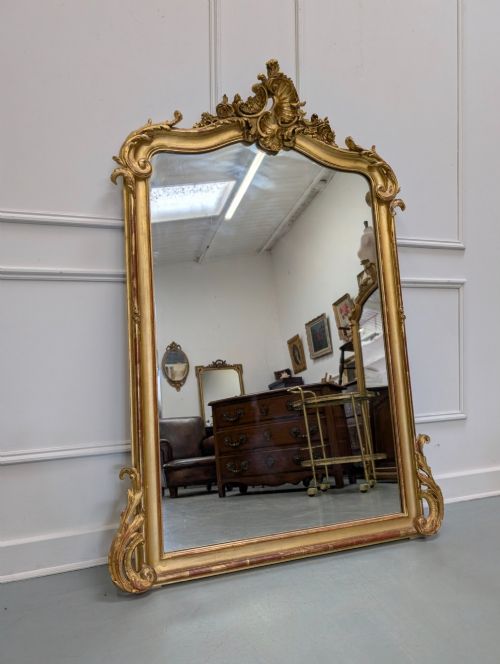
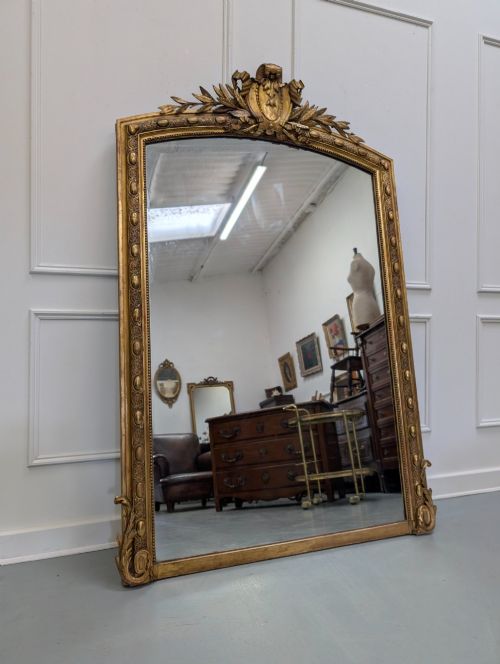
Gilded Crest Mirror
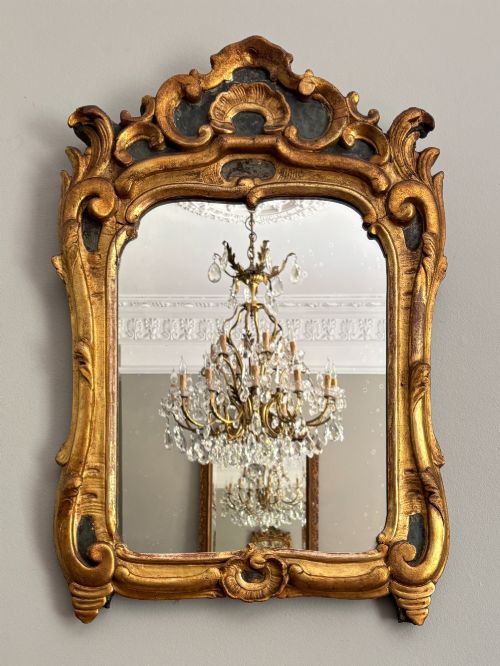
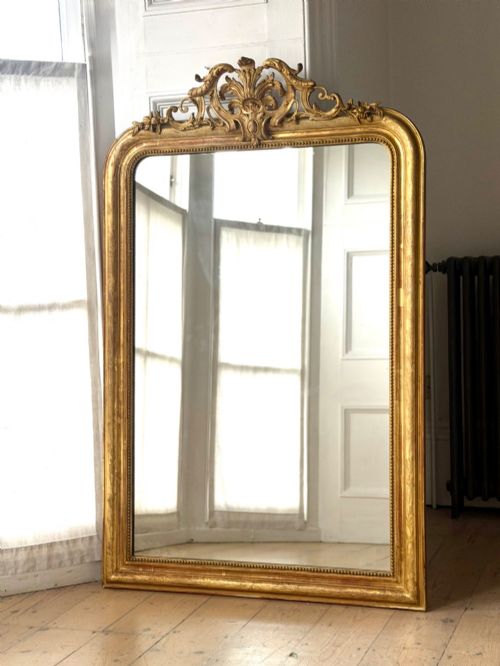
A gilded crest mirror brings sculptural presence to a room, drawing the eye upwards with carved ornament.
Gilded Crest Mirror
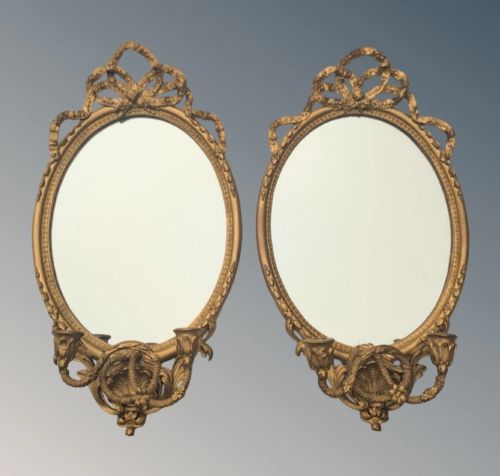
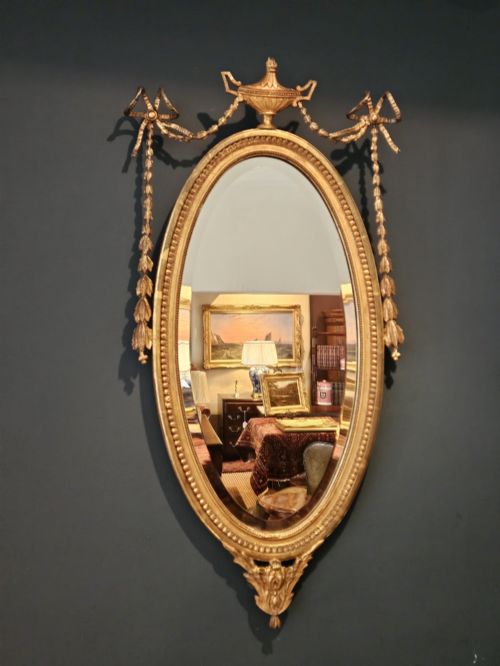
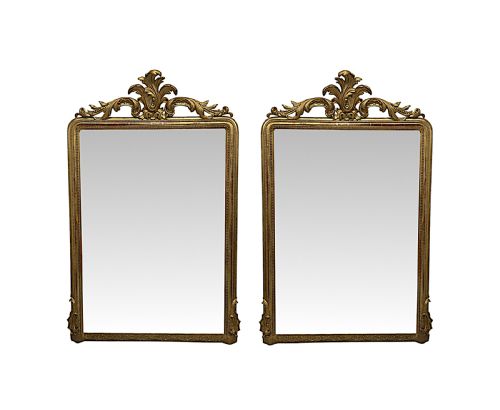
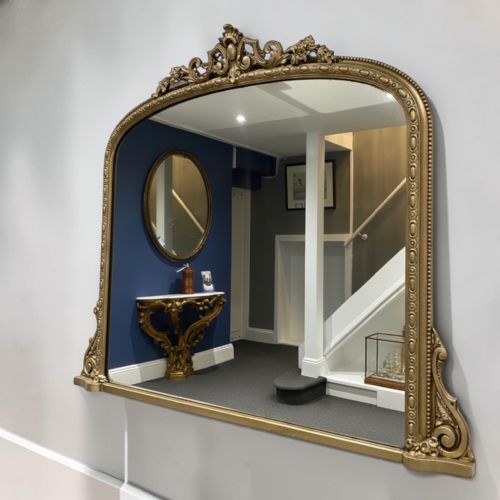
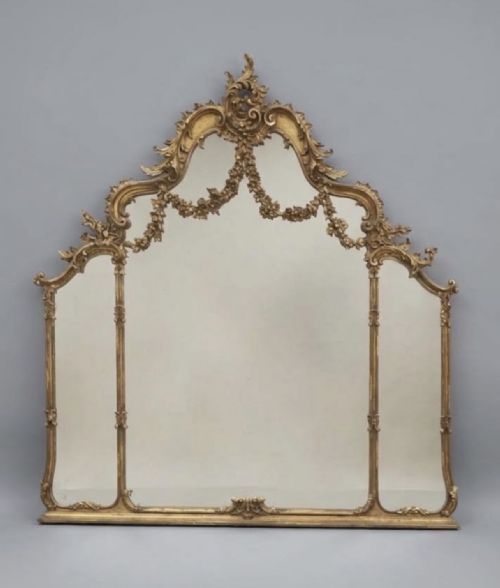
A gilded crest mirror is a wall-hanging or overmantel glass piece defined by decorative ornamentation surmounting the frame. These items range from large 19th century French overmantels to smaller convex wall glasses featuring eagle or ribbon crests.
The selections found here span the 18th, 19th, and early 20th centuries, taking forms such as girandoles, pier mirrors, and architectural overmantels. French styles and Regency convex designs dominate the selection, often displaying elaborate carved wood frames.
Buyers seeking a gilded crest mirror encounter regional variations, from English mahogany parcel-gilt fret designs to ornate continental giltwood and gesso pieces decorated with floral motifs or birds.
How they were made
Makers constructed the structural frames from timber such as mahogany, pine, or ebonised wood, sometimes building up complex relief ornamentation using layered gesso over carved wooden bases.
Guilders applied gold leaf or silver-gilt directly onto the prepared gesso surfaces, occasionally combining painted accents like olive green with the metallic leaf.
Glass production relied on traditional methods, yielding plates with foxed mercury backing or bevelled edges fitted into the finished wooden framework.
Listings feature 18th century and 19th century periods, utilising materials such as giltwood, gesso, mahogany, and mercury mirror glass.
What varies in quality
The depth and definition of the carved cresting separate standard production from finer work, as skilled carvers achieved naturalistic detail in foliage, birds, or architectural flourishes.
The integrity of the gilt surface matters greatly, with hand-applied gold leaf showing a richer warmth and ageing process compared to simpler painted finishes.
Originality defines the upper tier, where surviving mercury glass plates, untouched parcel-gilt surfaces, and intact structural joints remain unaltered by later restoration.
Gillows Of Lancaster
The Gilded Crest Mirror Glossary
- Giltwood
- Wood that has been coated with gold leaf or gold paint. This finish creates a reflective metallic surface popular in formal interior decoration.
- Gesso
- A plaster-like mixture applied to wood frames to create a smooth surface for carving and gilding. It allows for crisp relief ornamentation.
- Convex mirror
- A round glass plate curved outward to provide a wide-angle reflection of the room. These pieces often feature eagle surmounts.
- Overmantel mirror
- A large glass designed to hang above a fireplace mantelpiece. They frequently incorporate architectural cresting to fill vertical wall space.
- Parcel-gilt
- A decoration method where only specific carved details are gilded while the underlying wood remains visible. This technique highlights particular elements of the design.
Gilded Crest Mirror: Frequently Asked Questions
Where should I hang a gilded crest mirror?
These pieces suit principal reception rooms, hallways, or above fireplaces where their decorative top carvings can be appreciated without obstruction.
Because many examples are heavy overmantel or pier glasses, secure wall fixings into masonry or structural studs are essential for safe placement.
How do I care for antique giltwood?
Dust the carved frame gently using a soft, dry brush rather than a cloth that might snag delicate gesso or leafing.
Avoid liquid cleaners, polishes, and direct sunlight, which can degrade the fragile metallic surfaces over time.
What is foxed glass?
Foxing refers to the dark spots, speckling, and oxidation that develop on antique mirror plates as the backing degrades over decades.
This natural ageing process confirms the age of the glass and adds character to the reflection without obscuring the image entirely.
How can I tell a Regency convex mirror from a Victorian one?
Regency examples typically date from the early 19th century, featuring distinct spherical glass plates, ebonised reeded inner bezels, and detailed eagle or ball crests.
Victorian variations often incorporate heavier gesso decoration, oval formats, or revival styling influenced by earlier French aesthetics.