
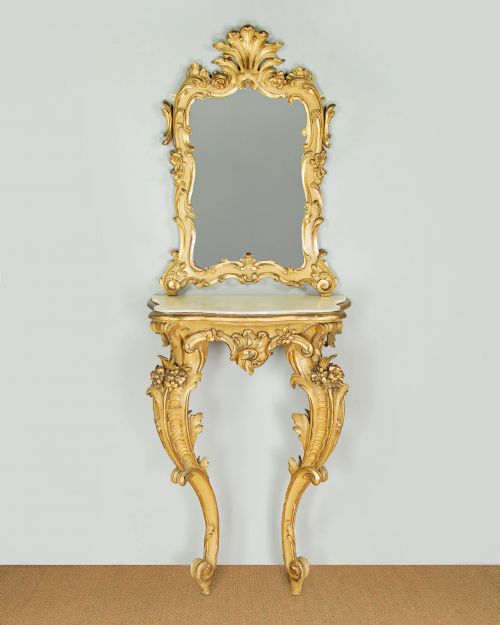


Gilded Console Mirror
A gilded console mirror brings reflective light and architectural presence to a room, pairing wall glass with a matching base or shelf.
Gilded Console Mirror
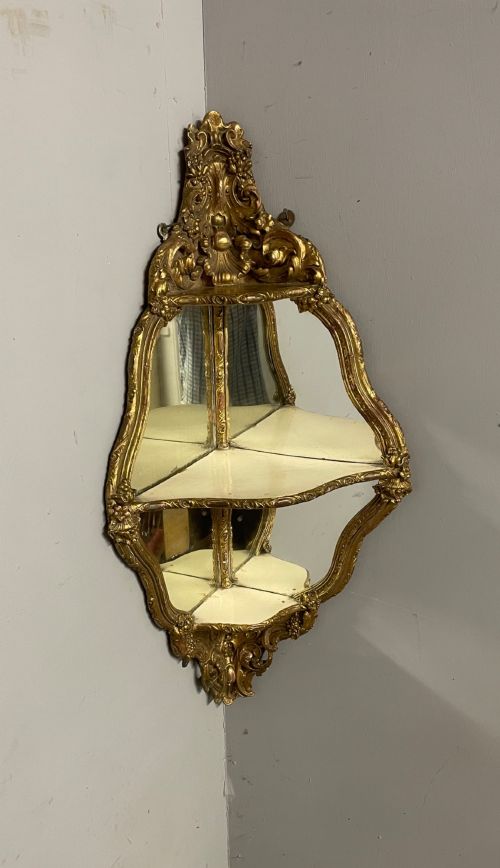
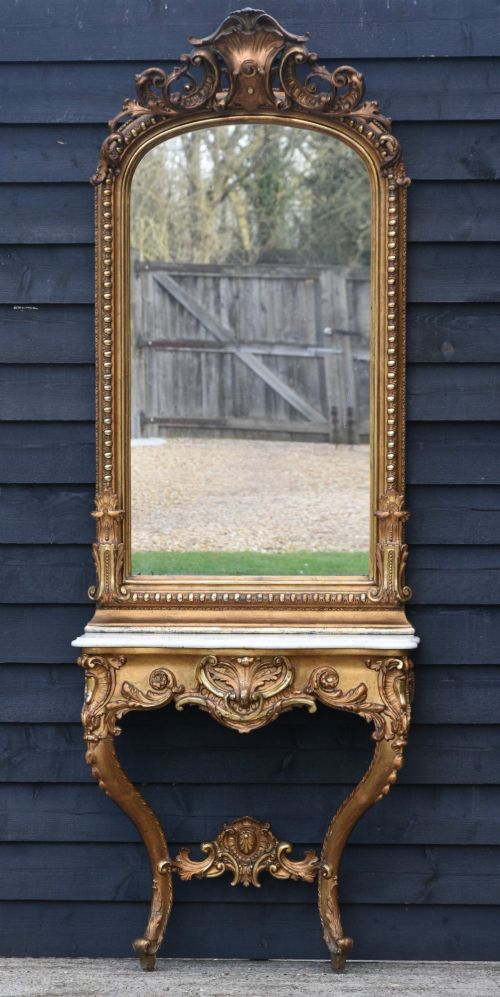
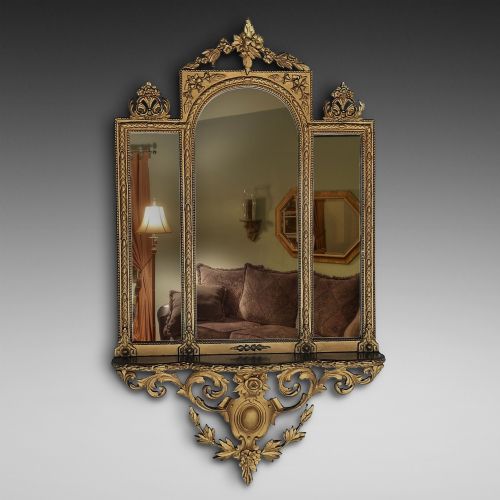
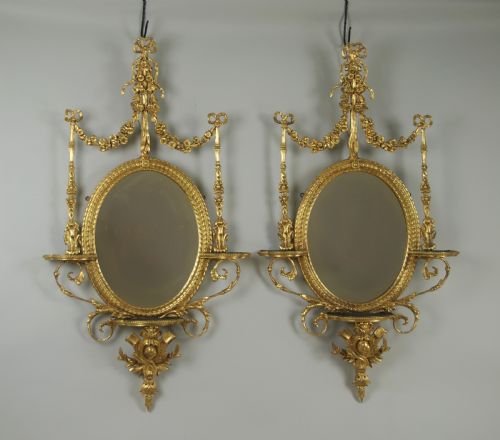
When you search for a gilded console mirror, you encounter pieces designed to anchor a room, often combining a tall wall glass with a matching console table, pier table, or display shelf below. The selections span the nineteenth century through the early twentieth century, drawing on Victorian, Regency, and continental European traditions.
Many examples arrive as matched sets where the carved frame of the mirror echoes the ornament of the table beneath. These range from substantial overmantel and pier formats built for grand reception rooms down to compact wall-mounted mirrors with integrated brackets or shelves.
The forms frequently display revival aesthetics, notably Rococo and Neoclassical vocabularies, alongside French Empire and Venetian influences. Buyers meet both grand gilded wood suites and painted variations paired with gilt highlights.
Materials and Construction
Makers built these pieces primarily from solid wood, gesso, and glass, applying gold leaf or paint over carved timber bases. Many nineteenth-century frames utilise a foundation of carved wood finished with built-up gesso layers to hold sharp relief ornament before gilding.
Console tables in the selection regularly incorporate marble tops, flame mahogany, or painted wood structures designed to support the weight of the matching mirror above. Mirror glass itself ranges from original silvered plates with gentle foxing to later replacements retained within the historic frames.
Some nineteenth-century tables feature carved wooden dolphins supporting the marble top, proving that Victorian designers enjoyed marine creatures indoors.
Judging Quality
Quality rests in the crispness of the hand-carved ornament and the depth of the gilding. Superior examples show deeply undercut foliage, scrolls, or figural motifs rather than shallow, moulded plaster substitutes.
The integration between the mirror and its console table dictates the piece's authority in a room. Matched pairs and suites where the timber, scale, and decorative vocabulary align seamlessly represent the upper tier of the range.
The Gilded Console Mirror Glossary
- Giltwood
- Wood that has been covered with a thin layer of gold leaf. This surface treatment gives frames a warm metallic sheen that catches interior light.
- Pier glass
- A tall mirror specifically designed to hang on the wall space between two windows, often placed directly above a low console table.
- Gesso
- A plaster-like mixture applied to wood frames and carved before gilding. It provides a smooth, receptive surface for intricate decorative details.
- Overmantel mirror
- A large horizontal mirror designed to sit directly above a fireplace mantelpiece. These pieces visually expand the proportions of a reception room.
- Trumeau
- A decorative wall panel incorporating a painted scene or mirror glass within carved wooden framing. It frequently matches an attached console table.
Gilded Console Mirror: Frequently Asked Questions
How do I style a gilded console mirror?
Pair the mirror with its matching console table against a principal wall in an entrance hall or living room. Keep the surface below uncluttered to let the carved frame and gilding command attention.
Allow natural light from nearby windows to strike the glass, which helps brighten darker corners and creates an illusion of greater room depth.
What is the difference between a pier mirror and an overmantel mirror?
Pier mirrors are typically tall and narrow, built to hang on the solid wall space between windows. They often sit above a matching console or pier table.
Overmantel mirrors are wider and designed specifically to sit horizontally above a fireplace mantel, reflecting the hearth and lower furniture.
Are these mirrors attached to the console tables?
Some period examples arrive as integrated furniture suites where the mirror rests on or fastens directly to the console base. Others function as independent wall mirrors hung above a separate console table.
Check the structural setup of individual pieces to understand whether the mirror and table operate as a single unit or two coordinating items.
How do I identify a nineteenth century piece?
Nineteenth-century pieces typically exhibit hand-carved wooden foundations beneath gesso and gold leaf, showing subtle tool marks and natural ageing to the gilding. Original mirror plates often display light foxing, oxidation spots, or slight distortion in the reflection.
Construction methods, such as traditional joinery on the console tables and backboards fixed with older screws or nails, also point toward nineteenth-century origins.