


Gilded Coat of Arms
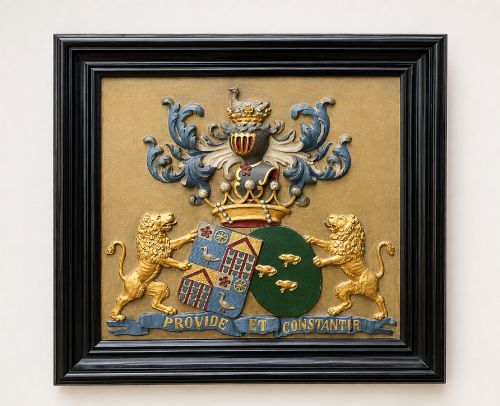
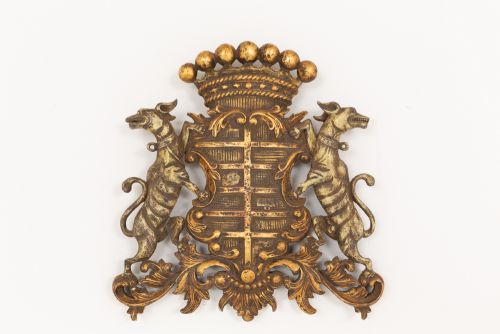
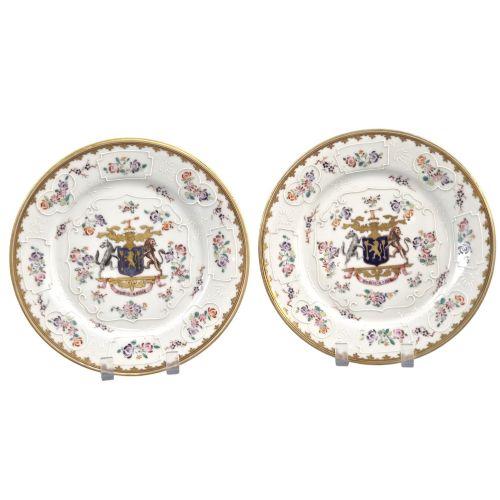
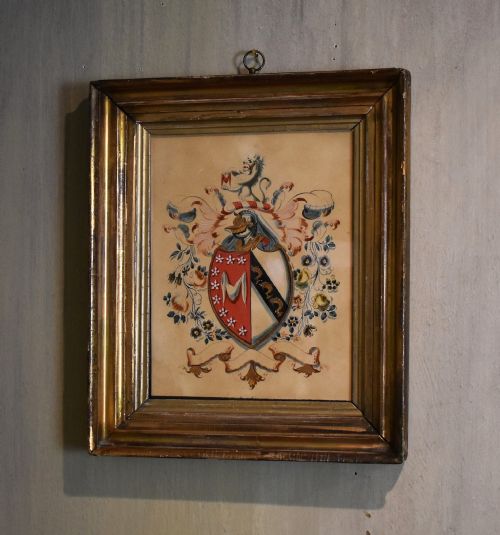
These gilded coat of arms pieces bring heraldic display and rich surface work into domestic interiors through plaques, ceramics, and carved shields.
Gilded Coat of Arms
A gilded coat of arms encompasses a variety of heraldic objects, from nineteenth-century Dutch marriage plaques and French porcelain plates to carved wooden shields and cast iron royal emblems. Buyers searching for a gilded coat of arms encounter items spanning the eighteenth and nineteenth centuries, including Georgian porcelain soup plates and Victorian wall plaques.
The objects take many forms, including decorative panels, campana vases, framed book cover bindings, oil on glass paintings, and leather fire buckets. Ceramic examples often feature armorial decoration commissioned for specific families, whilst wooden and metal pieces display civic or royal insignia.
Most pieces date from the Georgian and Victorian eras, reflecting a strong nineteenth-century interest in heraldry and revival styles. These items range from delicate Chinese export porcelain to substantial cast iron royal coats of arms designed for prominent display.
Judging quality in armorial pieces
Quality rests on the crispness of the heraldic carving or the precision of the hand-painted armorial detail. Finer pieces demonstrate superior draughtsmanship in the rendering of crests, shields, and mottoes.
The application of gold leaf and gesso distinguishes finer decorative panels and frames, where smooth burnishing and intact surface detail indicate superior craftsmanship. Maker attribution, particularly to established porcelain works or known artists, elevates the standing of an individual piece.
Listings feature works in gold leaf, porcelain, enamel, gilt, gesso, glass, paint, and giltwood spanning the Georgian and Victorian eras.
Edmé Samson & Cie·Chamberlain Worcester·Barr Flight & Barr·Coalport Porcelain·Van Rijckevorsel & Verheijen·Icilio Federico Joni
The Gilded Coat of Arms Glossary
- Armorial
- Relating to armorial bearings or a coat of arms. These designs display specific familial or institutional heraldry.
- Gesso
- A plaster-like mixture used as a base for gilding on wood or canvas. It provides a smooth surface for the application of gold leaf.
- Campana
- A bell-shaped vessel form typical of classical vases. This shape was frequently utilised by nineteenth-century porcelain makers.
- Famille Rose
- A palette of Chinese porcelain enamels dominated by opaque pink. This style gained popularity during the eighteenth century.
- Tavolette
- Painted wooden tablet covers associated with Italian archives. These panels often featured detailed heraldic and pictorial compositions.
Gilded Coat of Arms: Frequently Asked Questions
How are armorial porcelain plates dated?
Porcelain plates are dated by examining the paste, glaze characteristics, and factory marks on the underside. Stylistic cues in the painted armorial motifs also help narrow down the period of manufacture.
Matching the heraldic device to historical lineage can provide a precise date of commission, as seen with specific Georgian service pieces.
Where were wall plaques displayed?
Wall plaques and armorial shields were traditionally hung in grand halls, libraries, and civic buildings to display lineage and allegiance. They served as permanent markers of family identity or institutional authority.
Domestic interiors in the nineteenth century frequently incorporated these pieces to project historical continuity and status.
What is the difference between gilt and gold leaf?
Gold leaf consists of extremely thin sheets of hammered gold applied to a prepared surface using an adhesive size. Gilt is a broader term describing any object treated with a gold-coloured finish, which may include metallic paint or foil.
Traditional gilded pieces rely on gold leaf laid over gesso for a warm, burnished metallic lustre.
How do I care for painted glass and ceramics?
Painted glass and ceramic pieces require gentle dusting with a soft, dry cloth to protect fragile enamels and gilt details. Avoid exposing these items to direct sunlight, excessive moisture, or chemical cleaners.
Wall-hung pieces should be secured firmly using appropriate fixings to support the weight of cast iron or framed components.