



Cast Iron Coat of Arms
These cast iron coat of arms pieces bring heavy heraldic presence to a wall or hearth, combining robust metalwork with royal or civic design.
Cast Iron Coat of Arms
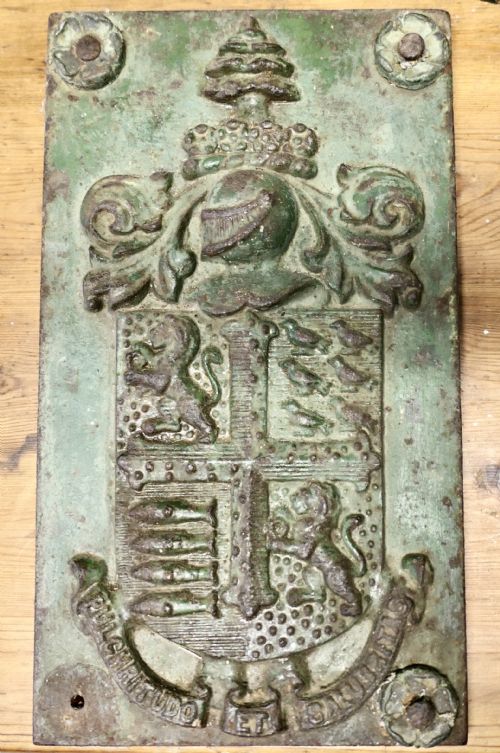
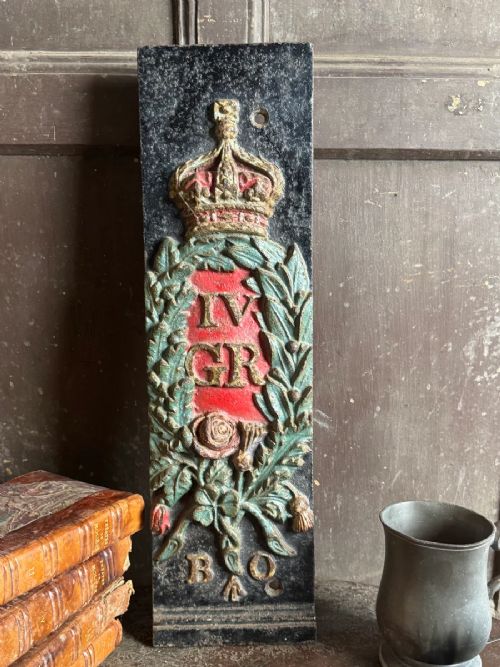
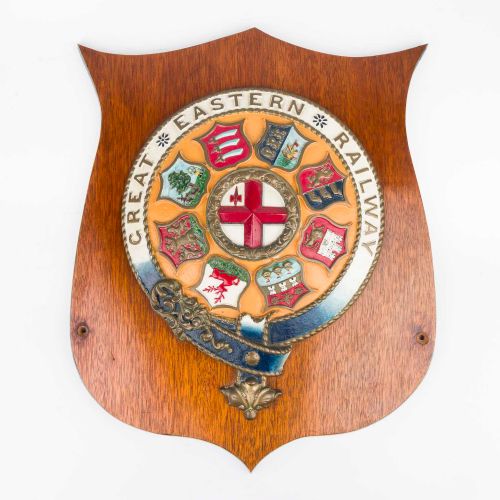
A cast iron coat of arms serves as a substantial architectural wall plaque, fireback or heraldic sculpture, often displaying royal cyphers or civic insignia. You will frequently encounter Victorian wall-hanging shield plaques alongside architectural pieces and heavy firebacks bearing traditional mottos.
The objects span periods from the Georgian era through to the early twentieth century, with nineteenth-century examples dominating the selection. Pieces emerge from English, French and Belgian origins, taking forms that range from flat wall plates to deeply moulded fire grates and arch top firebacks.
Materials and casting methods
Foundries utilised cast iron and cast metal poured into moulds to capture sharp relief details such as crowns, lions and unicorns. Many examples incorporate secondary materials including bronze, brass, oak and mahogany mountings to support the heavy metalwork.
Surfaces frequently retain traces of original polychrome paint, enamel paint, or gold leaf applied over the iron ground to highlight specific heraldic elements. Firebacks and architectural plaques relied on heavy-duty iron casting designed to withstand heat or external exposure.
Cast Iron Coat of Arms Retail Price Guide 2026
Typical asking prices for cast iron coat of arms among the pieces listed under this phrase on Sellingantiques today, from the lower quarter to the upper quarter. They describe what is for sale here now, not the wider market.
A railway crest on your wall proves that nineteenth-century commuters took their punctuality up with the board of directors.
Assessing quality and execution
The presence of untouched original painted or gilded decoration elevates an example above stripped iron surfaces. Furthermore, structural integrity in heavy wall plaques and firebacks distinguishes master foundry output from utilitarian industrial castings.
The Cast Iron Coat of Arms Glossary
- Coat of arms
- A distinct heraldic design on a shield or plaque that represents a specific family, institution, kingdom or government. These symbols often incorporate lions, unicorns and royal mottos.
- Fireback
- A heavy cast iron plate placed at the back of an open fireplace to reflect heat into the room and protect the masonry wall. They frequently display heraldic crests or architectural scenes.
- Armorial plaque
- A flat or slightly convex wall hanging cast with heraldic bearings rather than functioning as a structural element. They were produced for civic buildings, railway offices and domestic display.
- Polychrome
- Decoration utilising several colours painted onto the surface of the iron or wood. Traces of this original pigment help verify the historical finish of a piece.
- Gilding
- The application of gold leaf onto portions of the cast iron relief to accentuate crowns, borders and key heraldic symbols. This finish catches candlelight or daylight in a room.
Cast Iron Coat of Arms: Frequently Asked Questions
Were these intended for indoor or outdoor use?
Most surviving examples were cast for interior display in civic halls, railway offices, or grand domestic spaces, though firebacks were made specifically for hearths. Outdoor placement subjects the iron to moisture and rapid corrosion.
If displayed outside, unprotected cast iron requires regular maintenance to prevent rust from pitting the detailed heraldic relief.
How do I tell a Victorian piece from a Georgian one?
Georgian examples, particularly from the Regency period, often display refined neoclassical proportions and distinct architectural framing. Victorian and later castings tend towards heavier relief and bolder heraldic detailing.
Examining the style of the crown, the lettering of the motto, and any traces of underlying paint helps indicate the period of manufacture.
Why do some pieces have traces of paint while others are bare iron?
Many heraldic castings were originally finished with polychrome paint and gold leaf to distinguish the various elements of the coat of arms. Over the decades, subsequent owners either stripped the metal or applied new coats of paint.
Original paint fragments provide valuable evidence of how the piece looked when it left the foundry.