

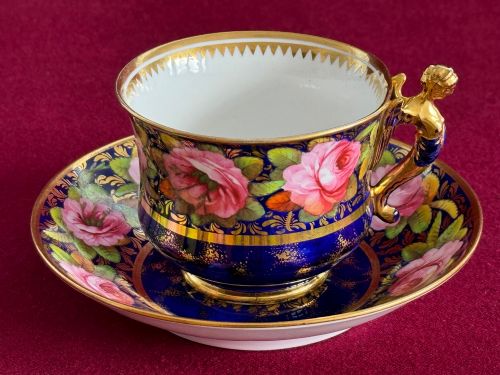
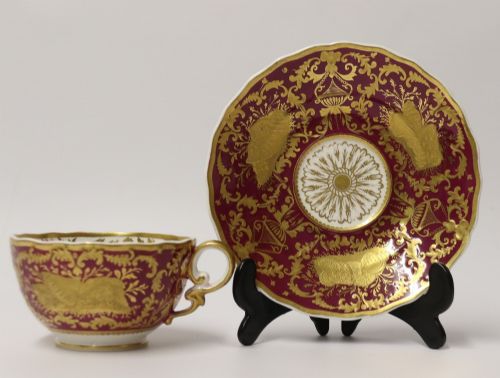
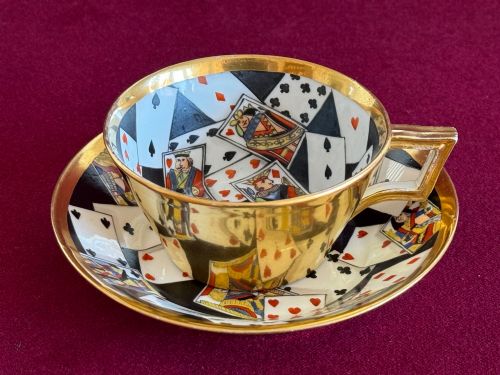
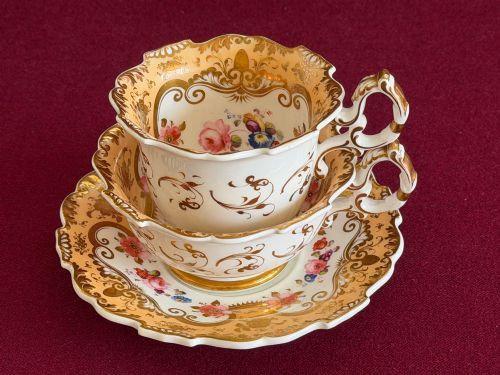


Gilded China Teacup Saucer
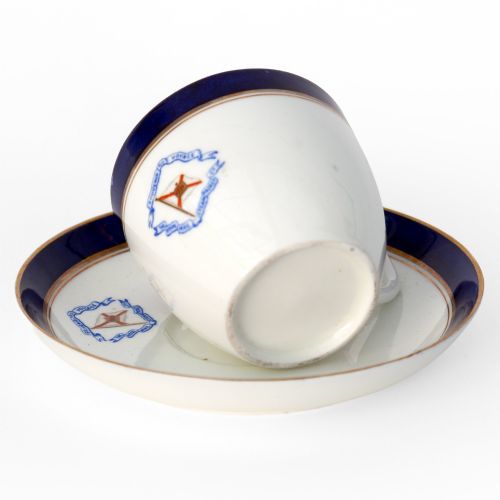
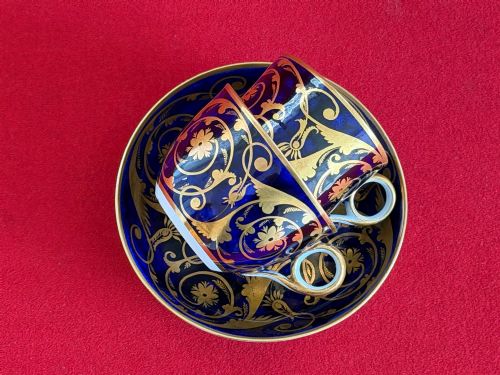
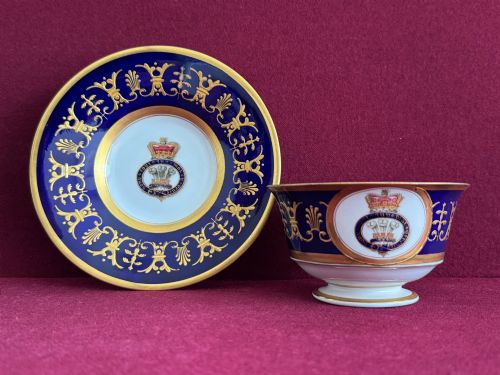
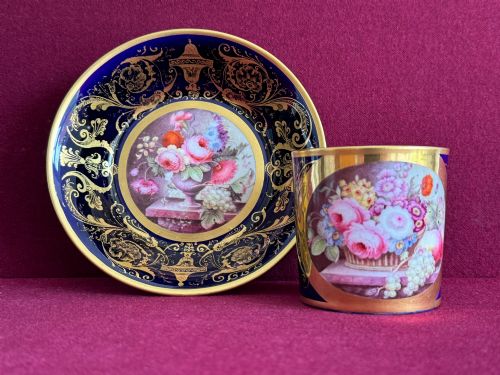
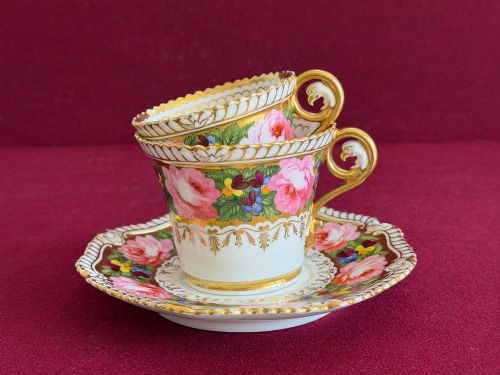
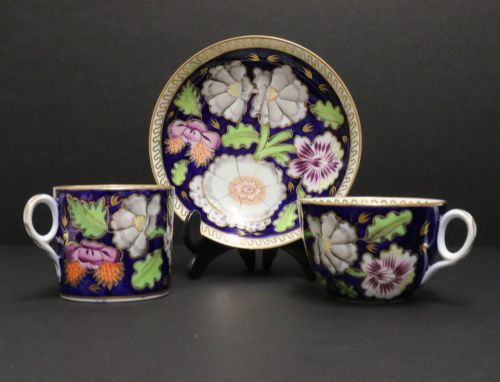
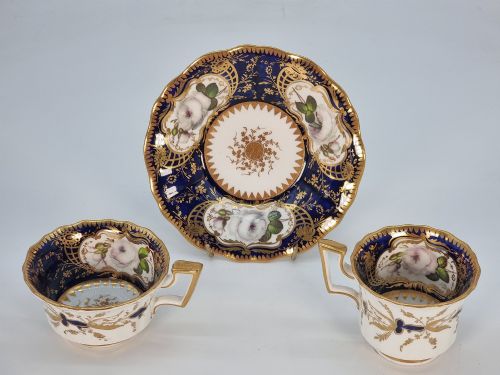
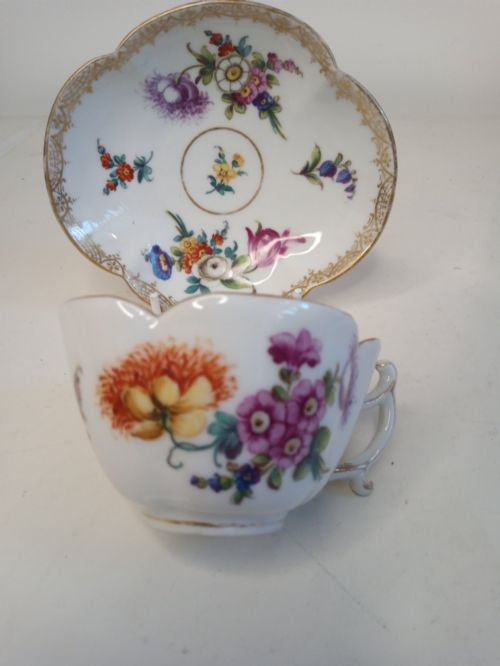
These gilded china teacup saucer sets bring Regency elegance and eighteenth-century hand-painted detail directly to the morning table.
Gilded China Teacup Saucer
A gilded china teacup saucer selection on this page centres on English porcelain drinking vessels spanning the Georgian, Regency, and Victorian periods alongside later Edwardian and twentieth-century examples. Buyers encounter individual cabinet cups, teacups and saucers, and larger tea services or trios featuring matching bowls.
The material origins trace through soft-paste porcelain, bone china, and porcelain body types decorated with gold leaf, enamel, and gilt highlights. Forms range from standard teacups to tea bowls, coffee cans, and miniature solitaire sets produced by historical English factories.
How they were made
Potters shaped porcelain and bone china bodies on the wheel or in moulds before firing the ceramic base at high temperatures. Artisans then applied hand-painted enamels and gold leaf gilding, frequently returning the pieces to the kiln to fix the metallic decoration.
Makers utilised gold gilt and burnished gold leaf to accent borders, handles, and pictorial scenes such as fancy birds and crests. The combination of delicate porcelain bodies and secure hand-applied gilding defined the production standards of major English works.
Gilded China Teacup Saucer Retail Price Guide 2026
Typical asking prices for gilded china teacup saucer among the pieces listed under this phrase on Sellingantiques today, from the lower quarter to the upper quarter. They describe what is for sale here now, not the wider market.
Several sets include miniature solitaire pieces, reminding us that past owners occasionally preferred tea for one.
What varies in quality
Quality rests on the crispness of the hand-painted enamels and the weight and burnishing of the gold leaf decoration. Pieces from prominent periods and named decorators display finer brushwork and more complex patterns than standard domestic wares.
The survival of the original gilding without excessive rubbing indicates how carefully a cup and saucer has been handled over centuries. Precision in the porcelain moulding and translucency of the body further distinguish standard production from cabinet-grade pieces.
New Hall Porcelain·Spode·Barr and Barr Worcester·Derby Porcelain·Minton Porcelain·H and R Daniel·Chamberlain Worcester·Coalport John Rose·Flight Barr and Barr·Royal Worcester·Davenport·Wileman Foley Shelley·Royal Crown Derby·Gladstone Potteries
The Gilded China Teacup Saucer Glossary
- Trio
- A matching set comprising a teacup, saucer, and matching side plate or tea bowl. These groups appear frequently in Georgian and Regency tea wares.
- Coffee Can
- A straight-sided cylindrical porcelain cup designed specifically for drinking strong coffee in the eighteenth and nineteenth centuries. They often share saucers with matching teacups.
- Soft-Paste Porcelain
- An artificial porcelain composition fired at lower temperatures than hard-paste, common in eighteenth-century English factories like early Worcester and Derby. It yields a warm, slightly creamy body.
- Gilding
- The application of gold leaf or gold paint to ceramic surfaces to create metallic borders and highlights. This finish varies from thin painted gilt to heavy burnished gold.
- Tea Bowl
- A handleless drinking vessel used for tea before the widespread adoption of handled teacups in the eighteenth century. They sit alongside matching saucers in early sets.
Gilded China Teacup Saucer: Frequently Asked Questions
Can I use these antique teacups daily?
While these porcelain pieces were originally created for functional use, centuries of wear mean many collectors now treat them as cabinet display items or handle them only on special occasions.
Hand washing is essential to preserve the delicate hand-painted enamels and gold leaf gilding, as modern dishwashers will quickly damage the antique surfaces.
How do I date an English tea set?
Dating relies on factory marks stamped or painted on the base, stylistic clues in the shape, and the type of porcelain body. Regency and Georgian pieces often feature pattern numbers hand-written in script.
Later Victorian and Edwardian examples introduce printed factory ciphers and standardised shapes that help narrow down the year of manufacture.
What is the difference between a tea bowl and a teacup?
Tea bowls are small, handleless vessels modelled on Chinese export imports, used primarily during the eighteenth century for green and black tea. Teacups introduce a handle for easier gripping as social tea drinking evolved.
Both forms sit within matching saucers designed to catch drips and cool the hot beverage before drinking.
Why do some cups have saucers with no indentations?
Early saucers lack the central well or ring found on later pieces because tea bowls and cups sat freely on the flat surface. This allowed the saucer to double as a vessel for cooling hot tea.
As manufacturing shifted through the Regency period, saucer designs adapted to hold the foot of the teacup more securely.