




Gilded Ceramic Mugs
Gilded ceramic mugs bring brilliant surface and durable utility to the table, uniting bright metal leaf with fired clay in varied historical forms.
Gilded Ceramic Mugs
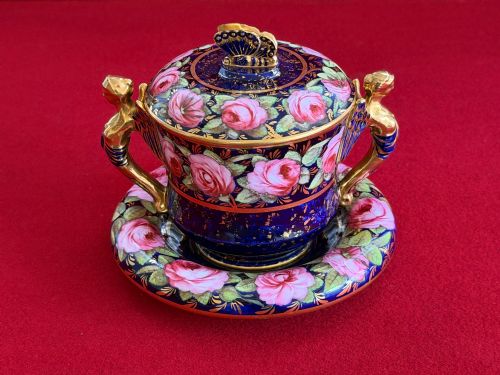
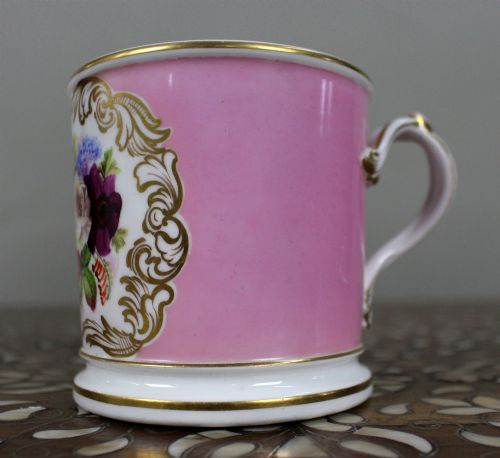
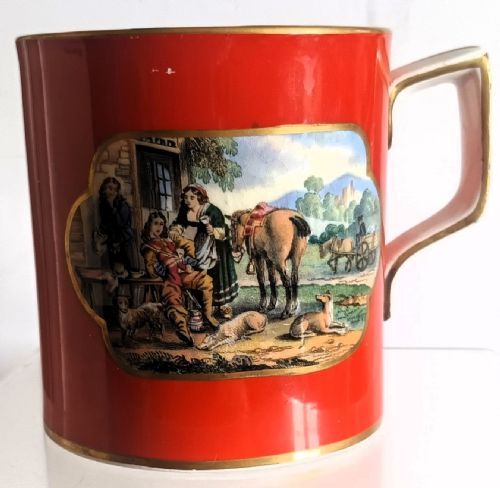
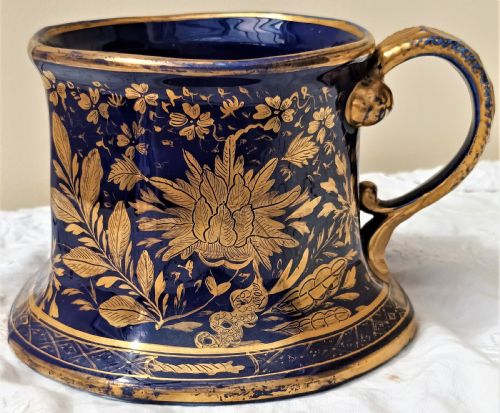
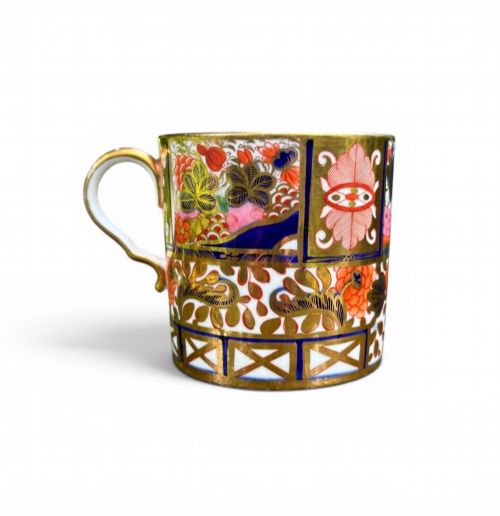
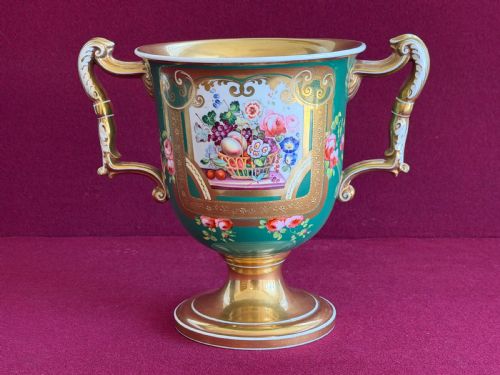
When you search for gilded ceramic mugs, you are looking at drinking vessels and cabinet cups enhanced with gold leaf, gilt, or glaze decoration. These pieces bridge decorative display and practical drinking forms across several centuries.
The selections available here range from Georgian ironstone and porcelain tankards to Victorian pottery mugs, Regency loving cups, and Edwardian lustre pieces. Cups, coffee cans, and tygs also appear among the forms.
Originating largely from English factories like Spode, Derby, Mason's, and Worcester alongside continental makers such as Berlin and Royal Vienna, these objects reflect distinct regional ceramic traditions.
Materials and Techniques
Potters shaped these vessels using hard-paste porcelain, ironstone, and earthenware bodies, applying fluid glazes before firing the clay in kilns. Enamel colours were often added alongside the ceramic body work to build complex surface designs.
Gilding was applied by hand using gold leaf or liquid gilt, sometimes burnished to create high-contrast matte and bright metallic finishes across handles, rims, and pictorial scenes.
Listings span porcelain, ironstone, and enamel materials across Georgian, Regency, Victorian, and Edwardian periods.
Assessing Quality and Execution
Quality rests in the crispness of the porcelain or ironstone potting and the precision of the hand-applied gilding. Superior examples display intact gold leaf without heavy rubbing and finely detailed painted scenes rather than simple transfer prints.
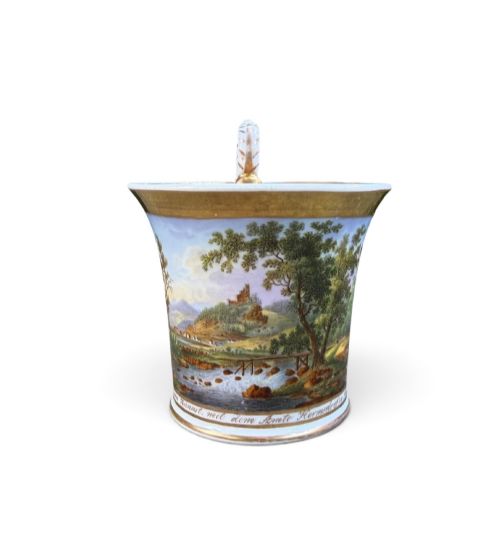
The refinement of the handle moulding and the balance of the vessel demonstrate the maker's skill. Pieces featuring named topographical views, allegorical subjects, or distinct factory patterns command greater attention from collectors.
Spode·Grainger Worcester·Derby Porcelain·Mason's Ironstone·H & R Daniel·Wedgwood·Royal Vienna·Royal Worcester·Hadley Worcester
The Gilded Ceramic Mugs Glossary
- Gilt
- A thin layer of gold applied to the ceramic surface. It provides the metallic sheen characteristic of these pieces.
- Ironstone
- A dense, durable type of earthenware patented in the nineteenth century. It resists chipping better than standard pottery.
- Tyg
- A multi-handled drinking vessel designed for communal passing. They commonly feature three handles.
- Porter Mug
- A large drinking vessel intended for dark beer. These sturdy forms often showcase substantial painted decoration.
- Hard-paste Porcelain
- A vitrified ceramic fired at very high temperatures. It creates a durable, translucent body.
- Coffee Can
- A straight-sided cylindrical cup without a foot rim. They emerged in the Georgian period for drinking strong coffee.
Gilded Ceramic Mugs: Frequently Asked Questions
What is a tyg mug?
A tyg is a drinking vessel fitted with multiple handles, usually three, designed to be passed around a table among company.
Historical examples in ceramic often carry rich glaze or gilt decoration and date from the nineteenth century.
How do I date a porcelain mug?
Dating relies on factory marks stamped or painted on the base, stylistic clues from periods like the Regency or Victorian eras, and the type of ceramic body used.
Porcelain composition and handle shapes shifted significantly between eighteenth-century soft-paste and later hard-paste bodies.
Can I use these mugs for drinking?
While these mugs were originally designed for beverages like coffee, chocolate, or porter, historic ceramic pieces require careful handling today.
Hand washing is essential to preserve fragile gold leaf and enamel decoration against modern detergents.
What is ironstone pottery?
Ironstone is a heavy, durable ceramic material developed in the nineteenth century as a robust alternative to true porcelain.
Makers like Mason's utilised it for mugs and tableware to withstand daily use while accepting bright gilding.
Why are some cups called cabinet cups?
Cabinet cups were decorative items intended for display in a glass cabinet rather than everyday dining.
They frequently feature elaborate hand-painted topographical views, allegorical scenes, or heavy gilding.